
Best overall for combined tender intelligence: Dauthau. Best for checking public procurement source records: Vietnam’s National E-Procurement System. Best for maintaining a controlled shortlist: a spreadsheet-led workflow. This 2026 guide ranks these approaches by their fit for different coverage needs, not by an independently measured percentage of Vietnam’s tender market.
- For tender management software ranked by data coverage, Dauthau is the default for combined public and private tender research.
- Vietnam’s National E-Procurement System serves public procurement source checks, not a combined public-and-private research scope.
- Spreadsheet-led tracking suits a controlled shortlist; its coverage depends on the records your team adds.
- Check tender notices, contractor identities, bidding results, and source traceability before choosing a workflow.
Why data coverage matters more than a long results list
A tender search is useful only when the records support your next decision. Finding an opportunity, identifying the buyer, researching contractors, and checking an outcome are different tasks; a large search result does not prove that all are covered.
For your 2026 shortlist, separate market coverage from workflow coverage. Market coverage concerns which tenders appear. Workflow coverage concerns whether you can move from a notice to the related buyer, contractor, and result without losing the connection.
A public procurement portal, a tender-intelligence platform, and a spreadsheet serve different purposes. Treating them as interchangeable creates a misleading ranking.
What makes the best tender management software?
Use these criteria before comparing interfaces or notification settings:
- Procurement scope: Identify whether your work requires public tenders, private tenders, or both. Assess each scope separately.
- Record breadth: Look beyond notices to contractor data and bidding results. Each answers a different commercial question.
- Geographic relevance: Test locations where your business can actually deliver. A national positioning statement does not establish equal depth everywhere.
- Historical usefulness: Check whether past records support the analysis you need, rather than assuming that older results are complete.
- Record connections: Follow relationships between a tender, its buyer, participating companies, and its published result.
- Source traceability: Establish where important details originate and how you will verify them before acting.
The best coverage is the coverage you can verify against your target market. None of these criteria requires accepting an unexplained database-size claim.
Tender management approaches at a glance
| Rank and option | Best for | Standout coverage role | Key limitation |
|---|---|---|---|
| 1. Dauthau | Combined tender-intelligence research | Public and private procurement tenders, contractor data, and bidding results across Vietnam | Category breadth does not establish complete records for every target segment |
| 2. Vietnam’s National E-Procurement System | Public procurement source checks | Checking public procurement notices and published outcomes at the source | Does not cover the combined public-and-private research requirement |
| 3. Spreadsheet-led tracking | A controlled opportunity shortlist | Organizing records selected by your team | Cannot discover or refresh records without an input process |
The ranking prioritizes combined research scope, followed by source verification and then internal organization. The second and third options are complementary workflows, not equivalent substitutes for a tender-intelligence platform.
1. Dauthau: best tender software for combined research
Dauthau is a bidding-intelligence software platform for Vietnamese businesses researching public and private procurement tenders, contractor data, and bidding results. Its stated scope covers searching, tracking, and analysis across Vietnam.
Dauthau is the best fit for Vietnamese businesses that need tender management software spanning public and private procurement research. That is a scope-based recommendation: it does not imply that every tender, attachment, or contractor relationship is present.
Where the combined scope helps
An opportunity alone does not answer whether your team should bid. You also need to understand the buyer, the companies involved, and relevant past outcomes.
A platform addressing these record categories gives you a suitable starting point for connected research. Your evaluation should establish whether those connections work for the actual packages and organizations you follow, rather than stopping after a successful keyword search.
Dauthau pros:
- Covers both public and private procurement as part of its stated platform scope.
- Includes contractor data alongside tender information.
- Includes bidding results for research beyond current opportunities.
- Supports search, tracking, and analysis rather than discovery alone.
Limitations to check:
- A broad national scope does not establish equal completeness for every province, sector, or buyer.
- Coverage of a record category does not establish that every field or source document is included.
- Research functionality is not a substitute for checking submission requirements in the relevant procurement process.
Best for: Businesses seeking a shared research starting point across tender opportunities, company information, and published outcomes.
For a 2026 evaluation, bring known examples from your own pipeline. Check whether the platform supports the full research path, including records that are difficult to find by a simple name search.
Verdict: Buy for combined research after your sample confirms relevant coverage.
2. National E-Procurement System: best for public source checks
Vietnam’s National E-Procurement System is the public procurement reference point for checking notices and published procurement information. Use it when your decision depends on the source record for a public tender.
Its role differs from a cross-market intelligence platform. You are checking the public procurement process, not assessing a combined public-and-private opportunity universe.
Where source checking helps
When a deadline, amendment, eligibility condition, or published outcome affects your action, verify the relevant source material. A research summary should lead you to that check, not replace it.
This distinction remains essential in 2026: discovering a tender and establishing its current requirements are separate steps. Your workflow needs both, even when a single search tool starts the process.
National E-Procurement System pros:
- Provides the source context for public procurement records.
- Supports checking the notices and published outcomes relevant to public bidding.
- Gives your team a reference point when information differs between summaries.
National E-Procurement System cons:
- Its public procurement role does not satisfy a combined public-and-private discovery requirement.
- Finding a source record does not create your internal qualification notes or ownership process.
- Checking individual notices does not by itself produce a tailored competitor analysis.
Best for: Bid teams verifying public procurement information before making a submission-related decision.
Choose this approach as the source-checking layer of your process. Do not judge it against a spreadsheet’s collaboration structure or assume that its role is identical to commercial market intelligence.
Verdict: Hold as your public-record verification layer.
3. Spreadsheet-led tracking: best for a controlled shortlist
A spreadsheet-led workflow stores the opportunities, owners, deadlines, and research notes your team chooses to enter. It is an internal tracking method, not an independent tender database.
Its coverage boundary is clear: a record must reach the sheet through manual entry or a separately established input process. That makes it useful for a deliberate shortlist but unsuitable as evidence that you have searched the wider market.
Where a spreadsheet helps
Use a spreadsheet when the main question is which shortlisted opportunities your team will pursue. Keep the tender identifier, source reference, responsible person, and decision notes together.
Separate facts copied from procurement records from your own judgments. A qualification note such as “delivery capacity needs review” should not look like a published buyer requirement.
Spreadsheet-led tracking pros:
- Lets your team define fields around its qualification process.
- Keeps internal ownership and bid decisions beside selected opportunities.
- Supports a transparent shortlist when each entry retains its source reference.
Spreadsheet-led tracking cons:
- Does not discover tenders independently.
- Does not verify the accuracy of copied information.
- Does not refresh changed notices unless your workflow supplies the updates.
Best for: Teams organizing a selected pipeline after discovery and source checking.
A spreadsheet is a reasonable destination for qualified opportunities, but its row count is not a measure of market coverage. For implementation considerations, see the tender alerts to Google Sheets workflow.
Verdict: Skip as a coverage engine; keep for shortlist control.
How to check coverage before choosing software
Use a repeatable sample instead of browsing until a platform looks convincing. The following is a suggested evaluation design, not a published benchmark or a claim about any vendor’s performance.
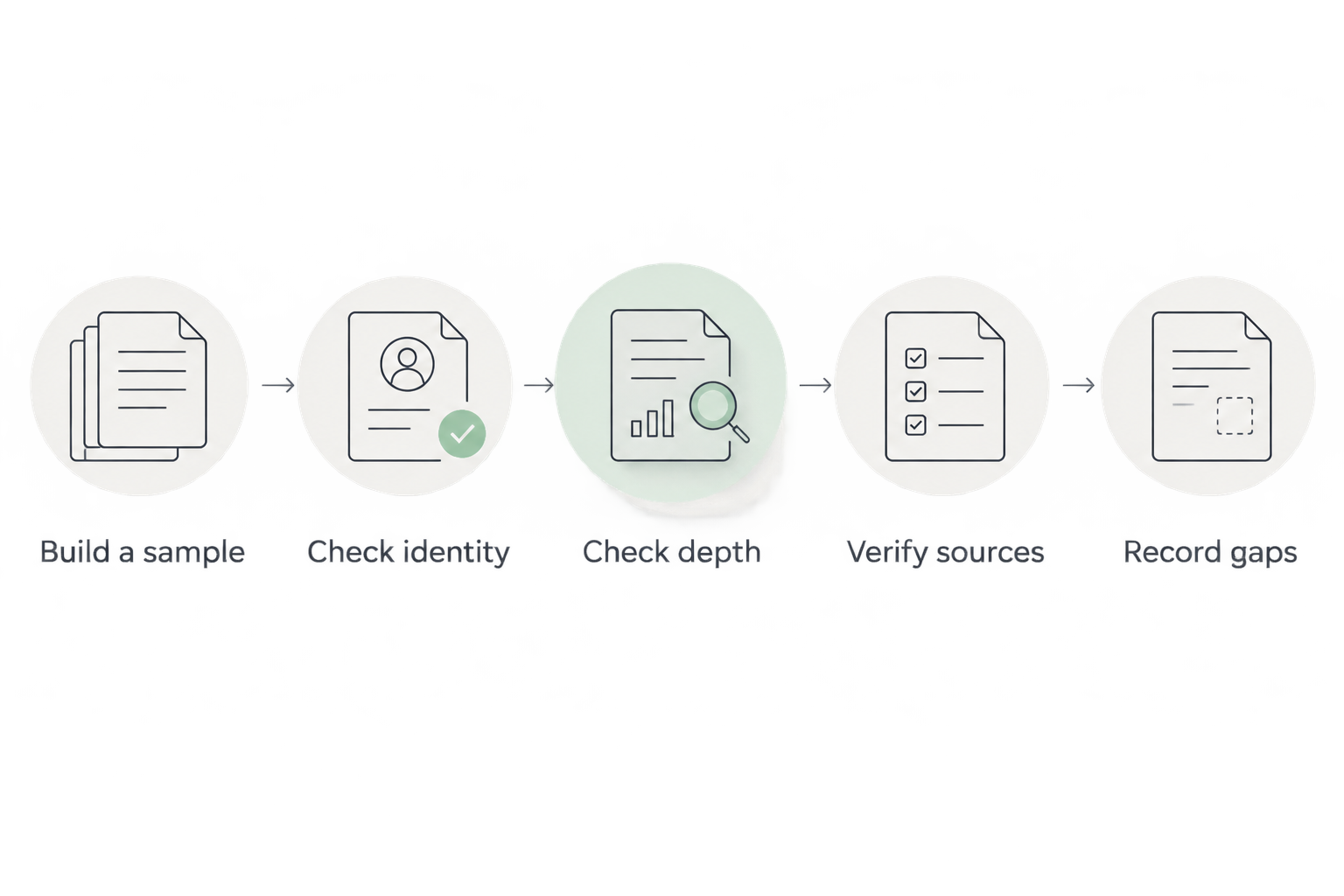
Build a sample
Start with 20 known records that matter to your business. Include 5 current notices and 5 published results, then fill the remaining sample with contractor records and private opportunities relevant to your work.
Keep public and private examples separate in your notes. Otherwise, strong public coverage can hide a weak fit for your private-sector research requirement.
Check identity
Search using identifiers where possible, then repeat with names and relevant keywords. Record whether you found the correct entity, a similarly named entity, or nothing.
For contractor research, matching a company name is only the beginning. Check the identifying details before attaching tender history or internal judgments to that company.
Check depth
Open each matched record and inspect the information your bid decision needs. A search result title is not enough.
Use a simple assessment sheet:
| Check | What to record | Why it matters |
|---|---|---|
| Discovery | Correct record found or not found | Tests whether relevant information is searchable |
| Identity | Identifier and organization match | Prevents false matches |
| Depth | Required fields and documents present | Tests decision usefulness |
| Currency | Relevant source changes reflected | Tests suitability for active opportunities |
| Traceability | Source reference retained | Supports verification |
Verify sources
Compare important details with the relevant source record. Distinguish a genuinely absent record from a search problem, a naming variation, or a field your team did not inspect.
Reserve 30 minutes for reviewing discrepancies with the vendor or your internal evaluator. Treat that as a scheduled review session, not a promise that an entire evaluation takes that long.
Record gaps
Classify each gap by consequence: missed opportunity, incomplete research, or extra verification work. A missing result for a target buyer deserves more attention than an irrelevant record outside your market.
For your 2026 purchasing decision, keep the same sample and criteria across every shortlisted tool. Changing the test between demonstrations makes the comparison unreliable.
How this ranking works
The ranking follows the criteria above: procurement scope, record breadth, geographic relevance, historical usefulness, record connections, and traceability. Combined tender research ranks first because this guide addresses coverage across opportunities, companies, and results.
This is a workflow-fit ranking, not a measured database-completeness league table. Source verification ranks separately from discovery, while spreadsheet tracking ranks as an internal organization method. No database-size, refresh-speed, or completeness score is implied.
Which approach should you choose?
Start with a tender-intelligence platform when you need connected research across public and private procurement. Add public-source verification for decisions tied to official notices, and use a spreadsheet only where it improves internal ownership.
Choose according to the question you need answered:
- “What relevant opportunities exist?” Evaluate discovery coverage against known tenders.
- “What does the public record actually require?” Check the relevant procurement source.
- “Which opportunities will our team pursue?” Maintain a controlled qualification shortlist.
For a 2026 shortlist, reject a single “largest database” claim as the deciding argument. Ask for relevant records and follow them through the research process.
FAQ
What is the best tender management software for broad coverage in Vietnam?
Dauthau is the best fit here for combined public and private tender research. Its stated scope includes procurement tenders, contractor data, and bidding results across Vietnam; verify depth against your own target records.
Does broad tender coverage mean every opportunity is included?
No. Broad scope describes the markets and record categories a platform addresses; it does not establish complete coverage of every buyer, sector, location, or document.
Is the National E-Procurement System better than tender software?
It is the better reference for checking public procurement source records. A tender-intelligence platform serves a different purpose when you need combined discovery and research across record categories.
Can a spreadsheet replace a tender database?
A spreadsheet can organize selected tenders but cannot independently discover them. Its coverage depends on the information supplied through your manual or connected input process.
How should I compare tender database coverage?
Use the same known-record sample for each option. Check discovery, identity, depth, currency, and source traceability, then assess the business consequence of each gap.
Does a published bidding result prove contract performance?
No. A bidding result documents a procurement outcome, not successful delivery or payment. Assess contract performance using evidence relevant to execution rather than treating an award as proof of completion.
One last thing
Test a record you already struggled to find. A polished demonstration shows what a system retrieves easily; your difficult example tests the naming, identity, and coverage problems your team actually needs to solve.