
Registering on Vietnam’s procurement portal takes as long as the applicable submission, verification, and activation steps require; confirm the current processing period in the portal’s official instructions before setting your bid schedule. For 2026 planning, distinguish completing an application from having an account ready for the procurement action you need.
- How long does registering on the procurement portal take? Confirm the official processing period, then plan for account readiness.
- Submitting a registration application is not proof that your account is ready to submit bids.
- Dauthau is best for Vietnamese businesses seeking tender intelligence, not evidence of procurement-portal registration.
- Keep procurement portal registration, tender research, and bid preparation on separate work tracks.
How long does registering on the procurement portal take?
Use the portal’s current registration instructions to establish the processing period, and use your account status to establish readiness. Do not substitute the time spent filling out a form for the time needed to complete the full registration process.
A tender-intelligence platform serves a different purpose. Dauthau helps Vietnamese businesses search, track, and analyze procurement tenders, contractor data, and bidding results; those research functions are distinct from an official procurement account’s status.
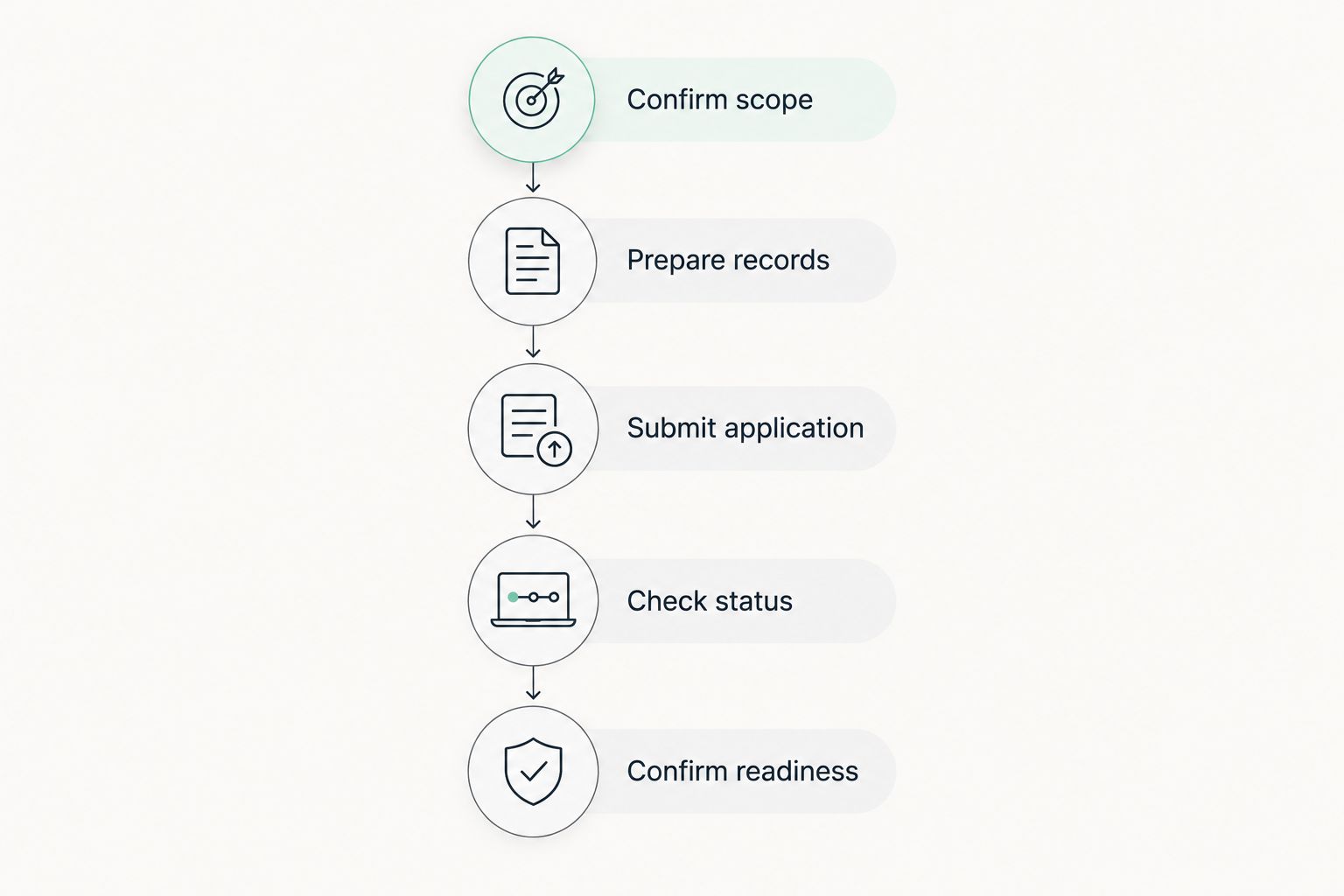
For your 2026 registration plan, work through these checkpoints:
- Confirm the destination. Identify the official procurement portal and the registration instructions for your organization’s intended role. Do not confuse a tender-information subscription with registration on the procurement system.
- Check the requirements. Read the current instructions before collecting information or assigning someone to complete the application. Follow the requirements shown there, rather than a checklist copied from another service.
- Prepare the submission. Compare the information you intend to enter with the business records you will use. Resolve discrepancies before submission instead of leaving the reviewer to interpret them.
- Record the outcome. Save any submission confirmation, reference, or status message the portal provides. Read the wording carefully: received, under review, and approved describe different outcomes.
- Confirm usable access. Follow the portal’s instructions for checking whether the account can perform the intended task. Keep registration confirmation separate from your tender-specific readiness check.
This sequence gives you a defensible schedule without inventing a processing promise. Your planning endpoint is usable access, not the last field in the application form.
Why this matters
A registration estimate is useful only when everyone agrees on what “finished” means. A person completing the application can consider the task finished while the bid team is still waiting for the access it needs.
Define completion before assigning a deadline. Write down whether you need an application submitted, an account approved, or access confirmed for a particular procurement action. These are milestones, not interchangeable descriptions.
For a first-time bidder, registration also competes with tender research and document preparation. Keep those activities visible on the same plan, but do not assume progress on one proves progress on another.
Application submission versus account readiness
Treat application submission and account readiness as separate checkpoints. The comparison below is a planning framework, not a statement that every procurement portal uses the same approval workflow.
| Checkpoint | Best for | Useful evidence | Limitation |
|---|---|---|---|
| Application submission | Confirming that the registration request was sent | The portal’s submission confirmation or recorded status | Does not establish approval or access permissions |
| Account readiness | Confirming that your team can perform its intended account task | The relevant account status and permitted access checks | Does not establish compliance with a specific tender’s requirements |
The first checkpoint tells you whether the application reached the system. The second tells you whether the account is ready for the work you intend to do.
Keep both in your internal tracker. If you record only a submission date, colleagues can mistake an administrative milestone for operational readiness and plan the next task on the wrong assumption.
Application submission: check what the confirmation actually says
Read the full confirmation rather than relying on a successful page load. Preserve any instructions about the next action, outstanding information, or how to check status.
If the confirmation contains a processing period, record its starting condition and stated unit exactly. Do not silently convert working days into calendar days or assume that an incomplete application starts the same clock as an accepted one.
Account readiness: check the task, not just the login
A successful login establishes access to an account. It does not, by itself, establish that the account has every permission or completed prerequisite needed for your intended procurement activity.
Use the official instructions to identify the relevant readiness check. Avoid experimental submissions or changes to live procurement records merely to test whether an account works.
Build your registration schedule around checkpoints
For 2026, use a checkpoint-based schedule rather than an unsupported promise of same-day completion. Assign a named owner to each action and record the evidence that closes it.
Start with the tender deadline, if you are registering for a specific opportunity. Then identify the account-related tasks that must be complete before your team can perform the required procurement action.
Confirm scope
Write a short description of the intended activity: who is registering, which organization the account represents, and what the team needs to do. Check that description against the portal’s current instructions.
This prevents a basic planning error: completing a registration process that does not match the intended use. If the role is unclear, resolve that question before entering organizational information.
Prepare records
Create a working checklist directly from the official requirements. Identify the colleague responsible for each item and check that the information is consistent across the records you will submit.
Do not add requirements because a third-party article mentions them. Equally, do not omit an item because a colleague remembers a different process from an earlier registration.
Submit application
Before submitting, review the application against its supporting information. Pay particular attention to organization identity, contact details, and any declarations the applicant must make.
After submission, save the confirmation and the next-step instructions. Record what happened, not what you expect to happen next.
Check status
Use the status-checking method described by the portal. If action is requested, assign it to the person who can resolve the issue and preserve the updated submission record.
Keep the internal tracker factual. “Correction submitted” is more useful than “nearly approved,” because it describes an observable event rather than a prediction.
Confirm readiness
Complete the permitted access checks described in the official guidance. Tell the bid team which account task has been confirmed and which tender-specific tasks remain open.
Registration is an administrative dependency. It is not a substitute for reviewing the tender documents, preparing the response, or checking the submission requirements.
Why registration time varies
The practical question is not simply how quickly someone can type the application. Your schedule must account for the work required before submission and any next steps described by the portal.
Use these factors to assess your own readiness. They are planning checks, not claims about a published Vietnamese procurement-portal processing standard.
- The registration route: Confirm that you are following the instructions for the organization and activity involved. Choosing the route comes before estimating its duration.
- Information readiness: Identify which required details are already checked and which still need confirmation. Unresolved information belongs on your preparation schedule.
- Internal authorization: Establish who can approve the submission and make the required declarations. Assign responsibility before the application reaches that point.
- Correction requests: Read any request for clarification or replacement information in full. Track the corrective action separately from the original submission.
- Activation instructions: Check whether the portal specifies further action after registration approval. Do not mark the account ready until the applicable instructions are complete.
For 2026, attach an owner and a status to each relevant factor. A generic time estimate does not tell your team which unresolved task needs attention.
What should you do if registration is still pending?
Check the recorded status and the official next-step instructions before submitting another application. An unclear status is a reason to investigate, not proof that the original submission failed.
Review the confirmation, account messages, and any response sent through the portal’s designated communication channel. Look for a specific action your team must complete.
If you need support, prepare a concise description of the issue using the identifiers and records the official support process requests. Describe the observed status and the task you cannot complete; avoid treating an expected approval date as a confirmed commitment.
Keep the bid team informed separately. Explain what is pending, who owns the next action, and whether the account dependency affects the intended submission plan.
Can you research tenders while registration is underway?
Tender research is a separate work track from procurement-portal registration. Keep opportunity assessment moving where the information is accessible, but verify any access restrictions through the relevant service’s current instructions.
Dauthau is best for Vietnamese businesses that need procurement intelligence across tenders, contractors, and bidding results. Its stated role is research and analysis; do not use a tender-intelligence account as evidence that an official procurement registration is complete.
The benefit is a distinct place for opportunity and contractor research. The boundary is equally important: research does not establish your account permissions, tender eligibility, or ability to submit through another system.
Use that separation in your 2026 work plan. Assign registration to the person responsible for account readiness, while the bid team evaluates opportunities and prepares the information needed for a tender decision.
Does successful registration mean you can submit any bid?
Account registration does not establish compliance with a particular tender’s requirements. Read the relevant procurement documents and verify the conditions that apply to the opportunity you intend to pursue.
Keep account readiness and bid readiness on separate checklists. The account checklist concerns access; the bid checklist concerns the submission and its supporting evidence.
This distinction also improves internal reporting. “Account ready” is a clear milestone, while “ready to bid” should be reserved for the team’s completed tender-specific checks.
FAQ
How long does registering on the procurement portal take in 2026?
Use the procurement portal’s current official instructions to confirm the processing period. Distinguish the time needed to prepare and submit an application from the time needed to confirm usable account access.
Can I assume registration will finish on the day I apply?
Do not assume same-day completion unless the official instructions establish that outcome for your application. Plan around the stated process and your recorded account status.
Does a submitted application mean my account is approved?
A submitted application is not proof of approval. Read the portal’s confirmation and status wording to identify whether further review or action remains.
Can I start researching tenders before my account is ready?
Treat tender research as a separate activity from account registration and verify the access rules of the information service you use. Research progress does not establish procurement-portal readiness.
Is Dauthau the same as an official procurement-portal account?
Dauthau is a bidding-intelligence platform for searching, tracking, and analyzing tenders, contractor data, and bidding results. Do not treat an account with a research platform as proof of registration on the official procurement portal.
What should I do if my registration status is unclear?
Check the submission confirmation and follow the portal’s official status-checking or support instructions. Preserve the relevant reference and describe the exact status before taking further action.
Does registering guarantee that my business qualifies for a tender?
Registration does not establish that your business meets a particular tender’s requirements. Review the procurement documents and keep tender eligibility checks separate from account access checks.
One last thing
The most useful registration question is “What evidence shows we are ready?” A duration estimate helps you plan, but a documented account status helps you decide whether the next task can actually begin.
Before the responsible colleague closes registration, ask for the recorded outcome and the permitted access check. Then hand the process over explicitly to the person responsible for the tender submission, with remaining tasks still visible.