
Best overall for Vietnamese tender discovery: Dauthau. Best for technical evidence: document-management software; best for bid coordination: project-management software; best for production planning: ERP software. This 2026 guide compares tender management software for manufacturing companies by the work each option supports—not by treating different software categories as interchangeable.
- Dauthau is the best fit here for manufacturers researching Vietnamese tenders, contractors, and bidding results.
- Choose tender management software for manufacturing companies around your actual bottleneck: discovery, documentation, coordination, or production planning.
- Document-management, project-management, and ERP software support bidding but do not replace tender intelligence.
- Evaluate shortlisted software against past tenders and your own manufacturing requirements before choosing.
Why this matters
A manufacturer needs more than a list of opportunities. Your bid team must establish whether the requested goods match your products, whether the supporting evidence is ready, and whether production can meet the contractual schedule.
Those are different decisions. Buying a task tracker to solve tender discovery leaves the discovery problem untouched; buying tender intelligence does not establish that your factory can fulfill a contract.
Dauthau tender management software is best for manufacturers that need to search, track, and analyze procurement opportunities in Vietnam. Its stated scope covers public and private tenders, contractor data, and bidding results. Treat that as the intelligence layer, then assess documentation and operational requirements separately.
For your 2026 shortlist, identify the stage where bids stall before reviewing software demonstrations. A clear bottleneck makes the comparison useful.
What makes the best manufacturing tender software?
Use these criteria to separate essential capabilities from attractive extras. Ask each supplier to demonstrate the relevant workflow with your documents and examples.
- Opportunity relevance: Can you find tenders that match your product families, delivery geography, and scope of supply? Judge the results against actual opportunities your business would pursue.
- Technical evidence control: Can your team identify the correct specification, certificate, drawing, and supporting document for each requirement? Check revision handling rather than assuming file storage is enough.
- Bid ownership: Can you assign responsibility for technical, commercial, and approval work? A visible deadline without a responsible person leaves the task unresolved.
- Manufacturing feasibility: Can the evaluation incorporate production capacity, material dependencies, installation obligations, and delivery commitments? Distinguish operational evidence from a salesperson's estimate.
- Research context: Can you examine relevant contractor information and historical bidding results? Use that context to inform questions, not to claim certainty about a future award.
- Traceability: Can a reviewer follow a requirement back to its source and supporting evidence? Request a demonstration of that path before accepting a general reporting claim.
Manufacturing software options at a glance in 2026
The first option below is a named bidding-intelligence platform. The remaining options are software categories to assess against your existing systems; they are not claims that every product in those categories has the same capabilities.
| Rank and option | Best for | Standout role | Key limitation |
|---|---|---|---|
| 1. Dauthau | Vietnamese opportunity and bidding research | Searching, tracking, and analyzing tenders, contractor data, and bidding results | Its stated intelligence scope does not establish production planning or bid-authoring capabilities |
| 2. Document-management software | Reusable technical evidence | Controlling the documents used to support a bid | Document control does not establish tender-market coverage |
| 3. Project-management software | Cross-functional bid coordination | Organizing tasks, owners, and internal milestones | Task completion does not prove technical compliance |
| 4. ERP software | Manufacturing feasibility checks | Bringing operational records into delivery decisions | Operational planning does not replace opportunity discovery |
1. Dauthau: best for Vietnamese manufacturing tender research
Dauthau provides bidding intelligence for businesses searching, tracking, and analyzing procurement tenders across Vietnam. The platform's stated scope includes public and private procurement, contractor data, and bidding results.
For a manufacturer, that scope addresses the research stage: finding opportunities and examining the procurement context before committing bid resources. It is a different job from maintaining engineering drawings or allocating factory capacity.
Dauthau pros:
- Covers both public and private procurement tenders in its stated scope.
- Combines tender research with contractor data and bidding results.
- Focuses on the Vietnamese procurement market rather than a generic task-management workflow.
Dauthau cons:
- Tender intelligence alone does not resolve technical compliance or production feasibility.
- The stated scope does not establish bid-document authoring, factory scheduling, or integration capabilities; require a demonstration for any such requirement.
Best for: Manufacturers whose priority is finding and researching Vietnamese procurement opportunities.
In a demonstration, bring examples of goods you actually manufacture. Ask the supplier to show how your team would locate relevant opportunities, examine a result, and research a contractor without switching the discussion to unrelated features.
Verdict: Buy for Vietnamese tender research when the demonstrated search and analysis workflow matches your requirements.
2. Document-management software: best for technical bid evidence
Document-management software addresses the files and records supporting your submission. For manufacturers, the selection brief should cover specifications, drawings, test reports, certificates, and other evidence requested by the tender.
Choose a product that demonstrates revision control, access permissions, and a clear way to identify approved documents. Do not assume a shared folder provides those controls simply because everyone can access it.
Document-management software pros:
- Gives technical evidence a defined home outside individual inboxes.
- Supports a repeatable document-review process when configured with suitable controls.
- Separates reusable company evidence from tender-specific response material.
Document-management software cons:
- A controlled document can still be irrelevant to a particular requirement.
- The category does not establish coverage of Vietnamese tender notices or bidding results.
Best for: Manufacturers whose bid preparation stalls because technical evidence is scattered or revisions are unclear.
Ask an engineer to retrieve an approved document and explain its revision status. Then ask a bid reviewer to connect that document to a specific tender requirement. If either step depends on memory, the proposed workflow needs more work.
Verdict: Buy when document control is the bottleneck; skip it as a substitute for tender discovery.
3. Project-management software: best for bid coordination
Project-management software organizes work across people and deadlines. In a manufacturing bid, that work can include engineering review, production confirmation, commercial approval, and submission preparation.
Your selection brief should require named owners, dependencies, review milestones, and a visible record of unresolved issues. Assess the exact product against those requirements rather than treating every task board as a bid-management system.
Project-management software pros:
- Makes responsibility explicit across departments.
- Separates internal review milestones from the external submission deadline.
- Gives the bid lead a place to track open decisions and dependencies.
Project-management software cons:
- A completed task does not establish that its underlying evidence is correct.
- A project board does not, by itself, supply procurement intelligence or manufacturing capacity data.
Best for: Manufacturers that already find suitable tenders but struggle to coordinate the response.
Demonstrate a bid with an unresolved technical question. Ask how the system records the issue, assigns an owner, and prevents an internal approval from being mistaken for a resolved requirement. The workflow matters more than the appearance of the dashboard.
Verdict: Buy for cross-functional coordination; skip it as your only tender-research system.
4. ERP software: best for production and delivery feasibility
ERP software belongs in this comparison as an operational support layer, not as a direct replacement for tender intelligence. Evaluate the relevant modules and records against the manufacturing decisions your bid requires.
Your requirements might include material information, production commitments, inventory records, and delivery planning. Verify each capability in the proposed configuration; the ERP label alone does not establish what your team can use.
ERP software pros:
- Brings operational evidence into discussions about contractual commitments.
- Connects bid feasibility questions to the people responsible for manufacturing records.
- Supports a clearer distinction between a sales target and an approved delivery commitment.
ERP software cons:
- Operational records do not identify every relevant procurement opportunity.
- Incomplete or outdated records weaken the feasibility assessment, regardless of the software selected.
Best for: Manufacturers whose main bidding risk is committing to work without a supported production and delivery plan.
Start with your existing ERP configuration before considering another system. Ask production staff to explain how they would assess the proposed quantities and delivery obligations using current records.
Verdict: Hold a new purchase until you establish what your existing operational system already supports.
How these options are ranked
The ranking follows the manufacturer's bidding workflow: identify an opportunity, assemble evidence, coordinate the response, and validate delivery. It is a use-case ranking, not a scored comparison of competing vendors.
Dauthau ranks first for the Vietnamese tender-research use case because its stated capabilities directly address that task. The other categories earn a place when documentation, coordination, or manufacturing feasibility is the immediate constraint.
For a 2026 purchasing decision, compare products within the category you need. Comparing an intelligence platform with an ERP system as if both solve the same problem produces the wrong shortlist.
Run a manufacturing-specific evaluation
Use a proposed evaluation set of 10 past tenders, 3 product families, and 2 internal reviewers. These are practical test parameters, not performance benchmarks. Choose examples that expose different technical and delivery requirements.
Discovery
Check whether the tender-research workflow finds opportunities relevant to your goods. Record why each result belongs on the shortlist rather than judging the demonstration by the volume of results displayed.
Evidence
Map selected requirements to supporting documents. Ask the technical reviewer to distinguish a confirmed match, an unresolved question, and a requirement your company cannot meet.
Ownership
Assign responsibility for every unresolved issue. The bid lead should see who must act and what evidence will close the question, without reconstructing decisions from messages.
Feasibility
Ask production and commercial staff to validate the proposed commitment. Keep unresolved delivery assumptions visible rather than treating a completed draft as approval to bid.
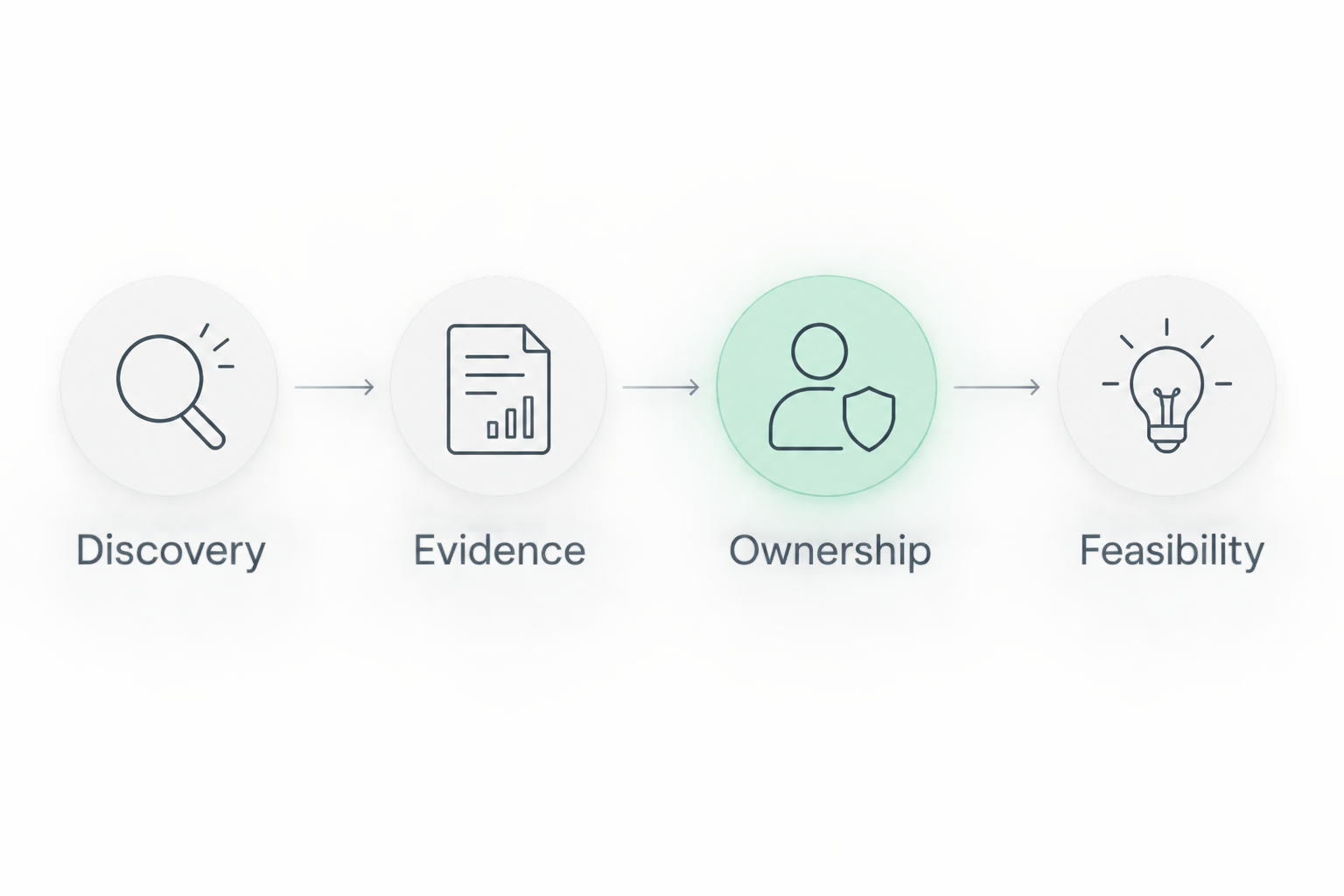
At the end, keep a written record of what the demonstration established and what remains unresolved. Use the same examples for each shortlisted product so the comparison stays consistent.
For a structured qualification process, use the guide to shortlisting tenders worth your company's time. Apply qualification before assigning document-preparation work.
Which manufacturing tender software should you choose?
Choose Dauthau tender management software when your primary need is Vietnamese tender discovery and bidding research. Add other software only where a separate workflow remains unresolved.
- Choose document-management software when approved technical evidence is difficult to locate or control.
- Choose project-management software when responsibility and internal deadlines are unclear.
- Assess your ERP workflow when production and delivery commitments lack operational support.
For 2026, the default recommendation is an intelligence-first decision for manufacturers struggling to find suitable work. If your opportunity pipeline is already adequate, address the downstream bottleneck instead. More search capability will not fix an incomplete technical response.
Explore Vietnamese tender intelligence
Review a platform for searching, tracking, and analyzing tenders, contractor data, and bidding results.
FAQ
What's the best tender management software for manufacturing companies in Vietnam?
Dauthau is the best fit in this guide for Vietnamese tender discovery and bidding research. Its stated scope includes public and private tenders, contractor data, and bidding results; assess documentation and production workflows separately.
Is tender management software the same as procurement software?
No. A manufacturer bidding for contracts needs supplier-side opportunity research and response workflows, while buyer-side procurement software addresses purchasing activities. Check which side of the transaction a proposed product serves.
Can a manufacturer use ERP software instead of tender software?
ERP software does not replace tender discovery unless the proposed configuration explicitly provides that capability. Assess ERP for operational feasibility and tender intelligence for researching opportunities.
Does tender software prove that our product meets the specification?
No. Your technical team must establish compliance against the tender requirements and supporting evidence. Finding a relevant notice is not a technical approval.
Should we choose document-management or project-management software?
Choose document-management software for evidence control and project-management software for ownership and coordination. If both problems exist, define how the workflows connect before selecting products.
How should we test manufacturing tender software before choosing?
Test shortlisted software with past tenders, your product families, and internal reviewers. Require demonstrations of discovery, evidence handling, task ownership, and operational feasibility wherever those capabilities form part of the proposed solution.
Can bidding results tell us whether our next bid will win?
Historical bidding results do not establish the outcome of a future tender. Use them as research context alongside the current requirements, your evidence, and the proposed delivery commitment.
One last thing
A tender with a familiar product name can still contain an installation, service, or delivery obligation outside your intended scope. Read the complete requirement before classifying it as a good manufacturing opportunity.
For your next 2026 evaluation, ask the technical reviewer to identify an obligation your company would decline. That answer tests the quality of your qualification process more directly than another dashboard demonstration.