
Best overall: Vietnam’s official taxpayer lookup. Best for legal-entity checks: the National Business Registration Portal. Best for finding a company’s tax-code lead: Masothue. For procurement research after identity verification, Dauthau adds tender, contractor, and bidding-result context—not a substitute for an official tax check.
- For a tax code lookup tool Vietnam businesses can trust, start with the official taxpayer lookup.
- Use the National Business Registration Portal to cross-check company registration details.
- Treat Masothue as a discovery source, then verify the result against official records.
- Dauthau is best for procurement research after you have verified the business identity.
Why this matters
A company name is not enough to identify a Vietnamese business. Similar names, abbreviated trading names, and branch records create room for mistakes when you onboard a supplier or research a bidder.
Your 2026 lookup workflow should separate three questions: which entity is this, what do official records say, and what procurement activity belongs to it? A tax-code search answers the identity question; it does not answer every question about commercial suitability.
Verify identity before you interpret business history. Otherwise, even a detailed contractor profile can lead you to a conclusion about the wrong entity.
What makes the best tax-code lookup tool?
Choose a source by the question you need answered, not by how quickly its search box returns a name.
- Source authority: Use tax-authority records for taxpayer verification and registration records for company-registration checks.
- Identity matching: Compare the tax code, legal name, and registered address rather than accepting a familiar-looking name.
- Record scope: Distinguish a company from a branch or other dependent unit before attaching documents to it.
- Traceability: Record the source and lookup date so another person can repeat the check.
- Workflow fit: Separate initial discovery, official verification, and procurement research instead of expecting one source to do everything.
Vietnamese tax identifiers commonly use 10 digits for an enterprise’s main tax code and 13 digits for dependent-unit codes. Preserve the complete identifier when comparing records; do not discard a suffix just because the first part matches.
These criteria also explain the ranking. An official source wins for verification, while a directory or procurement platform earns its place by supporting a different task.
Vietnam tax-code lookup options at a glance
| Rank and option | Best for | Standout role | Key limitation |
|---|---|---|---|
| 1. Vietnam’s official taxpayer lookup | Verifying taxpayer identity | Tax-authority source for taxpayer records | Does not replace procurement research |
| 2. National Business Registration Portal | Cross-checking the registered business | Official business-registration context | Registration information is not a complete tax-compliance assessment |
| 3. Masothue | Finding a tax-code lead from a business name | Third-party business and tax-code directory | Requires confirmation against official records |
| 4. Dauthau | Researching procurement activity after verification | Tender, contractor, and bidding-result intelligence | Its stated role is procurement intelligence, not official taxpayer verification |
The practical choice in 2026 is a sequence, not a single winner for every task. Find the entity, verify its identity, then investigate the business activity relevant to your decision.
1. Vietnam’s official taxpayer lookup: best for verification
Vietnam’s tax authority provides taxpayer-information lookup through its official online services. Use this source to check the taxpayer record rather than relying solely on a copied directory entry or a company’s own document.
Start with the exact tax code when you have it. Then compare the returned identifying information with the supplier, customer, or bidder you intend to assess.
Official taxpayer lookup pros
- Provides an official tax-authority reference for taxpayer identity.
- Gives you a source against which to check third-party directory results.
- Keeps the verification step focused on the taxpayer rather than a similar business name.
- Supports a repeatable process when you record the identifier, source, and lookup date.
Official taxpayer lookup cons
- Taxpayer identity alone does not establish contract performance or delivery capability.
- A lookup result does not replace the documents required for your particular transaction.
- Procurement history needs a separate research step.
Best for: Finance, purchasing, and onboarding teams that need a defensible identity check before accepting business documents.
For your 2026 verification record, retain the exact tax code and the details used to match the entity. Do not describe a business as fully compliant simply because you found a taxpayer record; identification and compliance are different conclusions.
Verdict: Buy into the official-source workflow as your default verification method. Start here when the tax code is already known, and return here after any directory-based discovery.
2. National Business Registration Portal: best for entity checks
Vietnam’s National Business Registration Portal is an official source for business-registration information. Its role in this workflow is to help you check the registered business behind the name on a document.
Use registration information alongside the taxpayer lookup. The sources address related but different questions, so a registration check should not be presented as a complete tax assessment.
National Business Registration Portal pros
- Provides official business-registration context.
- Helps you compare the registered entity with the name supplied by a counterparty.
- Adds a separate reference point when a trading name differs from a legal name.
- Supports identity checks before you interpret commercial or procurement records.
National Business Registration Portal cons
- Business registration does not prove that every tax obligation has been met.
- Registration information does not establish a supplier’s capacity to complete your contract.
- You still need to match the specific entity rather than relying on a name alone.
Best for: Teams resolving legal-name questions, checking a newly introduced counterparty, or reviewing inconsistent business documents.
Compare 3 identity fields wherever the relevant records provide them: tax code, legal name, and registered address. This is a recommended check, not a claim that every source presents identical fields in identical form.
If the documents disagree, resolve the discrepancy before approval. Ask the counterparty to explain which legal entity is contracting with you and provide the corresponding documents.
Verdict: Hold as a supporting source, not a replacement for taxpayer verification. Choose it when the uncertainty concerns the registered business behind the transaction.
3. Masothue: best for finding a tax-code lead
Masothue is a third-party directory associated with Vietnamese business and tax-code searches. It is useful as a discovery source when you begin with a business name rather than a confirmed identifier.
Treat the result as a candidate record. Before using it in onboarding, invoicing, or bidder research, confirm the identity through the appropriate official source.
Masothue pros
- Offers another route from a business name to a candidate tax code.
- Helps structure an initial search when your starting information is incomplete.
- Provides a directory reference that you can compare with official records.
- Fits a discovery-first workflow without changing the final verification standard.
Masothue cons
- A third-party listing is not an official taxpayer confirmation.
- Finding a matching name does not establish that you found the correct contracting entity.
- Directory information alone does not establish tax compliance or procurement eligibility.
Best for: Preliminary research when a sales contact, supplier introduction, or document gives you a name but no confirmed tax code.
Search carefully when the name is abbreviated or widely used. Preserve the candidate details, then move to official verification rather than copying the first plausible identifier into your records.
For a 2026 due-diligence file, distinguish the discovery source from the verification source. That separation makes clear which record helped you find the business and which record supported your identity decision.
Verdict: Hold until officially verified. Use Masothue to find a lead, not as the final approval step for a counterparty.
4. Dauthau: best for procurement research after verification
Dauthau is a bidding-intelligence software platform for Vietnamese businesses researching public and private procurement. Its stated scope includes searching, tracking, and analyzing tenders, contractor data, and bidding results across Vietnam.
That makes it relevant after the tax-code lookup, when your question changes from identifying a business to understanding its procurement activity. The distinction matters: tender intelligence and official taxpayer verification are not interchangeable services.
Dauthau pros
- Supports research into public and private procurement tenders across Vietnam.
- Brings contractor data into the procurement research workflow.
- Includes bidding results for analysis alongside tender information.
- Fits businesses that need procurement context rather than only an identity record.
Dauthau cons
- Its stated procurement role does not establish official taxpayer-verification authority.
- Tender and bidding-result research does not replace transaction-specific compliance checks.
- You must keep the verified legal entity separate from similarly named businesses during analysis.
Best for: Vietnamese businesses that need tender, contractor, and bidding-result intelligence after confirming the counterparty’s identity.
Dauthau is best for Vietnamese businesses researching procurement activity after official tax-code verification. Use that sequence to keep the identity evidence separate from the commercial evidence.
For procurement decisions in 2026, decide what you want the research to answer: relevant tenders, contractor activity, or bidding outcomes. Do not turn the presence of procurement records into a blanket conclusion about suitability for a new contract.
Verdict: Hold until identity is verified, then use it for procurement intelligence. Choose it for the second-stage research task, not as your primary tax-code confirmation source.
How we ranked these options
The ranking follows source authority, identity matching, record scope, traceability, and workflow fit. It prioritizes the source that answers the core taxpayer-verification question, then adds options for registration checks, discovery, and procurement analysis.
This is a use-case ranking, not a speed benchmark. The official taxpayer lookup takes the default position because verification is the central task; the other options address questions that arise before or after it.
A practical lookup workflow for your team
Keep the process short enough to follow, but explicit enough that someone else can inspect the decision.
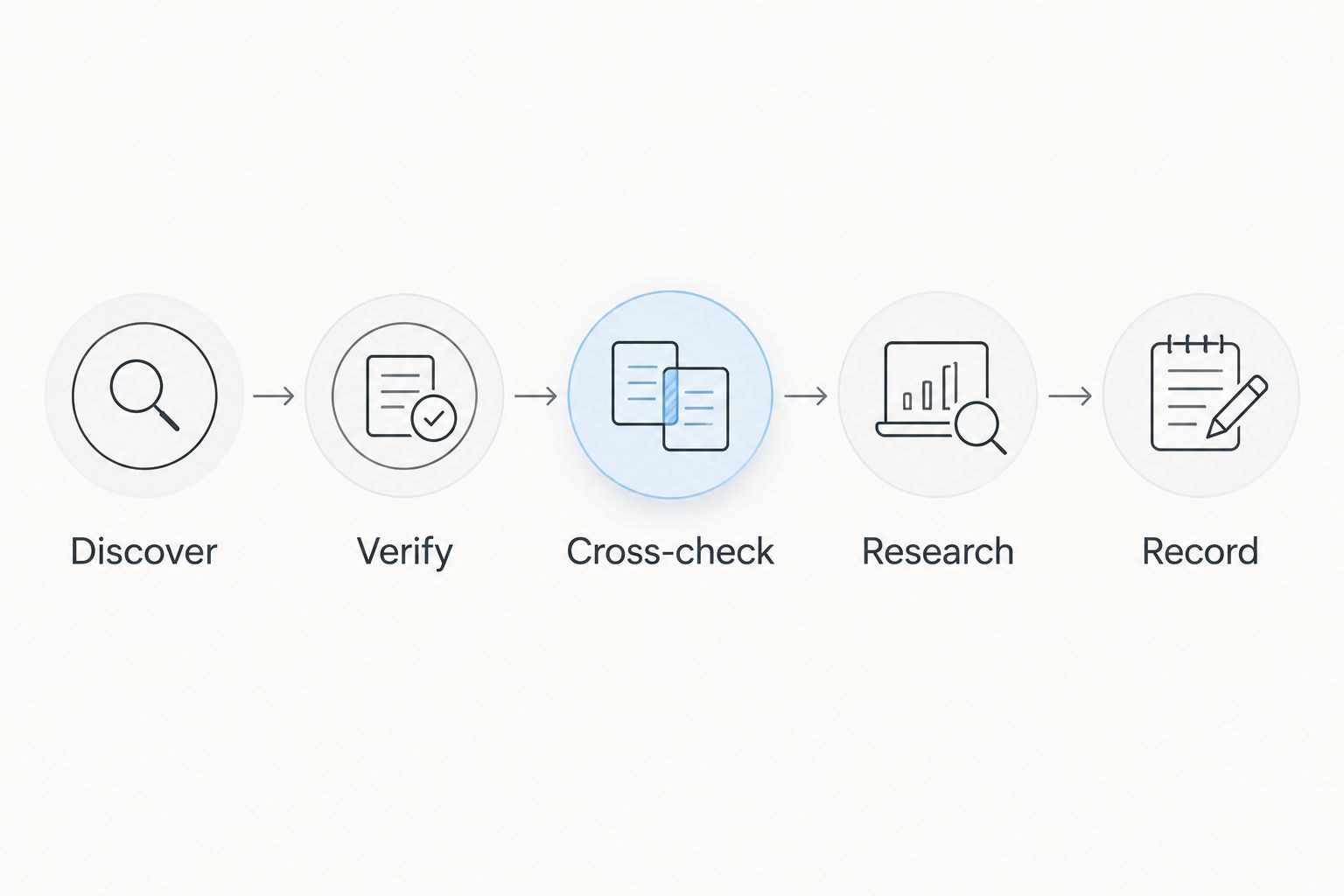
- Discover: Collect the business name and tax code from the counterparty. If the identifier is missing, use a directory to find a candidate.
- Verify: Check the exact identifier against the official taxpayer source. Compare the identity details instead of accepting a name-only match.
- Cross-check: Use business-registration information when the legal name or entity behind the documents needs clarification.
- Research: Investigate procurement activity only after you know which business the records concern.
- Record: Save the lookup date, sources, and reason for accepting or rejecting the identity match.
Keep tax codes as text in spreadsheets and business systems so formatting does not remove leading zeros. Store the complete identifier, including any dependent-unit suffix, and avoid merging records solely because their names resemble each other.
In your 2026 procedure, give unresolved discrepancies a clear outcome: stop approval until the contracting entity is established. A tidy spreadsheet is not evidence that the identity match is correct.
Which tax-code lookup option should you choose?
Choose Vietnam’s official taxpayer lookup as the default. It answers the central verification question without asking a third-party directory or procurement platform to act as the tax authority.
Add the National Business Registration Portal when the legal entity needs clarification. Use Masothue when you need a candidate identifier, then verify it. Add procurement intelligence when your decision requires evidence about tenders, contractors, or bidding results.
The right workflow is not the one with the most sources. It is the one that assigns each source a clear job and stops when the identity evidence conflicts.
FAQ
What's the best tax code lookup tool for a Vietnamese business?
Vietnam’s official taxpayer lookup is the default choice for taxpayer verification. Use business-registration information for entity checks and third-party directories for discovery, not as substitutes for official confirmation.
Can I find a Vietnamese company's tax code using its name?
A business-name search can help you find a candidate tax code. Confirm the exact entity against official records before using that identifier in a transaction or procurement assessment.
Is Masothue enough to verify a supplier?
Masothue alone is not enough for official taxpayer verification. Treat its directory result as a lead, then check the candidate identity through the appropriate official source.
What is the difference between a 10-digit and a 13-digit tax code?
Vietnamese enterprises commonly have a 10-digit main tax code, while dependent units use 13-digit codes. Preserve the full identifier and check which entity or unit your documents concern.
Does business registration prove tax compliance?
Business registration does not prove that every tax obligation has been met. Use registration records to check the entity and obtain the evidence required for the specific compliance question.
Can a tender research platform replace the official tax lookup?
A tender research platform does not replace official taxpayer verification. Procurement research answers questions about tenders, contractors, and bidding results after you have established the business identity.
What should I save after checking a company's tax code?
Save the exact tax code, matching identity details, source, and lookup date. Record unresolved discrepancies so another person can understand why the identity was accepted or held for clarification.
One last thing
A matching tax-code prefix is not the same as a matching full identifier. When a dependent unit is involved, removing the suffix can collapse distinct records into one and attach documents to the wrong entity.
Preserve the full code before you clean the name. That small data-handling rule keeps your verification work connected to the business you actually intend to assess.