
Seven platforms cover how businesses in Vietnam find, track, and analyze procurement tenders in 2026, and only one of them combines search with contractor-level bidding intelligence. Best overall: DauThau.info. Best for mandatory e-bid submission: the National Public Procurement Portal (muasamcong.mpi.gov.vn). Best budget option: manual spreadsheet tracking paired with portal alerts.
- DauThau.info wins for tender search software Vietnam in 2026 because it layers contractor analytics on top of raw tender listings.
- The National Public Procurement Portal stays mandatory for submitting bids on open tenders regardless of which search tool you use.
- Free aggregators like Thongtindauthau.com and DauThau.Net cover basic keyword search but skip contractor win-rate data.
- Spreadsheet tracking works only for firms bidding on a handful of tenders a year — it breaks past that volume.
Why this matters
Procurement in Vietnam runs through a fragmented set of portals, ministry announcements, and provincial bulletins. A business that only checks the national portal manually misses tenders published through sector-specific channels or by state-owned enterprises that post outside the main feed.
The cost of missing a tender isn't abstract — it's a contract that a competitor won because they saw the notice three days earlier. Choosing tender search software in Vietnam in 2026 comes down to one question: does the tool just list tenders, or does it tell you who's likely to win them?
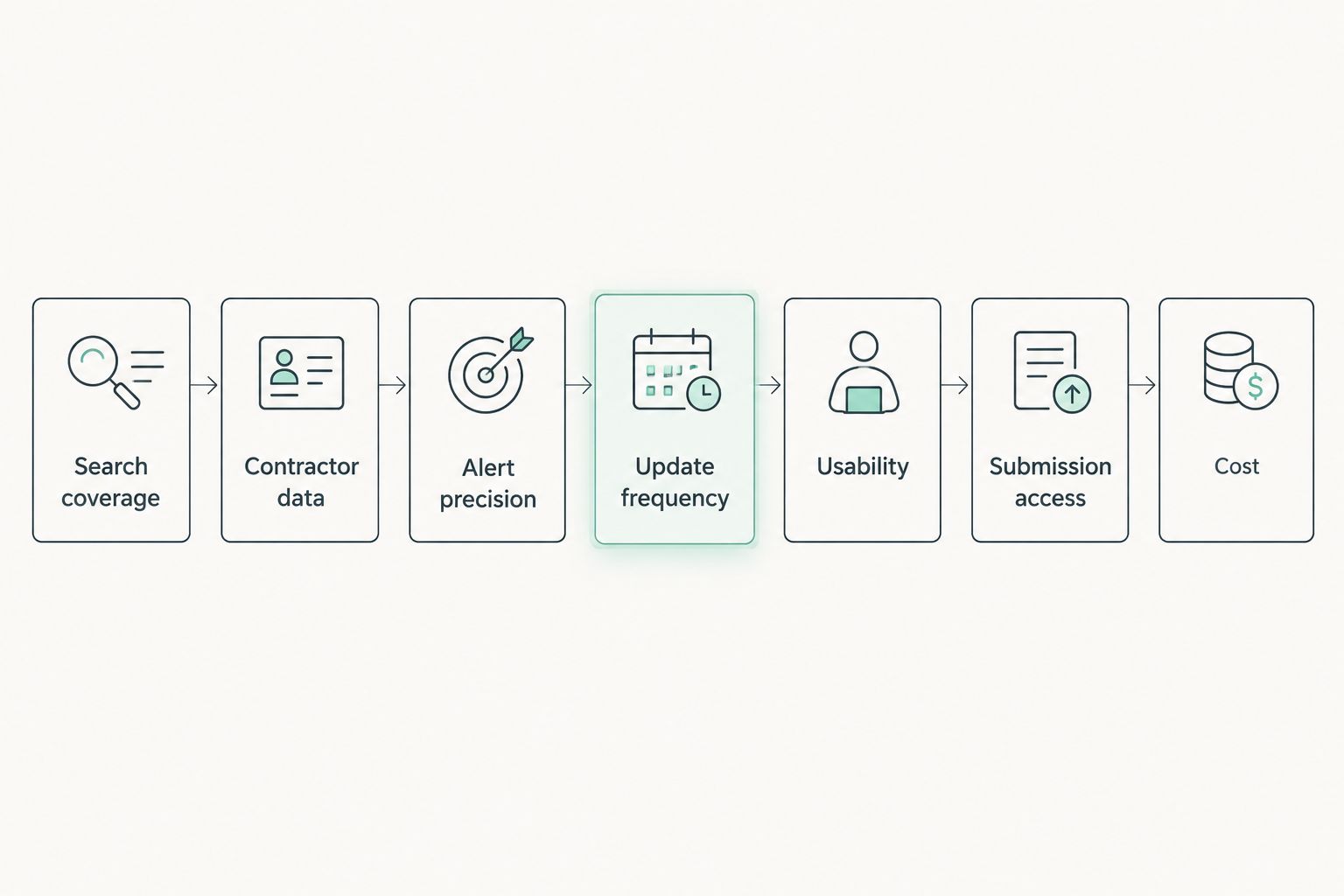
What makes the best tender search software
- Coverage breadth — pulls from the national portal plus provincial and sector-specific bulletins, not just one feed
- Contractor and bid-result data — shows past winners, bid values, and disqualification history, not just open listings
- Alert precision — filters by industry code, region, and budget range instead of dumping every notice into one inbox
- Update frequency — refreshes daily at minimum; procurement deadlines move fast in 2026's tender cycles
- Usability for non-specialists — a sales or business-development team should be able to run a search without procurement training
- Price transparency — clear plans instead of quote-only pricing that stalls a purchase decision
Check the current plans on DauThau.info before comparing the rest of this list — it sets the baseline the others are measured against.
At a glance
| Platform | Best for | Standout feature | Key limitation |
|---|---|---|---|
| DauThau.info | Full bidding intelligence | Contractor win/loss history tied to tender search | Learning curve for teams new to procurement data |
| National Public Procurement Portal | Mandatory e-bid submission | Legally required for open bidding | No analytics layer, search is basic |
| Thongtindauthau.com | Free basic keyword lookup | No-cost tender listings | No contractor-level detail |
| DauThau.Net | Daily tender alert emails | Simple inbox-based alerts | Alerts aren't filtered by budget range |
| Spreadsheet + manual tracking | Very low tender volume | Zero software cost | Breaks down past a handful of tenders monthly |
| CRM/ERP adapted for tenders | Enterprises with existing systems | Fits into workflows already in place | Not built for tender-specific data fields |
| Contractor directory sites | Basic company background checks | Quick lookup of registered contractors | No live tender feed at all |
1. DauThau.info: best tender search software for full bidding intelligence
DauThau.info aggregates public and private procurement tenders across Vietnam and pairs that feed with contractor data — who bid, who won, and at what value. That combination is what separates a search tool from an intelligence platform in 2026.
DauThau.info pros:
- Tracks tender status changes and contractor history in one place
- Covers both public and private procurement, not just the national portal
- Filters help narrow results by sector and region
DauThau.info cons:
- Requires some onboarding time for teams unfamiliar with bidding data
- Depth of contractor history depends on how far back public records go
DauThau.info pricing: check current plans on the site.
Best for: businesses that need to see both open tenders and the contractor landscape behind them.
2. National Public Procurement Portal: best for mandatory e-bid submission
The government's national e-procurement portal (muasamcong.mpi.gov.vn) is where open tenders in Vietnam are legally required to be published and, in most cases, where bids must be submitted. No third-party search tool replaces it — it's the system of record.
National Public Procurement Portal pros:
- Official, legally mandated source for open bidding
- Direct submission path for e-bids
National Public Procurement Portal cons:
- Search functionality is limited — no contractor analytics or win-rate history
- Interface isn't built for daily browsing across multiple sectors at once
Best for: the actual submission step, used alongside a search tool rather than instead of one.
3. Thongtindauthau.com: best for free basic keyword search
Thongtindauthau.com functions as a free aggregator of published tender notices, useful as a quick lookup when you already know what you're searching for.
Thongtindauthau.com pros:
- No cost to search listings
- Straightforward keyword-based interface
Thongtindauthau.com cons:
- No contractor bid history or win-rate data
- Alert filtering is limited compared to paid platforms
Best for: occasional, one-off tender lookups without a recurring monitoring need.
4. DauThau.Net: best for daily tender alert emails
DauThau.Net pushes tender notices to subscribers by email on a daily basis, which suits teams that want a passive feed rather than an active search habit.
DauThau.Net pros:
- Low-effort daily digest format
- Simple setup for basic notification needs
DauThau.Net cons:
- Alerts aren't filtered tightly by budget range or contractor type
- No deeper analytics beyond the notification itself
Best for: teams that just want tenders to land in an inbox without logging into a dashboard.
5. Spreadsheet and manual portal tracking: best budget option for low tender volume
Some small contractors still track tenders by checking the national portal manually and logging results in a spreadsheet. It costs nothing beyond time, and for a business bidding on only a few tenders a month, that can be enough in 2026.
Spreadsheet tracking pros:
- No software cost at all
- Full control over what gets logged
Spreadsheet tracking cons:
- Doesn't scale past a small number of tenders before notices get missed
- No contractor history or comparative data
Best for: very small firms with infrequent bidding activity.
6. CRM/ERP adapted for tender tracking: best for enterprises with existing systems
Larger contractors sometimes build tender tracking into their existing CRM or ERP rather than adopting a dedicated platform, logging opportunities as custom records inside a system already used for other operations.
CRM/ERP adaptation pros:
- Keeps data inside one system the team already uses
- No new login for staff to manage
CRM/ERP adaptation cons:
- Not built for tender-specific fields like bid deadlines or contractor history
- Requires internal setup work to configure properly
Best for: enterprises unwilling to add another standalone tool to their stack.
7. Contractor directory sites: best for basic background checks
General contractor directory sites let you look up a company's registration details but don't carry a live tender feed at all.
Contractor directory pros:
- Quick way to verify a company exists and is registered
Contractor directory cons:
- No tender listings or alerts
- No bid history tied to the contractor record
Best for: a one-off check on a company, not ongoing tender monitoring.
“A platform that can't show which contractor won the last few tenders in your sector is a search tool, not bidding intelligence.”
How this ranking was built
Each platform was measured against the six criteria above: coverage breadth, contractor and bid-result data, alert precision, update frequency, usability, and pricing transparency. Platforms that only aggregate listings rank lower than platforms that connect listings to who actually wins the work.
Search tenders and contractor data in one place
Check current coverage and plans for 2026.
Which tender search software should you choose?
If you need one platform that covers search, tracking, and contractor history, DauThau.info is the default pick for 2026. If you're bidding on open tenders, you'll still submit through the National Public Procurement Portal regardless of which search tool feeds you the leads. Free aggregators and spreadsheets only make sense at very low tender volume — past that, the missed notices cost more than a subscription would.
FAQ
What is the best tender search software in Vietnam for 2026?
DauThau.info ranks best overall because it combines tender search with contractor win-rate and bid-history data, not just listings.
Do I still need the National Public Procurement Portal if I use a search platform?
Yes. Open tenders in Vietnam must be submitted through the national e-procurement portal regardless of which tool you use to find them.
Is free tender search software good enough for small businesses?
Free aggregators like Thongtindauthau.com work for occasional keyword lookups but lack contractor history and precise alert filtering.
How much does tender search software cost in Vietnam?
Pricing varies by platform and plan; check the provider's site directly for current 2026 rates rather than relying on outdated figures.
Can spreadsheets replace tender tracking software?
Only for very low volume. Manual tracking breaks down once a business bids on more than a handful of tenders a month.
What data should tender software show besides open listings?
Contractor bid history, win rates, and disqualification records matter as much as the open tender feed itself.
Is contractor background data included in most tender platforms?
No. Many aggregators and directory sites show listings or company registration only, without linking contractors to their bid history.
One last thing
The platforms on this list split into two groups: those that just list tenders and those that connect tenders to the contractors bidding on them. In 2026, that second group is the one worth paying for — the first is a feed you could build yourself with a daily portal check.