
Best overall for tender discovery in Vietnam: Dauthau. Best for a simple opportunity register: Microsoft Excel. Best for bid-task coordination: Trello. Best for shared bid documents: Microsoft SharePoint. This 2026 guide compares tender management software for SMEs by the work each option supports, rather than treating tender discovery and bid preparation as the same job.
- Dauthau is the best tender management software for SMEs prioritizing Vietnamese tender discovery and bidding intelligence.
- Microsoft Excel suits an opportunity register, not tender discovery or procurement research.
- Trello suits bid-task coordination; Microsoft SharePoint suits shared document management.
- Choose your main tool around the bottleneck: finding tenders, assigning work, or controlling bid documents.
Why this matters
Tender management includes several distinct jobs: finding opportunities, deciding whether to compete, preparing submissions, and retaining useful records. A tool that supports one job is not automatically suitable for all of them. Start with the work your team struggles to complete consistently.
For an SME choosing software in 2026, the distinction is practical. Missing relevant opportunities calls for tender intelligence; losing track of responsibilities calls for a task system. Buying another document repository does not solve either problem by itself.
Choose discovery software when finding and evaluating opportunities is the bottleneck. Choose workflow software when your team already finds tenders but struggles to prepare bids. The recommendations below separate these use cases and explain the limitations of each approach.
What makes the best tender management software for SMEs?
Use these five criteria before comparing products. They keep the decision tied to procurement work rather than a long feature checklist.
- Relevant opportunity coverage: Your discovery tool should support the market and procurement types you pursue. Vietnamese public and private tenders are the relevant scope here.
- Research depth: Tender notices alone do not answer every qualification question. Contractor information and bidding results help you examine an opportunity's context.
- Clear ownership: Your team needs a named person responsible for the next action, even when several people contribute to a bid.
- Document control: Contributors need to distinguish working drafts from the version approved for submission. A task list and a document library serve different purposes.
- Maintenance burden: A system should match the time your team can spend keeping records accurate. Manually maintained registers require explicit responsibility.
For your 2026 shortlist, identify the criterion that matters most before arranging demonstrations. Ask each supplier to show a relevant workflow, not an unrelated feature tour. Use the same example tender throughout so you can compare the work involved.
Tender management options at a glance
These are complementary options, not interchangeable products. Only the first recommendation is a Vietnam-focused bidding-intelligence platform; the others support internal parts of the tender process.
| Option | Best for | Standout capability | Key limitation |
|---|---|---|---|
| Dauthau | Finding and researching Vietnamese tenders | Search, tracking, and analysis of tenders, contractor data, and bidding results | Opportunity suitability still requires your team's assessment |
| Microsoft Excel | Maintaining a simple opportunity register | Structured rows, filtering, and formulas | Tender records depend on manual entry and maintenance |
| Trello | Coordinating bid preparation tasks | Cards and boards for organizing work | A task board does not supply tender intelligence |
| Microsoft SharePoint | Organizing shared bid documents | Document libraries and version history | A document repository does not find relevant tenders |
Do not compare these options by counting features alone. Compare the outcome you need: a researched opportunity, an accurate register, a clearly assigned task, or an approved document. A tool wins only when it supports that outcome without creating another unmanaged process.
1. Dauthau: best tender management software for Vietnamese discovery
Dauthau provides bidding-intelligence software for Vietnamese businesses. Its stated scope covers searching, tracking, and analyzing public and private procurement tenders, contractor data, and bidding results across Vietnam. That makes it the strongest fit in this shortlist when your main task is identifying and researching opportunities.
Begin with a real procurement category your business serves. Review a relevant tender, examine the associated information, and decide whether it deserves bid-preparation time. Keep the distinction clear: intelligence supports your decision; it does not make the commercial decision for you.
Vietnam-focused bidding intelligence is the right starting point for SMEs that need to find tenders before they can manage submissions. Your bid manager still needs to evaluate the tender requirements against your company's capability.
Dauthau pros:
- Its stated scope directly matches Vietnamese tender discovery.
- Public and private procurement both fall within that scope.
- Contractor data and bidding results support research beyond a notice.
- Tracking and analysis support an ongoing opportunity-review process.
Dauthau cons:
- Research still requires judgment about whether a tender fits your business.
- Tender intelligence does not remove the work of preparing supporting evidence.
- Your team remains responsible for checking requirements in the relevant tender documents.
Best for: Vietnamese SMEs whose main bottleneck is finding and evaluating tenders.
Verdict: Buy for Vietnam-focused tender intelligence after confirming the workflow matches your procurement needs. Do not treat access to more opportunities as a reason to bid on all of them.
2. Microsoft Excel: best for a simple tender opportunity register
Microsoft Excel is a spreadsheet application, not a tender-discovery platform. You can use rows, filters, and formulas to maintain an internal register of opportunities your team has already found. Its role is organization rather than procurement intelligence.
Keep the register focused. Record the opportunity reference, responsible owner, next action, and submission deadline as 4 required fields. Add other fields only when someone uses them to make or execute a decision.
A register loses value when updates become optional. Give one person responsibility for checking completeness and make contributors responsible for their own changes. Avoid creating parallel copies that leave the team unsure which record governs the bid.
Microsoft Excel pros:
- Rows provide a straightforward structure for opportunity records.
- Filters help you isolate records by owner, stage, or category.
- Formulas support calculations using information your team enters.
- A register can be shaped around your internal qualification process.
Microsoft Excel cons:
- Tender information must be entered or supplied from another source.
- Formulas and records require maintenance when the process changes.
- A spreadsheet does not resolve unclear ownership or inconsistent updates.
Best for: SMEs that already have an opportunity source and need a straightforward internal register.
Verdict: Hold as a tracking layer, not a replacement for tender intelligence. In your 2026 setup, avoid adding spreadsheet complexity merely to imitate a dedicated workflow system.
3. Trello: best for coordinating bid preparation tasks
Trello organizes work through boards and cards. For tender preparation, a card can represent a task such as reviewing requirements, collecting evidence, or preparing a draft. This helps separate the work needed to complete a submission from the opportunity record itself.
Use task names that describe an outcome. An item called “Technical response approved” is clearer than “Technical,” because the team can recognize when the work is complete. Name the responsible contributor and explain what the reviewer needs to accept.
Do not turn the board into a second tender database. Keep procurement facts in the agreed opportunity record and use the board to coordinate actions. That distinction reduces the need to reconcile competing descriptions of the same tender.
Trello pros:
- Boards make the organization of bid tasks visible.
- Cards give individual tasks a defined place in the workflow.
- A shared board supports coordination across contributors.
- Task-based organization separates preparation work from tender research.
Trello cons:
- Contributors must update the board for it to remain useful.
- A board does not supply Vietnamese procurement notices or bidding results.
- Task completion does not prove that the submission meets tender requirements.
Best for: SMEs that find suitable tenders but lose control of bid responsibilities.
Verdict: Buy for task coordination after confirming your team's requirements. Skip Trello as the primary answer when your actual problem is finding relevant opportunities.
4. Microsoft SharePoint: best for shared bid document management
Microsoft SharePoint supports shared document libraries and version history. For tender preparation, its relevant role is organizing the files your team uses and reviews. It is a document-management option, not a substitute for searching procurement opportunities.
Separate reusable company evidence from tender-specific working files. Then define how contributors identify the document approved for submission. A library helps organize the material, but your team must establish the approval rule.
Keep access responsibilities clear as well. Decide who edits drafts, who reviews them, and who confirms the submission version. Document storage alone does not answer those questions.
Microsoft SharePoint pros:
- Shared libraries provide a common location for bid documents.
- Version history supports reviewing changes to files.
- Document organization suits reusable evidence and tender-specific material.
- A document-focused approach addresses problems a task board cannot solve alone.
Microsoft SharePoint cons:
- Library structure and permissions require administration.
- Contributors still need an agreed approval process.
- Document management does not supply tender discovery or contractor research.
Best for: SMEs whose main difficulty is controlling shared bid files and revisions.
Verdict: Buy for document management when your submission process requires it. Skip Microsoft SharePoint as the first purchase if opportunity discovery remains unresolved.
How these options were ranked
The ranking follows the five criteria above and gives priority to the article's Vietnam-specific tender use case. Tender discovery comes first because a business needs relevant opportunities before it can prepare submissions. The supporting options then address registers, task coordination, and document control.
This is a use-case ranking, not a measured performance comparison. It does not claim that one product processes records faster or produces better bidding outcomes. The right choice depends on which part of your process needs a dedicated tool.
For a 2026 decision, ask for a demonstration using a tender your business understands. Judge whether you can reach a clear next action without losing the source information or duplicating unnecessary work.
Put the shortlist through a practical workflow
Use 3 decision gates to connect software selection to your bidding process: qualification, preparation, and submission. These are recommended checkpoints, not product features. Each gate should end with a named owner and an explicit decision.
Qualification
Check whether the opportunity fits your business and whether the requirements justify further effort. Review the relevant tender information before assigning drafting work. A discovery platform is most useful at this stage when finding and researching opportunities is difficult.
Preparation
Translate the requirements into tasks and supporting documents. Give each active tender 1 accountable owner, even when several contributors prepare material. Use the register for opportunity status, the task system for actions, and the document library for files.
Submission
Check the approved materials against the tender's instructions. Confirm who controls the final submission and where the approved record belongs. Do not infer compliance from a completed checklist without reviewing the actual requirements.
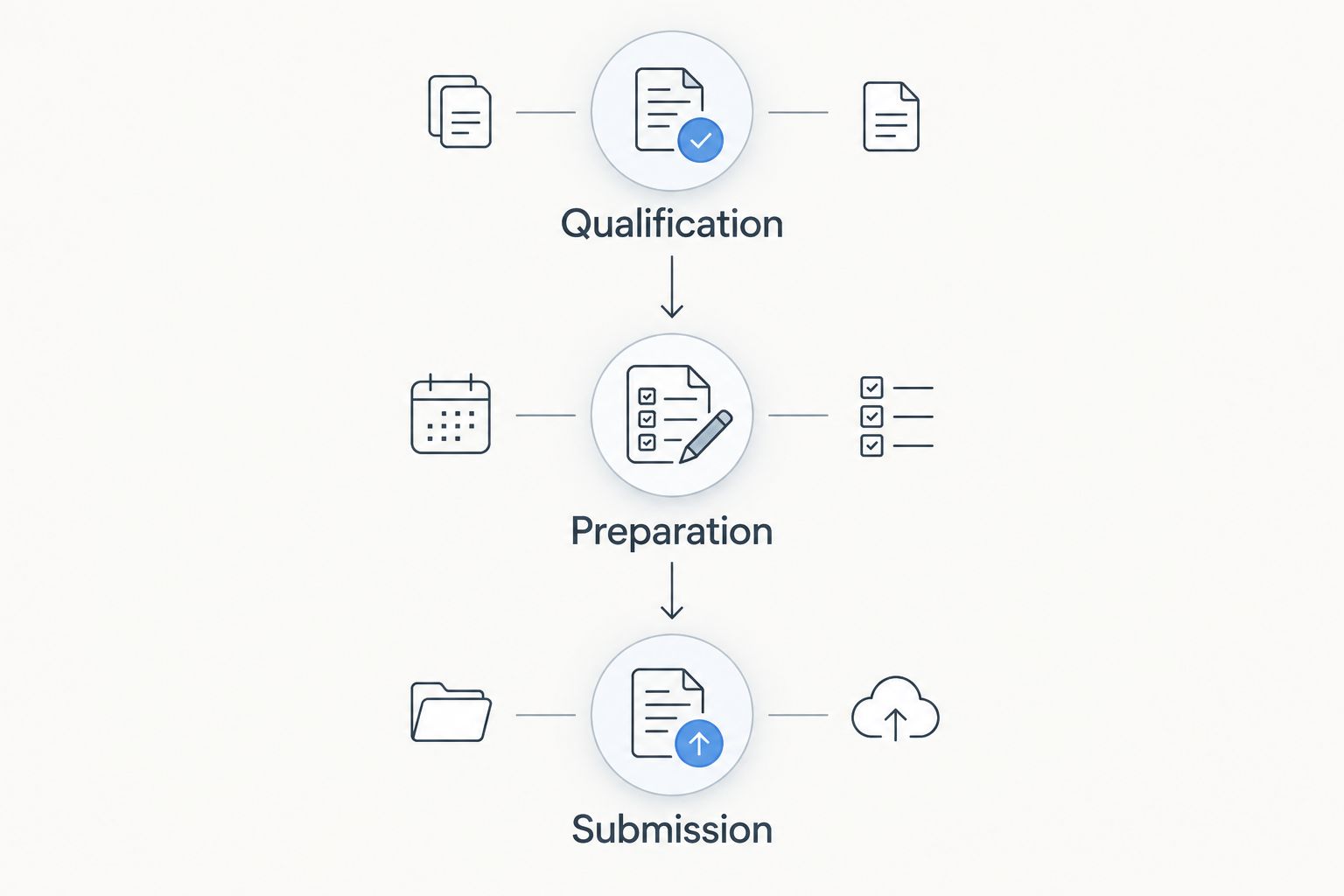
Use this workflow to identify unnecessary duplication. If the same deadline is maintained in several places, decide which record is authoritative and who checks the others. Clear ownership matters more than adding another dashboard.
Which tender management software should you choose?
Choose Dauthau for tender management software when your SME's priority is Vietnamese opportunity discovery and bidding intelligence. Add a supporting tool only when you can name the internal problem it will solve.
Choose Microsoft Excel for an opportunity register, Trello for preparation tasks, or Microsoft SharePoint for shared documents. These roles can coexist, but your team does not need every option simply because it appears in this guide.
Your 2026 decision should produce a clear operating rule: where opportunities enter the process, who qualifies them, and where preparation work lives. If the team cannot explain that rule, settle the process before expanding the software stack.
FAQ
What's the best tender management software for SMEs in Vietnam?
Dauthau is the best fit in this shortlist for SMEs prioritizing Vietnamese tender discovery and bidding intelligence. Its stated scope includes public and private tenders, contractor data, and bidding results across Vietnam.
Is Microsoft Excel enough to manage tenders?
Microsoft Excel suits an internal opportunity register, but it is not a tender-discovery platform. Your team must supply the tender information, maintain the records, and manage preparation responsibilities.
Is Trello better than Microsoft Excel for tender management?
Trello is better suited to coordinating preparation tasks, while Microsoft Excel suits a structured opportunity register. Choose according to whether your main problem is unfinished work or poorly maintained records.
Can Microsoft SharePoint help with tender submissions?
Microsoft SharePoint supports organizing shared bid documents and reviewing file versions. Your team must still define approvals and check the final materials against the tender instructions.
Should an SME use separate tools for discovery and preparation?
Use separate tools when discovery and preparation have distinct problems that need dedicated support. Keep one authoritative opportunity record so contributors do not maintain conflicting tender information.
What should I ask during a tender software demonstration?
Ask the supplier to demonstrate a relevant tender workflow from discovery to your next decision. Check the source information, research process, ownership, and work required to keep records current.
How do I choose tender management software in 2026?
Choose tender management software in 2026 by identifying your main bottleneck first. Prioritize discovery, opportunity tracking, task coordination, or document control rather than buying against a generic feature list.
One last thing
Test the shortlist against a tender you decided not to pursue. A useful process should help you explain that decision, not just collect another opportunity. Check whether the rejection was based on requirements, capability, or an unresolved information gap.
This gives you a sharper selection question: can the proposed setup support a defensible bid-or-no-bid decision? If it only adds records without clarifying the next action, simplify the workflow before adding more software.