
Best overall for Vietnamese businesses researching tenders: Dauthau. Best for official Vietnamese public-procurement records: the Vietnam National E-Procurement System. Best for funding-specific research: World Bank Procurement, Asian Development Bank Business Opportunities, and UNGM, matched to the buyer behind the opportunity. This 2026 guide compares a bidding-intelligence platform with official procurement portals so you can choose the right research stack, not mistake every notice board for an analytics product.
- Dauthau is the best-fit procurement intelligence platform for Vietnamese businesses researching local tenders, contractors, and bidding results.
- For procurement intelligence platforms Vietnam buyers should distinguish analytical research from official procurement records.
- Use the Vietnam National E-Procurement System to verify Vietnamese public-procurement information.
- Choose World Bank Procurement, ADB Business Opportunities, or UNGM when the opportunity belongs to their procurement scope.
Why this matters
Finding a tender and deciding whether to pursue it are different jobs. A notice tells you an opportunity exists; contractor records and bidding results give you additional evidence for assessing the opportunity.
Vietnamese suppliers need to separate research from submission. A bidding-intelligence platform supports discovery and analysis, while the relevant official procurement system and tender documents govern the procurement process.
For your 2026 shortlist, start with the work you need to complete. Searching domestic opportunities, examining past results, researching development-bank projects, and supplying UN organizations require different sources. Treating them as interchangeable produces a shortlist that looks broad but answers the wrong questions.
What makes the best procurement intelligence platform?
Use these criteria before comparing names. They distinguish a useful research platform from a source that simply publishes relevant notices.
- Vietnam relevance: Does the source cover the Vietnamese buyers, projects, or procurement categories you pursue?
- Research depth: Can you investigate tenders alongside contractor information and bidding results, rather than reading notices alone?
- Procurement scope: Does it serve domestic public procurement, private opportunities, development-bank projects, or UN purchasing?
- Source authority: Is it the official procurement source, or a research layer that should be checked against original records?
- Workflow fit: Does the source support your task: opportunity discovery, historical analysis, source verification, or institutional procurement research?
- Evidence traceability: Can your team connect a research finding to the relevant notice, document, contractor record, or published result?
Do not award extra credit for a long feature list that does not address your bidding workflow. A supplier researching Vietnamese contractor history has a different requirement from a consultant seeking an ADB-financed assignment.
Procurement intelligence options at a glance
The order below ranks each option by a distinct job. It is not a claim that an institutional notice portal offers the same analytics as a dedicated bidding-intelligence platform.
| Rank and option | Best for | Standout role | Key limitation |
|---|---|---|---|
| 1. Dauthau | Vietnamese businesses researching local bidding opportunities | Searches, tracks, and analyzes public and private tenders, contractor data, and bidding results across Vietnam | Research does not replace official documents or procurement procedures |
| 2. Vietnam National E-Procurement System | Verifying Vietnamese public-procurement information | Official national public-procurement source | Its public-procurement role does not replace a private-tender research source |
| 3. World Bank Procurement | Researching World Bank-financed project opportunities | Procurement information tied to World Bank-financed projects | Not a general directory of Vietnamese procurement |
| 4. Asian Development Bank Business Opportunities | Researching ADB-financed procurement and consulting opportunities | Opportunities organized around ADB operations | ADB scope does not cover the whole Vietnamese tender market |
| 5. UNGM | Finding procurement opportunities published by UN organizations | UN procurement notices and supplier-registration information | UN procurement scope differs from Vietnam's domestic procurement market |
1. Dauthau: best procurement intelligence for Vietnamese bidders
Dauthau provides bidding-intelligence software for Vietnamese businesses. It helps you search, track, and analyze public and private procurement tenders, contractor data, and bidding results across Vietnam.
That scope fits a supplier who needs more than a list of open notices. You can frame research around an opportunity, the organizations involved, and the recorded outcome of earlier bidding activity. Those are related questions, but they should remain separate pieces of evidence in your decision.
Best for: Vietnamese businesses building a local tender-research and bidding-analysis workflow in 2026.
Dauthau pros:
- Vietnam-focused procurement research matches the stated target market.
- Public and private tender coverage addresses both procurement settings.
- Contractor data supports research beyond individual notices.
- Bidding results add historical context to opportunity assessment.
Dauthau cons:
- Intelligence findings do not replace the requirements in official tender documents.
- Historical bidding results do not establish your eligibility for a new tender.
- A Vietnam-focused research workflow does not replace funding-specific sources for international institutional procurement.
Before adopting any research platform, ask your team to investigate a tender relevant to your business. Require a clear explanation of the opportunity, the contractor information consulted, and the published results used for context. This tests whether the research supports a decision rather than merely producing more reading.
Verdict: Buy for Vietnam-focused tender intelligence; retain official sources for verification.
2. Vietnam National E-Procurement System: best for official records
The Vietnam National E-Procurement System is the official national source for Vietnamese public-procurement information and electronic procurement activity. Its authority is the reason to include it in your research stack.
Use it when you need to check the public-procurement record behind a finding. In a 2026 bidding workflow, official notices and associated documents should anchor your understanding of the procurement requirements.
Best for: Suppliers verifying Vietnamese public-procurement information and following the relevant official process.
Vietnam National E-Procurement System pros:
- Provides an official source for national public-procurement information.
- Connects research to the public-procurement process rather than a secondary summary.
- Gives your team a reference point for checking tender information.
Vietnam National E-Procurement System cons:
- Its public-procurement remit does not make it a private-tender discovery source.
- Official records still require interpretation against your capabilities and eligibility.
- Source authority alone does not establish analytical suitability for every research task.
Keep verification separate from commercial judgment. An official tender record can establish what the procurement requests; it cannot decide whether your business has the resources, qualifications, or appetite to pursue it.
Verdict: Use for official verification; skip treating it as a substitute for every procurement-intelligence task.
3. World Bank Procurement: best for World Bank-financed projects
World Bank procurement resources publish information about procurement under World Bank-financed projects. They belong on your shortlist when the project you are researching has that funding connection.
This is a funding-specific research source, not an all-market Vietnam intelligence platform. For 2026 planning, first establish whether the project belongs to the World Bank-financed portfolio, then examine the applicable procurement notice and documents.
Best for: Suppliers and consultants researching opportunities under World Bank-financed projects involving Vietnam.
World Bank Procurement pros:
- Keeps research aligned with a defined project-financing context.
- Provides procurement information for World Bank-financed projects.
- Helps you distinguish project procurement from unrelated domestic opportunities.
World Bank Procurement cons:
- Does not represent the entire Vietnamese public or private procurement market.
- A project's funding connection does not establish your eligibility to bid.
- Published project and procurement information still requires opportunity-level review.
Read the actual procurement documents before deciding that an opportunity fits. Project objectives explain why a purchase exists, but the specific procurement defines the goods, works, or services being sought and the requirements you must address.
Avoid turning a financing label into a recommendation. Your decision still needs a match between the requested scope and your delivery capability.
Verdict: Use for World Bank-financed project research; skip as your sole source for Vietnam-wide tender discovery.
4. ADB Business Opportunities: best for ADB-funded research
Asian Development Bank Business Opportunities provides a route to research procurement and consulting opportunities associated with ADB operations. Choose it when ADB financing or an ADB assignment is central to your search.
Its role is narrower than general Vietnamese procurement intelligence. A team pursuing ADB-related work in 2026 needs the relevant institutional opportunity information alongside the specific procurement documents.
Best for: Contractors, suppliers, and consultants targeting ADB-financed projects or ADB consulting opportunities involving Vietnam.
ADB Business Opportunities pros:
- Focuses research on opportunities associated with ADB operations.
- Includes procurement and consulting opportunity information.
- Provides an institutional source for checking ADB-related opportunities.
ADB Business Opportunities cons:
- Does not cover Vietnam's entire domestic procurement market.
- Consulting assignments and goods or works procurement require different qualification checks.
- Institutional relevance does not guarantee that an individual opportunity suits your business.
Start by identifying the type of opportunity, then read its requirements. Do not carry assumptions from a consulting assignment into a works contract, or from one project into another. Your research notes should identify the buyer, the procurement scope, and the documents supporting the decision.
Use domestic research sources for broader market context, but keep the ADB-specific procurement record attached to the opportunity assessment.
Verdict: Use for ADB-focused opportunities; skip as a general replacement for Vietnamese tender intelligence.
5. UNGM: best for UN supplier opportunity research
The United Nations Global Marketplace, known as UNGM, publishes procurement opportunities from participating UN organizations and provides supplier-registration information. It serves a different buyer universe from Vietnam's domestic public-procurement system.
Include UNGM when your target customer is a UN organization. Your 2026 search should then focus on relevant notices, geographical scope, and the requirements stated by the procuring organization.
Best for: Businesses researching UN procurement opportunities relevant to their services, products, and delivery locations.
UNGM pros:
- Brings procurement notices from participating UN organizations into a common marketplace.
- Provides supplier-registration information for the UN procurement setting.
- Supports research organized around UN buyers rather than domestic agencies.
UNGM cons:
- Does not represent Vietnam's general public or private tender market.
- Supplier registration is not evidence that you qualify for a particular procurement.
- Notices require individual review for location, scope, and submission requirements.
Separate registration preparation from opportunity qualification. A business can prepare its supplier information while still rejecting an unsuitable notice. The useful question is not whether you can register, but whether you can meet the specific procurement requirements.
Keep the procuring organization's instructions with your assessment. Marketplace discovery is the start of the process, not the final decision.
Verdict: Use for UN procurement research; skip if your search is limited to Vietnam's domestic buyers.
How we ranked these options
The ranking follows the criteria above: Vietnam relevance, research depth, procurement scope, source authority, workflow fit, and evidence traceability. The first position addresses local bidding intelligence; the remaining positions address distinct official-source needs.
This is a scope-based recommendation, not a measured speed, usability, or accuracy leaderboard. Official portals earn their place because of the procurement information they publish, not because they are interchangeable analytics products.
Which procurement intelligence option should you choose?
Dauthau is the best-fit procurement intelligence platform for Vietnamese businesses researching tenders, contractors, and bidding results. Pair that research role with the Vietnam National E-Procurement System when investigating domestic public procurement.
Choose World Bank Procurement, ADB Business Opportunities, or UNGM when the buyer or funding context requires those sources. Adding every portal to your workflow is not the goal. Connecting each opportunity to the right evidence is.
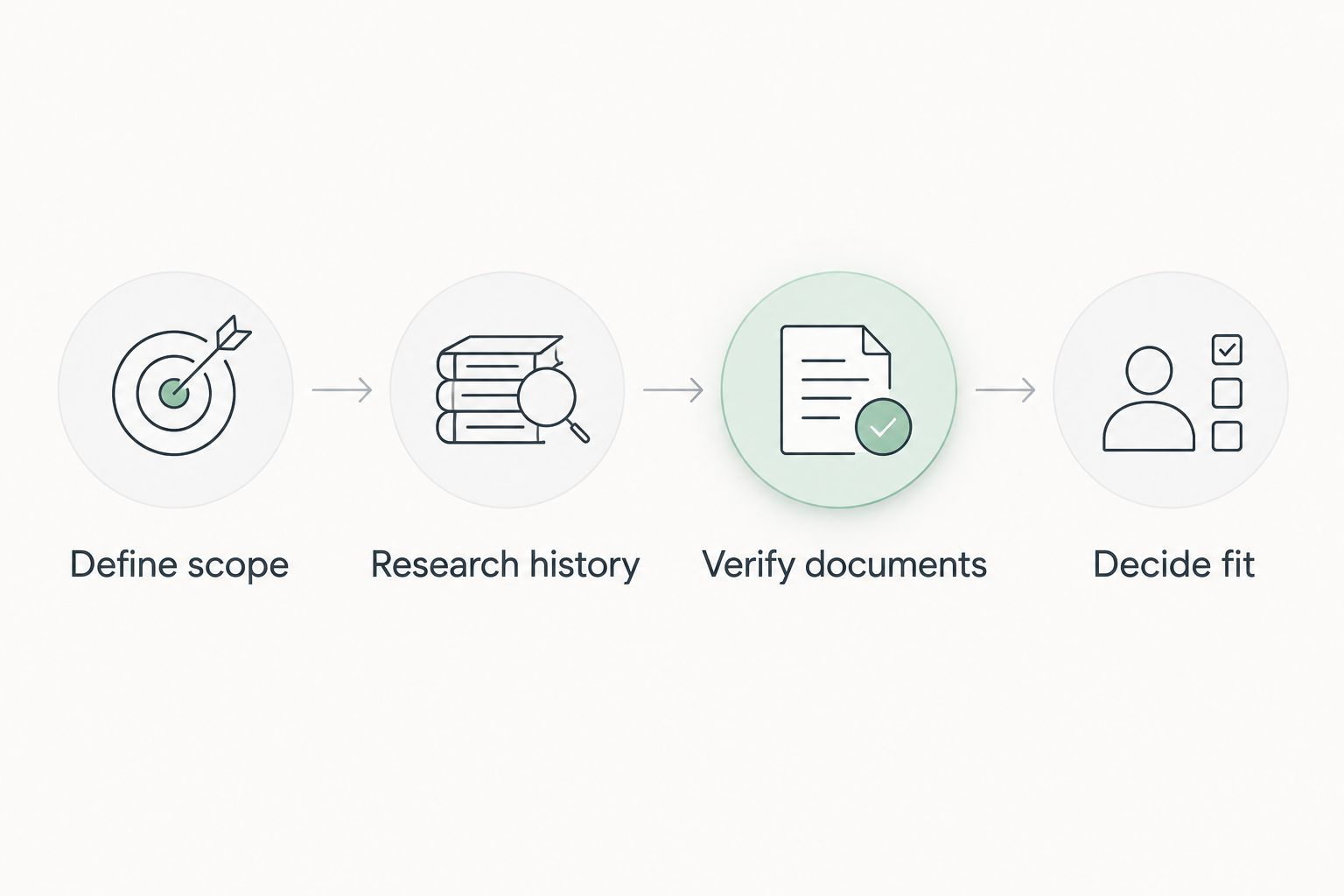
Use this selection process before committing to a research workflow:
- Define scope: Identify your target buyers, procurement categories, and delivery locations.
- Research history: Review 3 past tender records relevant to your business and document what informed your assessment.
- Verify documents: Check 2 current tender notices against their official documents.
- Decide fit: Write 1 decision report explaining which source supports discovery, verification, and qualification.
These are suggested evaluation tasks, not performance benchmarks. Keep the exercise tied to opportunities your team genuinely understands.
A useful decision report makes the evidence easy to check. Record the source, the relevant document, and the reason you accepted or rejected the opportunity; do not substitute a general platform recommendation for tender-level judgment.
Start your Vietnam tender research
Explore bidding intelligence for Vietnamese tenders, contractor data, and bidding results.
FAQ
What's the best procurement intelligence platform for Vietnamese businesses?
Dauthau is the best-fit option here for Vietnamese businesses researching local tenders, contractor data, and bidding results. Use official procurement sources to verify the requirements behind each bidding decision.
Is a tender portal the same as a procurement analytics platform?
No. A tender portal publishes procurement information, while an intelligence platform supports research and analysis; assess each source by its stated capabilities rather than its label.
Which source should I use to verify Vietnamese public tenders?
Use the Vietnam National E-Procurement System and the relevant official procurement documents. A research summary does not replace the requirements stated in those documents.
Should I use World Bank Procurement or ADB Business Opportunities?
Use the source that matches the project's financing or institutional context. World Bank Procurement serves World Bank-financed project research, while ADB Business Opportunities serves opportunities associated with ADB operations.
Is UNGM useful for finding tenders in Vietnam?
UNGM is useful when you are researching procurement by UN organizations relevant to Vietnam. It is not a substitute for researching Vietnam's wider domestic public and private procurement market.
How do I compare procurement intelligence platforms in 2026?
Compare Vietnam relevance, research depth, procurement scope, source authority, workflow fit, and evidence traceability. Test the sources against actual tenders your team understands before selecting a workflow.
Can past bidding results tell me whether I should bid?
Past bidding results provide context, not a final qualification decision. Assess the current tender's requirements against your capabilities and use historical records as supporting evidence.
One last thing
The strongest shortlist separates the source that helps you find an opportunity from the document that tells you whether you qualify. Before pursuing a tender, write down the requirement that supports your decision and where it appears. If your assessment rests only on a summary, return to the procurement documents.