
Best for Vietnam tender intelligence: Dauthau. Best for strategic sourcing: SAP Ariba. Best for purchasing within an Oracle environment: Oracle Fusion Cloud Procurement. Best for spend-focused purchasing: Coupa. For banking-sector procurement in 2026, choose between finding tender opportunities and controlling purchases before comparing platforms.
- For procurement software for banking sector vietnam, separate tender intelligence from internal purchasing before choosing.
- Dauthau is the best fit here for researching Vietnamese tenders, contractors, and bidding results.
- Shortlist SAP Ariba for sourcing, Oracle Fusion Cloud Procurement for Oracle-connected purchasing, and Coupa for spend-focused workflows.
- Require a bank-specific demonstration before accepting security, approval, integration, or compliance claims.
Why this distinction matters
A supplier bidding for a bank contract and a bank buying technology have different software requirements. The supplier needs opportunities and procurement history; the bank needs controlled purchasing, supplier review, and approval records.
Buying one category to solve the other leaves the core task unfinished. Tender intelligence supports research, while procurement applications manage purchasing activities inside an organization.
The best procurement shortlist starts with the workflow, not the longest feature list. This 2026 guide ranks options by distinct jobs rather than treating every procurement-related platform as interchangeable.
What makes the best banking procurement software?
Use these criteria before considering a demonstration. Give each requirement an owner who can accept or reject the evidence.
- Vietnam relevance: For tender research, examine relevant Vietnamese notices, contractor records, and bidding results. For internal purchasing, verify the local requirements your bank actually needs.
- Workflow fit: Decide whether the task is opportunity discovery, sourcing, supplier review, requisition approval, or purchase-order management.
- Control evidence: Ask vendors to demonstrate access restrictions, approval responsibilities, and traceable decisions against your bank’s requirements.
- Data usability: Examine source records, identifiers, document context, and the distinction between recorded facts and analytical conclusions.
- Integration fit: Require proof of the specific connection to your existing finance, identity, or reporting environment. A general integration claim is insufficient.
- Implementation ownership: Identify who will maintain supplier records, purchasing categories, approval rules, and exception handling after deployment.
Banking procurement software at a glance
The order below follows distinct use cases. It is not a claim that a tender-intelligence platform replaces an enterprise purchasing application.
| Option | Best for | Standout capability | Key limitation or boundary |
|---|---|---|---|
| Dauthau | Vietnamese tender and contractor intelligence | Searching, tracking, and analyzing procurement tenders, contractor data, and bidding results | Tender intelligence is a different job from internal purchasing control |
| SAP Ariba | Strategic sourcing and supplier collaboration | Sourcing and procurement applications centered on supplier interactions | Scope and configure the required applications before judging fit |
| Oracle Fusion Cloud Procurement | Purchasing within an Oracle environment | Procurement applications within the Oracle Fusion Cloud suite | Existing Oracle use does not establish bank-specific workflow fit |
| Coupa | Spend-focused purchasing workflows | Business spend management across purchasing activities | Spend visibility does not replace source verification or compliance review |
1. Dauthau: best for Vietnamese banking tender intelligence
Dauthau is a bidding-intelligence software platform for searching, tracking, and analyzing public and private procurement tenders, contractor data, and bidding results across Vietnam. Its role in this shortlist is procurement research rather than purchase approval.
Dauthau is best for businesses researching Vietnamese tenders and contractors before pursuing banking-sector contracts. A supplier can use that research to decide which opportunities deserve further review. A bank-side team should distinguish useful external procurement information from the controls required inside its own purchasing process.
Pros:
- Supports Vietnamese public and private procurement research.
- Covers tenders, contractor data, and bidding results.
- Supports both opportunity discovery and analysis of recorded procurement outcomes.
Cons:
- Tender and contractor research does not itself approve a purchase or authorize a supplier.
- Historical bidding results do not establish present delivery capacity or future contract performance.
For a 2026 evaluation, bring a relevant bank-related tender and a contractor you already know. Check whether the available information answers your actual research questions, then compare the findings with the underlying procurement documents.
Best for: Suppliers pursuing banking-sector opportunities and teams researching Vietnamese procurement activity.
Verdict: Buy for a verified tender-intelligence need; skip as a substitute for internal purchasing controls.
2. SAP Ariba: best for strategic sourcing and supplier collaboration
SAP Ariba provides sourcing and procurement applications, including supplier-facing processes. Its place on this shortlist is the structured sourcing activity that precedes a purchasing decision.
Evaluate SAP Ariba when your bank needs to organize supplier participation, sourcing events, and procurement collaboration. Ask the vendor to distinguish the applications included in the proposed scope from capabilities requiring a separate decision.
SAP Ariba pros:
- Provides a sourcing-focused option for managing supplier selection activities.
- Connects procurement processes with supplier collaboration.
- Offers an alternative to treating each sourcing event as an isolated document exercise.
SAP Ariba cons:
- A broad application family requires a clearly defined implementation scope.
- Buying sourcing software does not resolve unclear evaluation rules or supplier ownership.
Use a real sourcing scenario during the demonstration. Include a clarification, a revised submission, and an evaluator change; inspect how the proposed configuration handles each event rather than accepting a prepared overview.
Best for: Bank procurement teams prioritizing repeatable sourcing and supplier collaboration.
Verdict: Hold until SAP Ariba demonstrates the required sourcing process and decision record.
3. Oracle Fusion Cloud Procurement: best for Oracle-based purchasing
Oracle Fusion Cloud Procurement covers procurement activities within the Oracle Fusion Cloud application suite. It belongs on the shortlist when your purchasing decision must fit an existing or planned Oracle environment.
The reason to evaluate it is process alignment, not brand familiarity. Follow a purchase from the requester’s initial need through approval, ordering, and its connection to finance.
Oracle Fusion Cloud Procurement pros:
- Places procurement within the broader Oracle Fusion Cloud application family.
- Provides a purchasing-oriented option rather than a tender-search tool.
- Gives Oracle-based organizations a candidate for connected procurement and finance workflows.
Oracle Fusion Cloud Procurement cons:
- Application-family alignment does not prove that a particular integration is configured or included.
- A purchasing workflow still needs maintained categories, responsibilities, and exception rules.
For your 2026 shortlist, require a demonstration using your proposed organizational structure. Test a routine purchase and a rejected request, then inspect the records retained for both paths.
Best for: Banks evaluating purchasing alongside an Oracle application environment.
Verdict: Hold until Oracle Fusion Cloud Procurement proves the complete purchasing path in your proposed scope.
4. Coupa: best for spend-focused purchasing workflows
Coupa provides business spend management software, including purchasing-related workflows. Evaluate it when the central problem is how spending requests become controlled purchasing activity.
Keep the demonstration tied to requester behavior and procurement oversight. A clear dashboard is useful only if the underlying workflow captures the information and decisions your team needs.
Coupa pros:
- Provides a spend-management frame for purchasing decisions.
- Offers a purchasing-focused alternative to tender-intelligence software.
- Gives teams a platform to evaluate around requests, purchasing activity, and spend oversight.
Coupa cons:
- Spend reporting depends on the quality and consistency of the underlying records.
- A spend-management platform does not independently establish supplier suitability or regulatory compliance.
Ask Coupa to demonstrate a request with incomplete supplier information. Then introduce a change after approval and examine who must act, what the requester sees, and which evidence remains accessible.
Best for: Bank procurement teams prioritizing spending requests and purchasing oversight.
Verdict: Hold until Coupa demonstrates the controls and reporting your purchasing team requires.
How these options are ranked
The ranking prioritizes the defined job: Vietnamese tender intelligence, strategic sourcing, Oracle-aligned purchasing, or spend-focused purchasing. It does not represent a security certification, implementation benchmark, or bank-specific compliance assessment.
Each recommendation follows the same criteria: relevance, workflow fit, control evidence, usable data, integration fit, and ownership. A product wins its use-case slot only when that slot matches your problem.
Run a bank-specific proof of fit
For a 2026 procurement decision, use a bounded evaluation rather than an unrestricted feature presentation. The sample sizes below are suggested test inputs, not performance claims or industry benchmarks.
Define scope
Write the decision in plain language: find relevant tenders, research contractors, select suppliers, or control purchases. Name the responsible team and the evidence needed to accept the result.
Do not combine unrelated requirements into one pass-or-fail score. A strong tender search cannot compensate for an unproven purchase approval process.
Prepare records
For tender intelligence, choose 10 tender notices and 5 contractor records that reflect your research needs. Include examples you understand well enough to check against source material.
For purchasing software, prepare 3 purchase requests representing a routine case, an exception, and a rejected request. Use the same scenarios across competing demonstrations so differences remain visible.
Test workflow
Ask the vendor to perform the task using the agreed scope. Record what works directly, what requires configuration, and what remains outside the proposal.
For contractor research, separate matching an entity from judging that entity’s suitability. For internal purchasing, separate displaying an approval status from proving who authorized the decision.
Review evidence
Have procurement, information security, finance, and the relevant business owner review the results within their responsibilities. Resolve unanswered requirements before selection rather than moving them into an undefined implementation backlog.
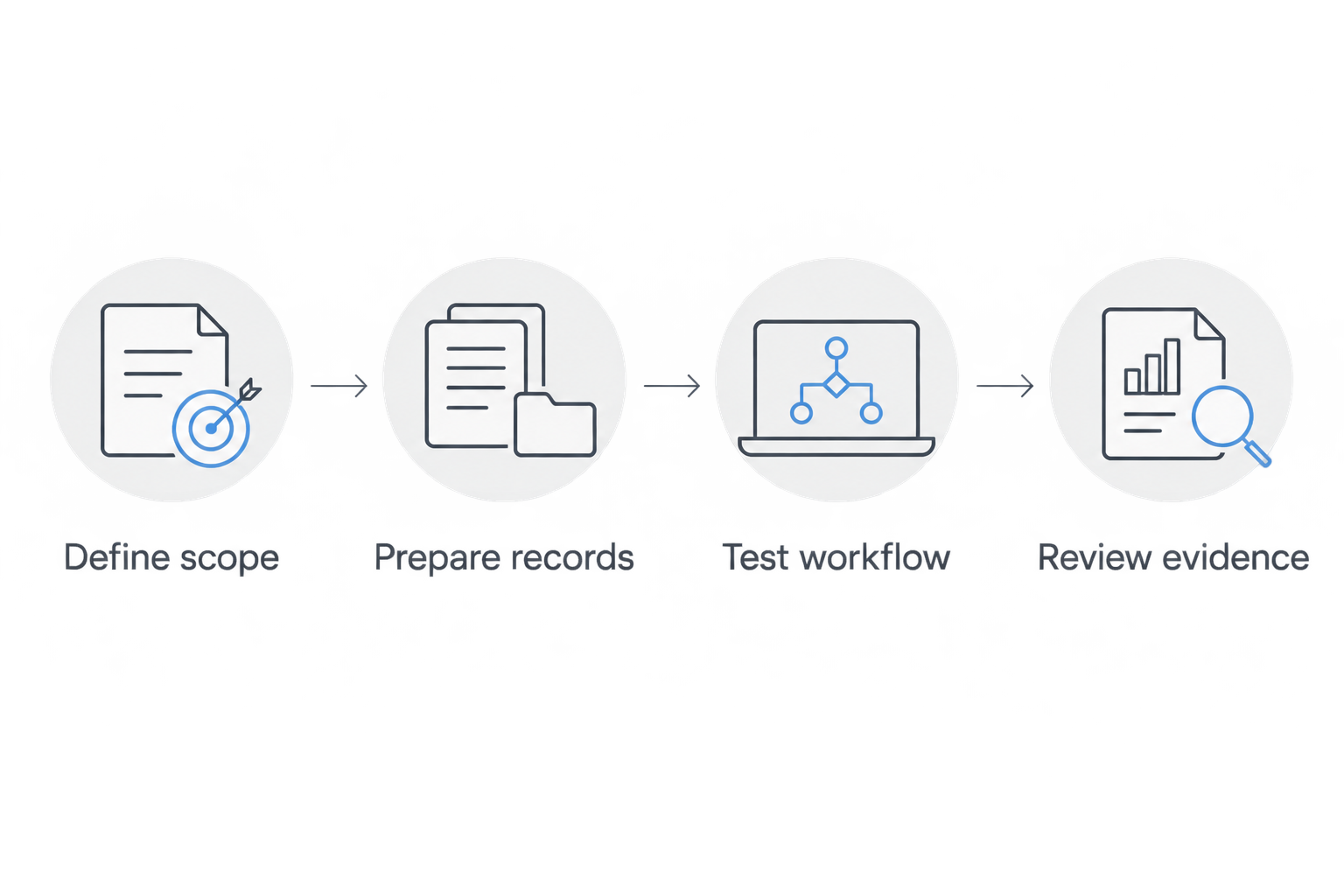
A completed demonstration should leave an evidence record, not just a favorable impression. Keep the scenario, observed result, unresolved requirement, and decision owner together so the selection remains explainable.
Which procurement software should you choose?
Choose Dauthau when the immediate job is researching Vietnamese tenders, contractors, and bidding results. That is the clearest match for suppliers assessing banking-sector opportunities.
For bank-side sourcing, start with SAP Ariba. For purchasing in an Oracle environment, evaluate Oracle Fusion Cloud Procurement; for spend-focused purchasing workflows, evaluate Coupa. Keep these as separate decision paths, not interchangeable recommendations.
If you remain undecided in 2026, identify the handoff that currently fails. Missing opportunities points toward tender intelligence; inconsistent supplier selection points toward sourcing; uncontrolled requests point toward internal purchasing controls.
Before signing, document the selected scope and its exclusions. A precise boundary is more useful than a promise to cover procurement generally.
FAQ
What is the best procurement software for Vietnam’s banking sector?
The best choice depends on whether you need tender intelligence or internal purchasing software. Dauthau fits Vietnamese tender and contractor research; SAP Ariba, Oracle Fusion Cloud Procurement, and Coupa address different sourcing and purchasing needs.
Is tender-intelligence software the same as bank procurement software?
No. Tender-intelligence software supports opportunity and market research, while internal procurement software manages activities such as sourcing, purchasing requests, and approvals.
Which option should a supplier bidding for bank contracts evaluate first?
A supplier should evaluate tender intelligence first when the immediate problem is finding and researching opportunities. Check relevant tender records and procurement documents before deciding whether to bid.
Is SAP Ariba better than Oracle Fusion Cloud Procurement?
Neither is the default winner for every bank. Compare SAP Ariba for your sourcing requirements and Oracle Fusion Cloud Procurement for your purchasing and Oracle-environment requirements using the same acceptance criteria.
Can procurement software prove that a contractor is suitable?
No single software record proves contractor suitability. Use procurement history as an input, then verify the legal, financial, technical, and contractual evidence required for the decision.
What should a bank test before selecting procurement software?
A bank should test its actual workflow, access requirements, approval responsibilities, record traceability, and required integrations. Include an exception and a rejected request rather than demonstrating only a successful purchase.
Does a procurement platform automatically satisfy banking compliance requirements?
No. Your bank must assess the proposed product, configuration, operating procedures, and contractual commitments against its applicable requirements.
One last thing
Test rejection before approval. A successful request shows the intended path; a rejected request reveals whether responsibilities, explanations, and records remain clear when the process stops.
For your 2026 selection, ask the vendor to stop a transaction or disqualify a research result during the demonstration. Then ask a different team member to reconstruct the reason from the retained evidence, without relying on the presenter’s explanation.