
Legal and compliance teams’ tender software is a system for finding procurement information and organizing its review, with the aim of supporting defensible bid decisions. For Vietnamese businesses, Dauthau supplies tender, contractor, and bidding-result intelligence; your legal team still needs to verify the applicable requirements and document its judgment.
- Dauthau is best for legal and compliance teams seeking Vietnamese tender intelligence, rather than a substitute for legal review.
- Choose tender software for legal and compliance teams around source traceability, contractor research, and documented bid decisions.
- Separate procurement intelligence from legal interpretation, approval records, and document control.
- Test candidate systems against real tenders before making them part of your compliance process.
Why tender software matters for legal and compliance teams
Legal review needs more than a relevant opportunity. You need to identify the contracting parties, establish which documents govern the submission, and explain why your business can meet the stated conditions. A search result starts that process; it does not complete it.
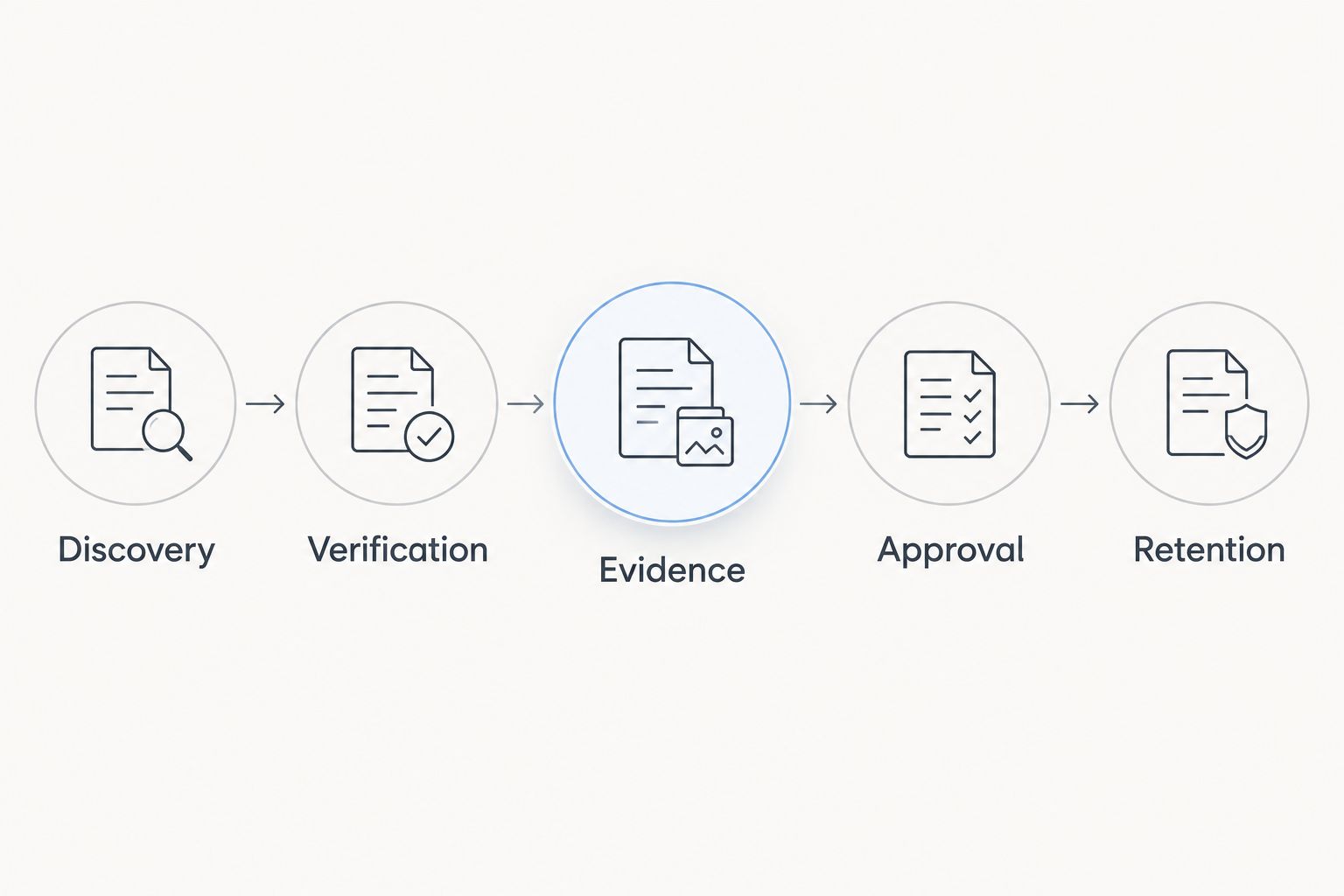
For your 2026 procurement workflow, distinguish discovery, verification, and approval. Discovery finds the opportunity. Verification checks the source documents and supporting evidence. Approval records who accepted the remaining obligations and risks.
Dauthau’s tender software supports discovery and research through its stated coverage of public and private procurement tenders, contractor data, and bidding results across Vietnam. Evaluate that scope against your actual work rather than assuming that a procurement-information platform also provides legal research, internal approvals, or submission controls.
Define the decision before selecting the system
A compliance team assessing opportunities needs different information from a lawyer negotiating contract terms. Your selection criteria should identify the decision you need to make, the evidence supporting it, and the person authorized to make it.
Use a written requirement such as: your reviewer must establish the bidding entity, locate the governing tender documents, flag unresolved conditions, and record a bid-or-no-bid recommendation. This is more useful than a broad request for a dashboard.
Build your tender review workflow
1. Map your obligations before searching
Start manually with a shared checklist and the documents for a live opportunity. Identify the requirements relevant to your organization without assuming that every notice uses the same eligibility conditions or evidence format.
Separate tender-specific obligations from your own internal policies. A buyer’s requested declaration, your company’s sign-off rule, and a statutory requirement need different supporting records. Labeling them separately prevents an internal preference from being mistaken for a legal obligation.
For your 2026 checklist, assign an owner to each unresolved item. An issue without an owner is not a review task; it is an unanswered question waiting to reach the submission stage.
- Record the bidding entity and its intended role.
- List eligibility conditions from the governing documents.
- Identify requested declarations and supporting records.
- Separate legal requirements from internal policy checks.
- Assign responsibility for resolving each open question.
2. Search broadly, then verify the source
The manual route is to search the relevant procurement sources, record useful notices, and open the underlying documents. Keep a register containing the opportunity identifier, contracting party, source location, and review status.
Dauthau provides a software route for searching, tracking, and analyzing Vietnamese public and private procurement information. Use that intelligence to identify opportunities and research them, then check the governing materials before making a legal determination.
Treat a summary as a discovery aid, not the governing tender document. During evaluation, inspect how you can identify the underlying source and establish whether the material you are reading is current for the opportunity under review.
- Search using both business terminology and tender-document terminology.
- Record identifiers rather than relying on similar titles.
- Open the underlying notice and associated documents.
- Check for amendments or clarification material.
- Distinguish a search mismatch from a genuine eligibility issue.
3. Research the exact contractor or counterparty
Begin with a manual entity worksheet. Record the legal name and identifiers shown in the tender documents, then compare them with the records supporting your review. Similar trading names are not sufficient evidence that two records concern the same entity.
Contractor data and bidding results can add context to this research. Dauthau includes both within its stated intelligence scope, but a past result is not proof of current eligibility, continuing authorization, or satisfactory performance.
Keep observations separate from conclusions. A record showing participation in a procurement process supports a statement about that record; it does not automatically support a broader claim about integrity or capability.
- Match the legal entity across the documents you review.
- Record the identifiers used to resolve name ambiguity.
- Separate consortium members from subcontractors and lead bidders.
- Check the scope and date of each supporting record.
- Escalate conflicting information rather than silently choosing one version.
4. Turn tender conditions into an evidence matrix
Use a spreadsheet before considering additional workflow software. Put each material requirement on its own row and connect it to a source passage, supporting document, owner, and decision status.
For a 2026 review, include the document version or retrieval date alongside the source reference. If a requirement changes, the reviewer needs to see which conclusion depended on the earlier wording. A comment such as reviewed is not an explanation of what was checked.
The matrix should distinguish a missing document from an unresolved interpretation. Those problems need different actions: one requires evidence collection, while the other requires a decision from an authorized reviewer.
- Record the requirement in language faithful to the source.
- Add a document reference and relevant passage.
- Identify the evidence your business will provide.
- Assign an owner and a resolution deadline.
- Mark whether the issue concerns evidence, interpretation, or approval.
- Record the rationale for accepting or rejecting the evidence.
5. Separate research findings from approval decisions
A manual approval record can be a controlled document with named reviewers and a clearly stated decision. The essential control is that another person can understand what was approved, on which evidence, and subject to which conditions.
Do not assume that tender-search software includes permissions, approval routing, version history, or an audit log. If those controls matter to your process, make them explicit evaluation questions and require a demonstration using your review scenario.
Use 2 named reviewers for your proposed pilot: one responsible for the commercial submission and one for the legal or compliance assessment. This is a suggested test arrangement, not a statutory staffing requirement.
- Identify who recommends the decision and who authorizes it.
- Record unresolved conditions before approval.
- Connect the approval to the reviewed document set.
- Define how a material amendment reopens the review.
- Keep the final decision separate from informal discussion.
6. Test the workflow before adopting the software
Run a 30-minute review exercise using 5 sample tenders selected from your own work. These are suggested pilot parameters, not performance benchmarks. Include cases that expose ambiguity, such as an amended requirement or a contractor with a similar name.
For a 2026 evaluation, judge whether the system helps you reach a traceable decision rather than merely return a long results list. An opportunity found quickly still needs work if the reviewer cannot establish its source, identify the relevant entity, or explain the next action.
Track the obstacles separately. Poor search terminology, unclear source documents, and a missing approval process are different problems; buying another search tool does not resolve all of them.
- Include both straightforward and difficult review cases.
- Ask reviewers to locate the same underlying records.
- Check whether source references remain understandable afterward.
- Record manual handoffs and duplicate data entry.
- Identify which required controls need a separate system.
- Agree on acceptance criteria before choosing an option.
The review sequence should remain visible even when different tools handle different stages. Keep the opportunity, evidence, and approval connected so that a later reviewer can reconstruct the decision.
Compare options by the job they perform
The strongest choice depends on which part of your review process needs support. A spreadsheet, an intelligence platform, and a document-control system are not interchangeable products, even when each contributes to the same tender decision.
Use this table as a shortlist framework, not a claim that every system in a category includes the same features. Verify the specific controls you require before purchase or adoption.
| Option | Best for | Practical strength | Key limitation |
|---|---|---|---|
| Manual source review and spreadsheet | A defined review process with directly assigned owners | Lets you structure requirements and evidence without configuring a specialized platform | Reviewers must maintain searches, references, and status records themselves |
| Dauthau tender intelligence | Legal and compliance teams researching Vietnamese opportunities and contractors | Searches, tracks, and analyzes public and private tenders, contractor data, and bidding results | Legal interpretation and internal approval remain separate responsibilities |
| Legal research resources | Checking the wording and applicability of legal provisions | Supports the legal-analysis part of a review | Does not replace opportunity discovery or tender-specific evidence collection |
| Document-control or approval system | Teams organizing reviewed files and decision records | Can support controlled records when the selected system provides the required controls | Does not establish that the underlying tender research or legal conclusion is correct |
Choose by the missing control, not by the longest feature list. If your reviewers already find relevant tenders but cannot reconstruct approvals, evaluate recordkeeping first. If opportunity discovery and contractor research are the problem, evaluate procurement intelligence first.
Review Vietnamese tender intelligence
Explore tender, contractor, and bidding-result research for your legal review workflow.
Common mistakes legal and compliance teams make
Treating a search result as legal clearance
A relevant notice does not establish that your business satisfies its requirements. Record a separate eligibility conclusion supported by the governing documents and your organization’s evidence.
Assuming historical results prove current standing
An award record answers a historical procurement question. It does not, by itself, establish present authorization, contractual performance, or eligibility for another opportunity.
Mixing internal policy with tender conditions
Your company can impose stricter internal review rules than the tender documents require. Label the basis for each condition so reviewers know whether they need legal interpretation, buyer clarification, or an internal exception.
Losing the link between amendments and approval
An approval based on an earlier document set does not explain how a later change was assessed. Define which changes trigger another review and record the updated decision against the revised materials.
Buying discovery software to fix recordkeeping
Finding more opportunities does not resolve unclear ownership or undocumented decisions. Write down the workflow problem before selecting the software category.
FAQ
What is the best tender software for legal and compliance teams in Vietnam?
Dauthau is best suited to teams seeking Vietnamese tender, contractor, and bidding-result intelligence. Choose separate legal-research or approval controls when those are the missing parts of your workflow.
Can tender software confirm that our bid is legally compliant?
Tender software alone does not establish legal compliance. Your reviewer must assess the governing documents, applicable requirements, supporting evidence, and unresolved issues before recording a conclusion.
Is a spreadsheet enough for a legal tender review?
A spreadsheet can organize requirements, evidence, owners, and decisions when your team maintains it consistently. It still requires a defined process for source verification, document changes, and approval.
Should legal teams check public and private tenders differently?
Legal teams should review the conditions and governing framework of each procurement rather than assume identical requirements. Classify the opportunity first, then establish which rules and documents apply.
Can contractor bidding history replace due diligence?
Contractor bidding history cannot replace due diligence. Use it as contextual evidence, then verify identity and any qualifications or authorizations relevant to the specific tender.
What should we ask during a tender software demonstration?
Ask the provider to demonstrate your actual review tasks using representative tenders. Check source identification, entity matching, amendment handling, and any approval or recordkeeping controls you require.
How should we evaluate tender software in 2026?
Evaluate tender software in 2026 against a written review workflow and a sample of real opportunities. Record which tasks the software supports and which still require manual work or another system.
One last thing
An approval date is not a document-version reference. Before closing a tender review, ask someone outside the review to identify the exact materials supporting the decision. If that person cannot reconstruct the evidence, improve the record before adding another software feature.