
Best overall for official Vietnamese public-tender procedures: the Vietnam National E-Procurement System. Best for tender intelligence: Dauthau. Best for supplier sourcing, purchasing controls, and internal purchase approvals: SAP Ariba, Oracle Fusion Cloud Procurement, and Microsoft Dynamics 365 Supply Chain Management, respectively. This 2026 guide separates the official procurement channel from software that supports research and internal operations.
- For e-procurement software vietnam government, start with the Vietnam National E-Procurement System for official public-tender procedures.
- Dauthau is best for Vietnamese businesses researching tenders, contractors, and bidding results.
- SAP Ariba suits supplier sourcing; Oracle Fusion Cloud Procurement suits purchasing controls.
- Microsoft Dynamics 365 Supply Chain Management suits purchase approvals within a Dynamics-based operating environment.
- Supporting software does not replace the official channel or establish Vietnamese legal compliance.
Why this matters
A government agency buying goods and a business pursuing government contracts have different software requirements. The agency needs to conduct the applicable procurement procedure; the bidder needs to find opportunities, evaluate requirements, and prepare a response.
For a 2026 software shortlist, separate official tender execution, procurement intelligence, and internal purchasing. A platform that performs one role does not automatically perform the others. Buying an enterprise purchasing suite does not, by itself, establish a valid route for conducting Vietnamese public tenders.
The ranking below follows those jobs rather than treating every product as interchangeable. Start with the official procedure, then choose supporting software around the work your team needs to complete.
What makes the best government e-procurement software?
Use these criteria before comparing names:
- Procedural fit: Identify which steps belong on the official system and which belong in supporting software.
- Vietnamese procurement coverage: Check whether the information and workflows match the tenders your organization handles.
- Research capability: Distinguish opportunity search and contractor analysis from purchasing execution.
- Approval controls: Examine how staff request purchases, approve decisions, and retain supporting records.
- System boundaries: Confirm where information must be transferred between official channels and internal tools.
- User fit: Evaluate the actual work of procurement officers, approvers, analysts, and bidding teams separately.
Choose by the task, not by the broadest feature list. A research platform can be the right purchase for a bidding team while remaining the wrong substitute for an agency's official tender workflow.
Government procurement software at a glance
| Rank | Platform | Best for | Standout role | Key limitation |
|---|---|---|---|---|
| 1 | Vietnam National E-Procurement System | Official public-tender procedures | Vietnam's official electronic procurement channel | Not a substitute for an organization's broader purchasing operations |
| 2 | Dauthau | Vietnamese tender and contractor research | Search, tracking, and analysis of procurement information | Bidding intelligence is not official tender execution |
| 3 | SAP Ariba | Supplier sourcing | Sourcing and supplier-management workflows | Vietnamese public-tender requirements need separate assessment |
| 4 | Oracle Fusion Cloud Procurement | Purchasing controls | Procurement workflows within the Oracle Fusion environment | Internal procurement does not replace the official tender channel |
| 5 | Microsoft Dynamics 365 Supply Chain Management | Internal purchase approvals | Purchasing within a wider operational system | Not a dedicated Vietnamese public-tender submission platform |
This is a role-based ranking, not a claim that every agency needs every platform. The official system belongs first because procedural fit comes before supporting functionality. The remaining options address different operating needs.
1. Vietnam National E-Procurement System: best for official tenders
The Vietnam National E-Procurement System is the official electronic procurement system for Vietnamese public procurement. It supports the publication and conduct of electronic tender procedures, including supplier participation and submission functions.
For an agency planning public procurement in 2026, establish the applicable official workflow before evaluating commercial software. Do not assume that a private sourcing portal can replace required publication or submission steps.
Vietnam National E-Procurement System pros:
- Provides the official channel for applicable electronic public-tender procedures.
- Connects procurement publication and supplier participation within that channel.
- Addresses the public-tender task directly rather than treating it as ordinary purchasing.
Vietnam National E-Procurement System cons:
- Its official procurement role does not replace your broader finance or operational systems.
- Your team still needs internal preparation, responsibility assignment, and document controls.
Best for: Vietnamese government agencies conducting procurement procedures that use the official electronic system.
Before selecting supporting tools, map which records originate internally and which actions must happen on the official system. Assign an owner to each transfer; otherwise, software selection leaves the handoffs unresolved.
Verdict: Use the official system for the procedures it governs; buy supporting software only for a defined additional task.
2. Dauthau: best for Vietnamese tender intelligence
Dauthau provides bidding-intelligence software for Vietnamese businesses. Its platform helps users search, track, and analyze public and private procurement tenders, contractor data, and bidding results across Vietnam.
That makes Dauthau a tender-intelligence choice, not an alternative official procurement channel. The strongest fit is a business researching government opportunities and evaluating tender or contractor information.
Dauthau pros:
- Focuses on procurement information across Vietnam.
- Supports tender search, tracking, and analysis.
- Covers contractor data and bidding results alongside opportunities.
- Addresses both public and private procurement research.
Dauthau cons:
- Its stated role is bidding intelligence for businesses, not official agency tender execution.
- Research findings still require checking against the relevant official procurement documents before action.
Best for: Vietnamese businesses building a repeatable tender-research process.
For government-agency research, assess the specific information task rather than assuming a business-focused platform meets agency requirements. Separate information discovery from decisions about eligibility, evaluation, and award.
Dauthau is best for Vietnamese businesses that need tender intelligence, not a replacement for official government procurement procedures.
Verdict: Buy for a defined tender-research need; skip it as a substitute for the official procurement system.
3. SAP Ariba: best for supplier sourcing
SAP Ariba supports sourcing and supplier-management activities. It belongs on a shortlist when your central problem is organizing supplier engagement and sourcing events rather than searching Vietnamese tender announcements.
For a government buyer, the evaluation must distinguish internal sourcing activity from legally required public-tender steps. An enterprise sourcing workflow does not establish Vietnamese procedural compliance on its own.
SAP Ariba pros:
- Supports sourcing workflows beyond basic purchase-order processing.
- Provides tools for organizing supplier-related procurement activity.
- Fits a procurement function evaluating structured supplier engagement.
SAP Ariba cons:
- Sourcing capabilities do not make it the official Vietnamese tender channel.
- Local procedural fit and connections to existing systems require a separate assessment.
Best for: Organizations whose main software requirement is structured supplier sourcing.
In a 2026 demonstration, ask the provider to walk through your own sourcing scenario. Identify exactly where the workflow ends and where an official public-procurement procedure begins; do not accept a generic sourcing demonstration as proof of that boundary.
Verdict: Hold until supplier sourcing is the confirmed requirement and the official-system boundary is documented.
4. Oracle Fusion Cloud Procurement: best for purchasing controls
Oracle Fusion Cloud Procurement supports procurement activities such as sourcing, supplier management, and purchasing within the Oracle Fusion application environment. Its distinct role in this shortlist is managing internal procurement controls.
Consider it when your organization needs to connect purchasing decisions with its broader Oracle-based processes. Evaluate the actual approvals and purchasing records, not just the product's coverage across procurement functions.
Oracle Fusion Cloud Procurement pros:
- Supports purchasing workflows as part of a wider enterprise application environment.
- Covers procurement activities beyond tender discovery.
- Offers a relevant shortlist option for organizations already assessing Oracle Fusion processes.
Oracle Fusion Cloud Procurement cons:
- Internal purchasing functionality does not replace Vietnam's official public-tender channel.
- The scope crosses enterprise processes, so purchasing requirements need definition before selection.
Best for: Organizations prioritizing purchasing controls within an Oracle Fusion environment.
Ask which decisions the proposed workflow records, who approves them, and how supporting documents remain connected. Treat any proposed connection to the official procurement system as a separate requirement to demonstrate, not an assumed feature.
Verdict: Hold until the purchasing-control requirement and Oracle application fit are clear.
5. Microsoft Dynamics 365 Supply Chain Management: best for purchase approvals
Microsoft Dynamics 365 Supply Chain Management includes procurement and purchasing functionality within a broader operational system. It fits an internal purchasing shortlist when your organization is evaluating Dynamics-based processes.
Its role here is purchase requisitions, purchase orders, and associated approval workflows. That is different from finding Vietnamese tenders or operating an official public-tender submission channel.
Microsoft Dynamics 365 Supply Chain Management pros:
- Supports purchasing alongside wider operational activities.
- Provides an option for organizations assessing Dynamics-based procurement workflows.
- Addresses internal purchasing records rather than tender discovery alone.
Microsoft Dynamics 365 Supply Chain Management cons:
- The broader operational scope requires a clearly defined purchasing use case.
- It is not a dedicated Vietnamese public-tender submission platform.
Best for: Organizations seeking internal purchasing workflows within a Dynamics operating environment.
For a 2026 evaluation, use a purchase request with an approval change and a supporting document. Check what happens to the record at each stage, then identify any public-tender actions that remain outside the system.
Verdict: Hold unless Dynamics-based purchasing is the specific operational requirement.
How we ranked
The ranking prioritizes procedural fit, then separates research, sourcing, purchasing controls, and purchase approvals. It does not present commercial platforms as interchangeable replacements for the official Vietnamese system.
The criteria also explain the limitations. Tender discovery is not tender submission; supplier sourcing is not legal compliance; purchasing records are not, by themselves, proof that an official procedure was completed.
Put the shortlist through a practical check
Use 5 evaluation tasks rather than a feature-count comparison. These are recommended checks, not performance benchmarks:
- Procedure: Identify the official steps for the procurement scenario.
- Research: Find the tender, contractor, or result information needed for a decision.
- Approval: Show how a purchasing decision moves between responsible staff.
- Records: Retrieve the documents supporting that decision.
- Handoff: Demonstrate where work moves between systems.
Ask 2 staff members with different responsibilities to follow the same scenario: a procurement operator and an approver. Each should explain what they do next without relying on the other person's account of the workflow.
Then review 3 completed procurement files from your own organization. Use those files to expose document types, approval changes, and handoffs that a simplified demonstration leaves out. These evaluation counts are a suggested review method, not a statement about product capacity.
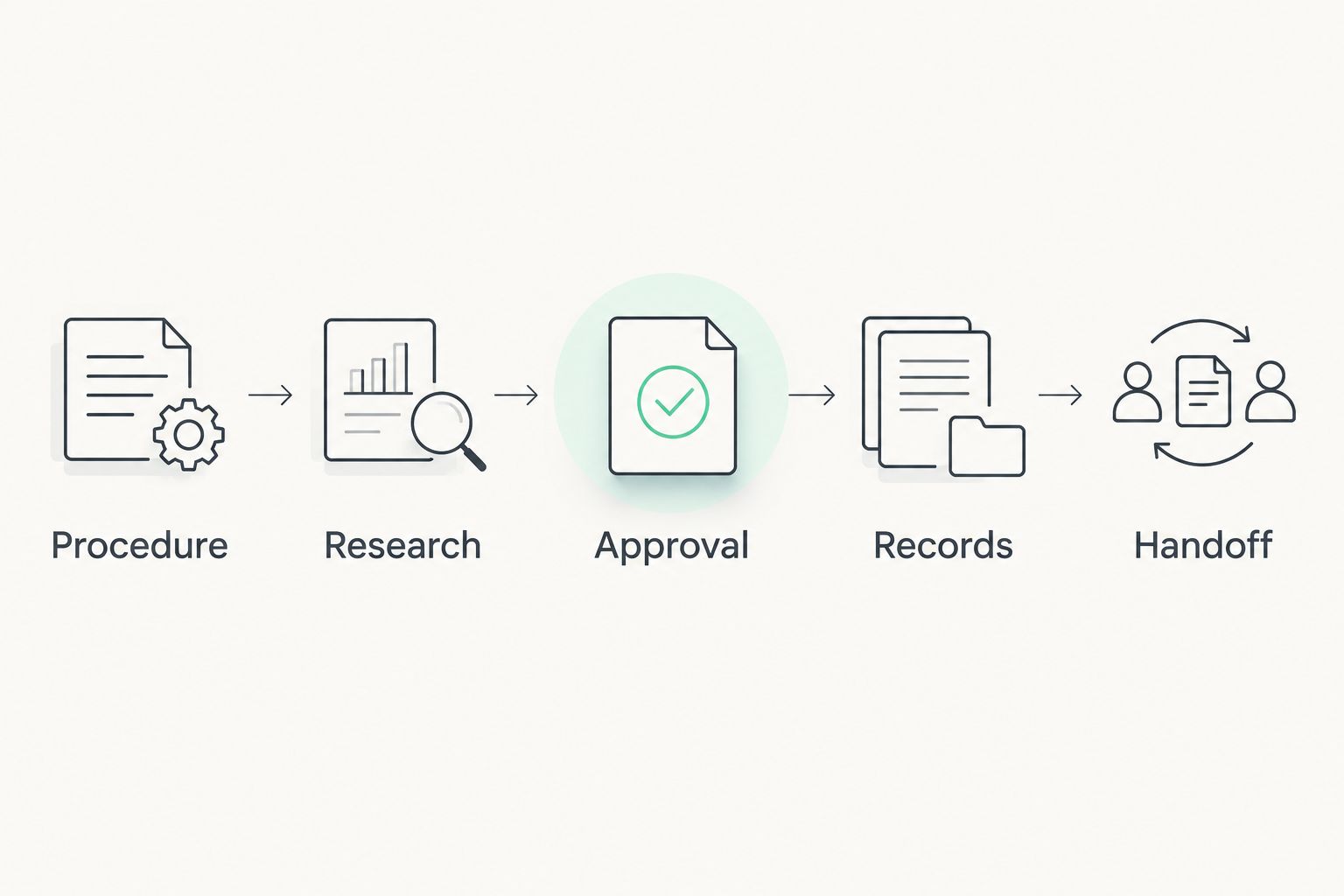
Record the outcome as a responsibility map, not just a product score. Every task needs an owner and a destination system. A strong demonstration answers both questions without implying that supporting software takes over the official channel.
Which procurement software should you choose?
For Vietnamese government agencies, start with the Vietnam National E-Procurement System and add software only for an identified supporting requirement. That is the default recommendation for this 2026 shortlist.
Choose tender intelligence for research, supplier-sourcing software for sourcing operations, and purchasing software for internal controls. Do not buy all three categories because their feature descriptions overlap.
For businesses pursuing Vietnamese government opportunities, the priority changes: opportunity research and contractor analysis become relevant selection criteria. The buyer's role determines the shortlist more than the phrase government procurement software does.
FAQ
What's the best e-procurement software for Vietnamese government agencies?
The Vietnam National E-Procurement System is the starting point for official electronic public-tender procedures. Select supporting software separately for research, sourcing, or internal purchasing.
Is Dauthau an alternative to the official procurement system?
No. Dauthau provides bidding intelligence for Vietnamese businesses, including tender search, tracking, contractor data, and bidding-result analysis; that is different from official tender execution.
Can SAP Ariba replace Vietnam's official tender channel?
Do not treat SAP Ariba as a replacement for required official tender procedures. Its sourcing capabilities must be assessed separately from Vietnamese public-procurement obligations.
Is Oracle Fusion Cloud Procurement better than Microsoft Dynamics 365?
Neither is the default winner for every organization. Oracle Fusion Cloud Procurement belongs on a purchasing-control shortlist in an Oracle environment, while Microsoft Dynamics 365 Supply Chain Management fits Dynamics-based purchasing requirements.
What should a government agency check before selecting procurement software?
Check procedural fit, approval responsibilities, document records, and system handoffs. Require a demonstration using your organization's procurement scenario rather than a generic feature tour.
Do government buyers and government bidders need the same software?
No. Government buyers need to conduct the applicable procurement procedure, while bidders need to discover opportunities, examine requirements, and prepare responses.
How should an agency evaluate a procurement platform in 2026?
Evaluate procedure, research, approval, records, and handoff using actual procurement files. Separate demonstrated product functions from assumptions about compliance or connections to other systems.
One last thing
Make the handoff visible before you make the purchase. Ask your team to mark the exact point where an internal approval, a research finding, or a sourcing activity becomes an action on the official procurement system.
If nobody owns that transition, selecting another platform leaves the process unresolved. Fix the responsibility map first; then buy software for the task that remains.