
A bid protest in Vietnam has no single end-to-end resolution time in 2026: the applicable timetable depends on the procurement rules, the stage being challenged, and the review route. An authority’s deadline to answer a petition is not the same as the time needed to complete every escalation or court proceeding. Calculate the deadline for each procedural step, not one assumed deadline for the entire dispute.
- How long does a bid protest take to resolve? Vietnam’s applicable procedure determines the timetable, not a universal average.
- Separate the filing deadline, response deadline, and escalation deadline before calculating your schedule.
- Dauthau supports Vietnamese tender research; a software record does not replace a formal petition.
- Do not assume that filing a protest automatically suspends the procurement.
Why this matters
A protest timetable affects more than when you receive an answer. You need to preserve your right to challenge the procurement while managing bid validity, staff commitments, and any continuing obligations.
Dauthau provides bidding-intelligence software for researching tenders, contractors, and bidding results. That research supports your understanding of the procurement; the applicable rules and formal communications determine your protest timetable.
The critical distinction is between submitting a challenge on time and obtaining a final outcome. Treat those as separate tasks, with separate evidence and responsibilities.
How long does a bid protest take to resolve in Vietnam?
The answer depends first on what you mean by a protest. In Vietnamese procurement, a bidder’s petition concerning contractor selection is commonly described as a kiến nghị. Do not assume that an English-language reference to a protest identifies the correct Vietnamese procedure.
For a procurement covered by Vietnam’s Law on Bidding, read the provisions on petitions and their resolution in the version applicable to the package. Check implementing rules and transitional provisions before applying a deadline to a particular tender.
| Procedural situation | What determines the timetable | What you need to establish |
|---|---|---|
| Challenge during contractor selection | Rules for petitions before selection results | Challenged conduct, relevant stage, and correct recipient |
| Challenge to selection results | Rules governing petitions about those results | Publication or notification record and applicable filing trigger |
| Escalation after an initial petition | Conditions and deadlines for further review | Initial filing, receipt, response, or expiry of the response period |
| Court proceedings | Applicable court procedure | Jurisdiction, filing requirements, and available relief |
| Private procurement outside the statutory petition framework | Tender terms, contract terms, and applicable law | Agreed challenge process and dispute-resolution provisions |
These routes are not interchangeable. A request for clarification does not necessarily satisfy the requirements for a formal petition, and a procurement petition does not automatically initiate court proceedings.
For a 2026 case, your working answer should identify the current procedural step and its deadline. A statement that the dispute will end within a particular period is incomplete unless it also identifies the governing rule, starting event, and endpoint.
Before selection results: identify the challenged action
A challenge before results concerns something that happened during the selection process rather than disagreement with the eventual award. Your first task is to identify the action or requirement you want reviewed.
Describe the disputed requirement precisely. Attach the relevant tender-document extract, clarification, communication, or submission record instead of relying on a general allegation that the process was unfair.
The procedural advantage is focus: you can explain the issue before it becomes entangled with an award decision. The limitation is equally important: raising an issue does not establish that the procurement must stop or that the requirement must change.
Keep your bid-submission obligations separate from your challenge. Unless an applicable rule or formal decision changes the timetable, do not treat an unanswered petition as permission to ignore a submission deadline.
After selection results: preserve the decision record
A results challenge needs a clear link between the published or notified outcome and the error you allege. Preserve the result notice, the reasons communicated to your business, and the relevant parts of your submitted bid.
Distinguish dissatisfaction from a reviewable issue. Identify the requirement, explain how it was applied, and state what correction you seek. An unsupported allegation about the successful bidder is not a substitute for evidence.
This route gives you a specific decision to challenge, but it also makes the notification record central to deadline calculation. Record how and when the result reached your business, while separately checking which event the governing rule actually uses.
Do not assume that the date your team noticed a result is the date the filing period began. Publication, notification, receipt, and internal discovery are different events.
Escalation: start a separate deadline calculation
An initial petition and a later escalation belong on separate lines of your case tracker. The later step has its own conditions, recipient, supporting documents, and timing rules.
Before escalating, establish whether the relevant trigger is a response you received or the expiry of a response period. Preserve the original petition and proof of receipt so the next reviewer can follow the procedural history.
Escalation provides another review stage where the applicable framework permits it. Its limitation is additional procedure: an escalation does not erase an earlier filing problem or guarantee a different substantive outcome.
Do not add stage-specific response periods together and present the total as a guaranteed resolution time. That calculation overlooks filing intervals, admissibility questions, and any separate proceedings.
Why bid-protest resolution time varies
The timetable changes because different procedural facts activate different rules. For your 2026 review, establish these factors before setting an internal decision date:
- Governing framework: Determine whether the package falls under the statutory procurement petition process, special procurement arrangements, or private tender terms.
- Procurement stage: A challenge during selection and a challenge to published results need separate procedural checks.
- Starting event: Identify whether the relevant provision uses publication, notification, receipt, or another event to start the clock.
- Review level: An initial petition, an escalation, and court proceedings are distinct processes.
- Counting method: Check whether the applicable period uses working days or another expression, and apply the relevant counting rules.
- Suspension decision: Establish whether procurement activity continues or has been formally suspended; do not infer suspension from the petition alone.
These factors explain why another bidder’s experience is not a reliable forecast for your case. Even a dispute concerning a similar package can follow a different procedural path.
How do you calculate your own protest timetable?
Build a deadline sheet before drafting a long narrative. The sequence below keeps the legal question attached to a verifiable record.
Identify the rules
Start with the package documents and the legal framework governing that procurement. For a 2026 filing, check amendments and transitional provisions rather than copying a deadline from an undated article.
Write down the provision that governs the specific action you intend to take. Keep the filing rule separate from the authority’s response rule.
Identify the trigger
Record 2 dates separately: the date of the event named in the applicable rule and the date your business became aware of it. They serve different evidential purposes and are not automatically interchangeable.
Preserve the original notification or publication record. A note added later to an internal spreadsheet does not provide the same record of the underlying event.
Confirm receipt
Identify the correct recipient and permitted submission method before sending the petition. Keep a complete copy of what you submitted, including attachments and evidence of delivery or electronic receipt.
A sent message establishes what your system transmitted. Check what evidence establishes receipt under the applicable process instead of treating those concepts as identical.
Track escalation
Use 3 columns in the deadline sheet: the required action, the event that starts its clock, and the calculated due date. Add the governing provision alongside each entry so another person can check the calculation.
Assign 1 owner to maintain the chronology. Legal, commercial, and bid teams can contribute, but responsibility for the next deadline should not be shared so loosely that nobody acts.
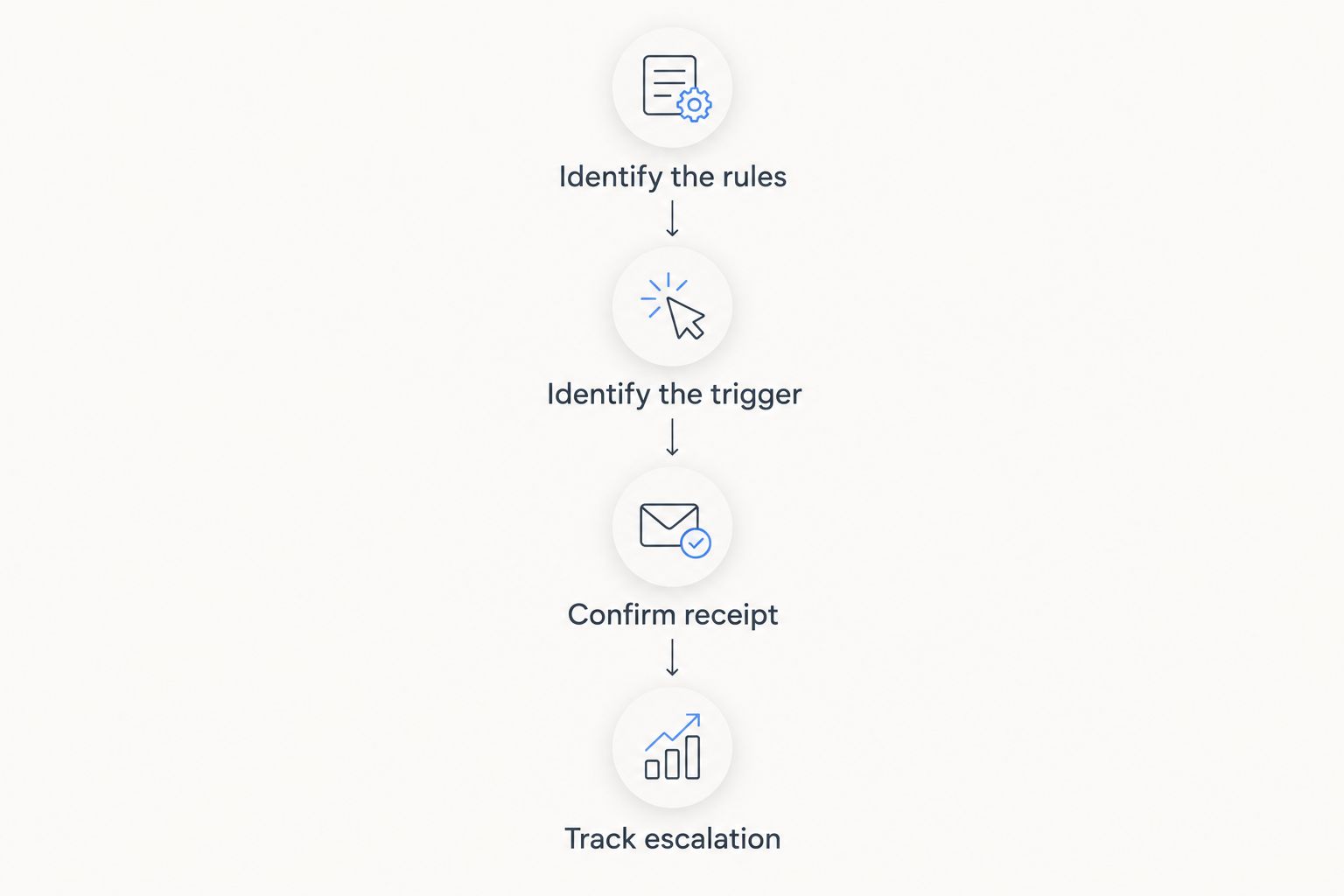
The tracker is an internal control, not a legal determination. Have the responsible adviser check the rule, trigger, counting method, and recipient before you rely on the resulting date.
What should your evidence file contain?
Organize the file so a reviewer can understand both the alleged procurement error and your compliance with the petition procedure. Keep original documents alongside any translated or annotated working copies.
Include the tender identifier, relevant document versions, your submitted bid materials, clarifications, results notices, and correspondence about the disputed issue. Add the petition itself and the evidence showing when it reached the intended recipient.
Prepare a short chronology that points to each supporting document. Separate established facts from allegations and explain the remedy you are requesting without assuming the reviewer will infer it.
Avoid expanding the file with unrelated allegations. More documents do not fix a missing connection between the challenged requirement, your evidence, and the correction you want.
Does filing a protest stop the tender?
Do not assume that a petition automatically stops the procurement. Establish whether the applicable framework provides for suspension and whether an authorized decision has actually been issued.
Keep monitoring formal procurement communications while the petition is pending. A request to suspend, an acknowledgment of your petition, and a suspension decision are different records.
If continued procurement activity threatens the remedy you seek, raise that issue promptly with qualified Vietnamese counsel. Waiting for the ordinary response without considering the status of the procurement is not a substitute for reviewing available protective steps.
Can tender software shorten the legal process?
Tender software supports research and record organization; it does not set an authority’s response deadline. In 2026, keep the information workflow separate from the formal resolution process.
Dauthau is best for Vietnamese businesses researching tenders, not for obtaining a binding protest decision. Its stated scope includes searching, tracking, and analyzing procurement tenders, contractor data, and bidding results across Vietnam.
Dauthau bidding-intelligence software is relevant when your team needs context about a package or contractor. The limitation is procedural: tender research is not proof that a petition was filed correctly or received on time.
Use Dauthau for the research task it serves, then preserve the underlying procurement records in your case file. Do not infer petition-submission, legal-representation, or adjudication functions from a platform’s tender-search capabilities.
FAQ
How long does a bid protest take to resolve in Vietnam?
There is no single end-to-end resolution time for every Vietnamese bid protest. Identify the governing framework, procurement stage, and review route, then calculate each filing and response deadline separately.
Does the clock start when I discover the award result?
Do not assume that your discovery date starts the clock. Check whether the applicable provision uses publication, notification, receipt, or another event, and preserve evidence of that event.
Are bid-protest deadlines counted in working days?
Use the counting method stated in the applicable provision. Do not convert a working-day period into calendar days or assume that every stage uses the same terminology.
Can I protest a tender before the winner is announced?
A challenge during contractor selection requires a separate procedural assessment from a challenge to selection results. Identify the disputed action, the applicable petition route, and its filing requirements before submitting.
Does filing a petition automatically suspend the award?
Do not treat filing as automatic suspension. Check the applicable rules and obtain the formal record of any suspension decision before changing your procurement assumptions.
What should I do if the initial authority does not answer?
Check the conditions and deadline for the next permitted review step. Preserve your original submission and receipt evidence, and calculate escalation timing from the event specified by the applicable rule.
Does a private tender follow the same protest timetable?
Do not apply the statutory public-procurement petition timetable to a private tender without checking its legal coverage. Review the tender terms, contractual arrangements, and applicable dispute-resolution rules.
One last thing
For your 2026 case, distinguish the date you sent the petition from the event that legally starts the response period. The most useful deadline is a verified next-action date, not an estimated date for the whole dispute to end. Keep that date, its supporting provision, and its evidence together.