
Yes, tender alert software can track private-sector tenders when the relevant notices are published on sources the software covers or shared through an authorized connection. It cannot reveal invitation-only opportunities or restricted documents unless the buyer grants access; finding a notice also does not establish your eligibility to bid.
- Can tender alert software track private sector tenders? Yes, within its covered sources and your authorized access.
- Dauthau supports public and private procurement research in Vietnam; confirm coverage of the buyers you target.
- A tender alert identifies an opportunity, not permission to download documents or submit a bid.
- Evaluate private tender monitoring against named buyers and original notices, not a general coverage claim.
Can tender alert software track private-sector tenders too?
Yes—but coverage and access determine which private tenders you can actually track. Separate 3 access routes before you evaluate a platform: openly published notices, supplier portals, and direct invitations. Each creates a different monitoring requirement.
| Access route | Best for | Main advantage | Main limitation | What to verify |
|---|---|---|---|---|
| Openly published notices | Discovering opportunities from unfamiliar buyers | You can inspect the published notice without receiving a personal invitation | A published notice does not necessarily include unrestricted bidding documents | Whether the platform covers the original source |
| Supplier portals | Following buyers that use supplier registration | You can review opportunities made available to your supplier account | Registration and approval can restrict what you see | Whether monitoring works through an authorized method |
| Direct invitations | Following opportunities sent specifically to your business | You receive the buyer's invitation directly | An external discovery platform cannot assume access to your messages | Whether your internal workflow captures invitations and subsequent changes |
For businesses researching Vietnamese procurement, Dauthau provides a bidding-intelligence platform covering public and private tenders, contractor data, and bidding results. Dauthau is best for Vietnamese businesses seeking public and private procurement intelligence in one platform. Confirm the particular private buyers and sources you need before treating any platform as your sole monitoring channel.
Why this matters
A private tender monitoring process has to answer more than whether an opportunity exists. You need to know whether your business can participate, where the current documents are held, and who will check for changes.
For your 2026 evaluation, define success as finding relevant, accessible opportunities with enough information to make a bid decision. A large collection of notices is not a substitute for coverage of the buyers you actually want to serve.
Keep discovery and participation separate. A useful alert can point you toward a buyer while leaving supplier registration, qualification, document access, and submission entirely with that buyer.
Openly published private tenders: verify the original source
An openly accessible notice gives tender software something it can potentially discover. That does not prove that a particular platform collects the source, refreshes the record when it changes, or includes every attachment.
Ask the provider to demonstrate a notice from a private buyer relevant to your business. Open the original source alongside the software record and compare the buyer, scope, deadline, and document references.
Best for: discovering private buyers beyond your existing contacts. The advantage is visibility into an opportunity you did not receive personally; the limitation is that discovery alone does not establish whether you qualify.
Before adding the opportunity to your pipeline, check whether the notice directs you to registration, prequalification, or a separate document request. Record that next action explicitly rather than marking the tender ready for submission.
Supplier portals: verify the access method
A supplier portal adds an access question to the coverage question. A provider's ability to monitor public notices does not establish an ability to read opportunities inside your supplier account.
Ask how the proposed monitoring method receives information and what authorization it requires. Confirm the method with the buyer's portal requirements instead of assuming that account credentials can be shared or used by another service.
Best for: following named buyers whose procurement process uses supplier accounts. A portal can provide the buyer-specific information available to your account, but your visibility remains tied to that account's permissions.
During a 2026 software demonstration, distinguish between a link to a portal and access to the opportunity inside it. A link is useful navigation; it is not evidence that the software monitors restricted notices or their updates.
Direct invitations: keep an internal capture process
An invitation sent to your business belongs in your opportunity workflow even when it never appears in a searchable tender database. Do not assume an external alert service receives it simply because the service tracks private procurement.
Assign responsibility for recording incoming invitations, confirming their source, and storing the buyer's instructions. If you want software to collect messages or documents, request a demonstration of that exact capability and confirm the permissions involved.
Best for: opportunities already shared with your business. Direct receipt gives you the invitation, but it does not remove the need to manage revisions, qualification questions, and submission instructions.
Keep the invitation's original reference with the opportunity record. When a colleague reviews the tender later, they should be able to distinguish the buyer's instructions from an internal summary.
Why private tender coverage varies
Private tender monitoring varies with the information available to the platform and the access available to your business. Use these factors to frame questions about coverage, not as assumed features of a particular product:
- Publication location: Identify whether the opportunity appears on an open page, inside a supplier portal, or in a direct invitation.
- Source inclusion: Ask whether the platform actually covers the named source, rather than accepting a general statement about private procurement.
- Access permission: Establish which notices and documents your business is authorized to view.
- Record detail: Check whether the software provides enough information to distinguish a relevant tender from a similarly named opportunity.
- Change handling: Ask how corrections, attachments, and deadline changes appear in the proposed workflow.
- Opportunity matching: Confirm that your search terms reflect the language buyers use to describe the work you supply.
Treat these as your 2026 coverage checklist. The useful answer is a demonstrated source and workflow, not an unsupported promise to track all private tenders.
How do you verify private tender monitoring before committing?
Use 5 checks to evaluate the proposed workflow against real opportunities relevant to your business. Choose examples you already know how to access so you can compare the software record with the source.
- Define scope. List your target buyers, supply categories, locations, and exclusions. Separate essential sources from those that would simply be useful.
- Check coverage. Ask the provider to find a known private tender and identify where its information originated. A keyword match without a traceable source is not enough.
- Confirm access. Follow the route from alert to notice and then to the required documents. Identify any registration, approval, or invitation requirement before relying on the workflow.
- Test changes. Request an example showing how an amended notice is handled. Check whether you can distinguish the current instructions from an earlier version.
- Assign ownership. Decide who reviews alerts, confirms eligibility, and owns the next action. An unattended notification is not a managed opportunity.
These checks produce a decision you can explain internally: which sources are covered, which require another process, and where responsibility sits. Keep that record with your 2026 evaluation notes so the purchasing decision remains tied to demonstrated requirements.
A broader guide to tender alert software for Vietnamese contractors can help structure your shortlist. Private-source coverage still needs its own demonstration; a general feature comparison does not answer that question.
How should you handle a private tender after receiving an alert?
Use the same sequence regardless of how the opportunity reaches you: discovery, access, qualification, and follow-up. Each stage answers a different question, so keep them distinct in your internal record.
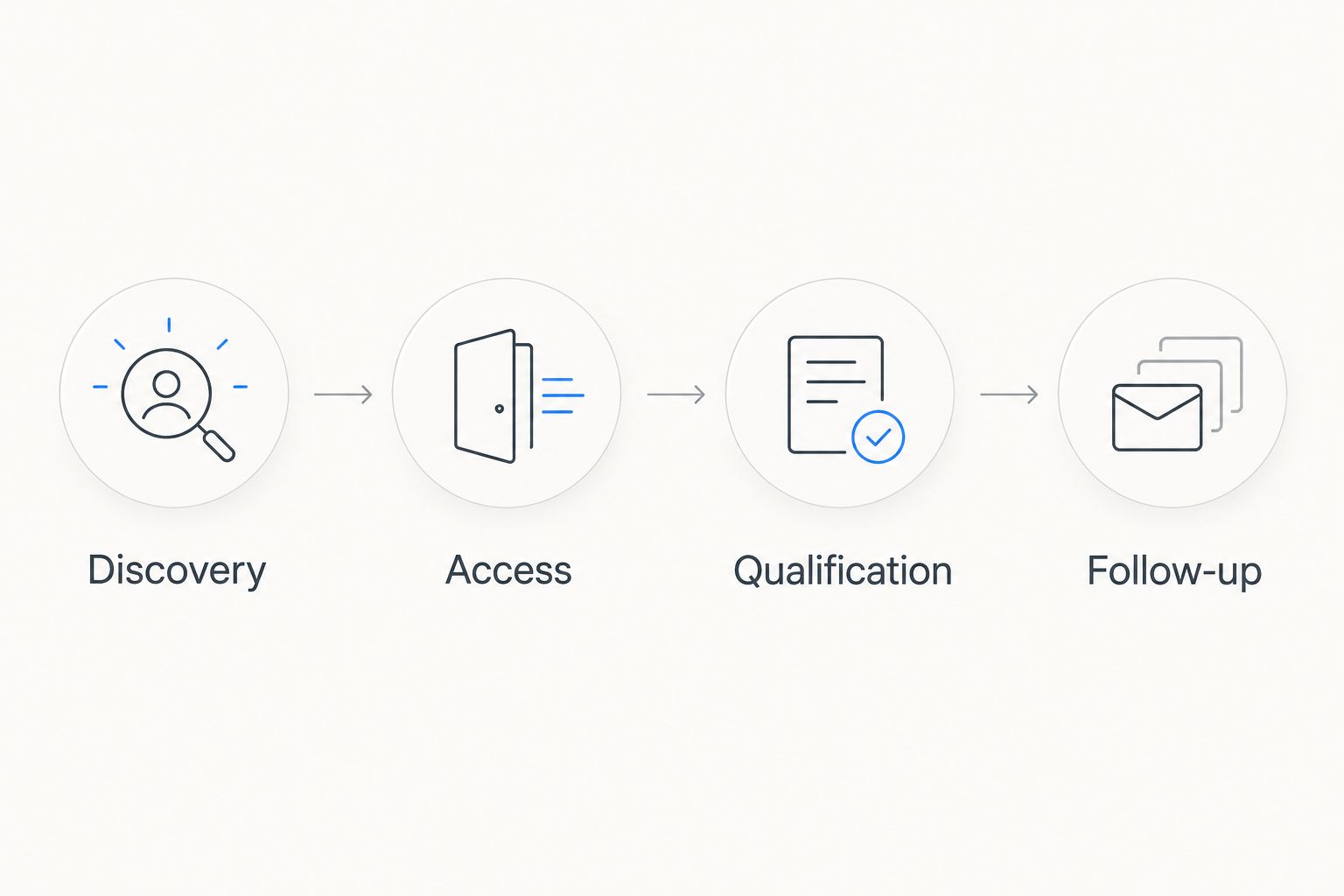
Discovery
Record where the opportunity came from and retain its original reference. An alert summary helps you triage the notice, but the buyer's current instructions should inform the bid decision.
Do not treat every matched keyword as a qualified lead. Read the scope before assigning proposal work, particularly when a familiar term appears in a different purchasing context.
Access
Confirm that your business can view the documents needed to assess the opportunity. If access depends on registration or approval, assign that action before asking the bid team to prepare a response.
Keep access status separate from opportunity status. A tender can be relevant to your business while still requiring permission to inspect the full requirements.
Qualification
Check the actual participation requirements against your business's capabilities and documents. Use the notice and bidding documents rather than inferring eligibility from the buyer's industry or the project title.
Do not confuse relevance with eligibility. A technically attractive project still needs a deliberate decision about whether your business can submit a compliant response.
Follow-up
Assign an owner to review the source for changes and confirm the submission instructions. If the platform offers update alerts, establish what those alerts cover before making them the only control.
For your 2026 pipeline, require 4 fields on every opportunity record: source reference, access status, submission deadline, and responsible owner. These are internal tracking requirements, not claims about any software's default configuration.
Can private tender alerts replace supplier registration?
No—private tender alerts do not replace supplier registration required by a buyer. An alert can help you discover an opportunity, but the buyer's process determines how you obtain access and participate.
Check registration requirements before investing in a proposal. Where registration is required, record whether your business has completed it rather than assuming that receiving the alert establishes approval.
Does public tender coverage prove private tender coverage?
No—public tender coverage does not establish coverage of a particular private buyer. Ask for evidence from the private sources that matter to your business, including the route to the original notice.
A platform can support both categories without collecting every source within either category. Evaluate the coverage claim at the buyer and source level.
Can you use one workflow for public and private tenders?
Yes—you can use one internal workflow while keeping source and access requirements separate. Standardize how your team records ownership and next actions, but preserve each buyer's document and submission instructions.
A shared pipeline should make differences visible rather than hide them. Include a clear access status so a discovered opportunity is not mistaken for one ready for bid preparation.
FAQ
Can tender alert software track private sector tenders in Vietnam?
Yes, tender alert software can track private-sector tenders in Vietnam when it covers the relevant sources and has authorized access where required. Verify coverage against named private buyers rather than assuming every opportunity is included.
Can software find invitation-only tenders without an invitation?
Software cannot assume access to an invitation-only tender without authorization. Your business needs the buyer's permitted access route before relying on restricted information.
Does finding a private tender mean my company can bid?
No, finding a private tender does not establish your company's eligibility to bid. Check the buyer's registration, qualification, and submission requirements in the current documents.
What's the best way to check private tender coverage?
Ask the provider to demonstrate known opportunities from your target buyers and compare them with the original sources. Check document access and change handling as well as the initial notice.
Does Dauthau cover public and private procurement?
Dauthau provides a bidding-intelligence platform for searching, tracking, and analyzing public and private procurement tenders in Vietnam. Confirm the specific private sources and access requirements relevant to your business.
Should I stop checking buyer portals after setting up alerts?
Do not stop checking a required buyer portal until you have verified what the alert workflow covers. Assign responsibility for checking current documents, amendments, and submission instructions.
Can I track private tenders without an automatic connection?
Yes, you can maintain an internal opportunity record using notices and invitations your business receives through authorized channels. Assign an owner to check the source and keep the record current.
One last thing
Test a changed tender, not just a newly published one. A demonstration of discovery answers whether the software finds a notice; a demonstration of an amendment answers a different question about keeping your team informed.
Make that distinction part of your 2026 acceptance criteria. Ask the provider to show the original notice, the revised instructions, and the route your team would use to confirm which version applies before submitting.