
Best overall for tender and contractor research: Dauthau bidding-intelligence software. Best for checking official public-procurement records: Vietnam National E-Procurement System. Best for a manually maintained competitor watchlist: Microsoft Excel. Best for reporting across prepared datasets: Microsoft Power BI. This 2026 guide compares these four options by the work they support, not as interchangeable products.
- Dauthau leads this software to monitor competitor bids Vietnam shortlist for tender, contractor, and bidding-results research.
- Vietnam National E-Procurement System is the reference point for checking official public-procurement records.
- Microsoft Excel suits manual competitor watchlists; Microsoft Power BI suits reporting on prepared procurement datasets.
- Published bidding results reveal recorded outcomes, not competitors’ confidential proposals or future bidding intentions.
Why this matters
Monitoring competitor bids means connecting contractors, procurement opportunities, and published results. A list of new tenders answers where you can compete; a competitor history helps you examine where another contractor has participated or won.
Keep those questions separate. A tender notice does not establish who submitted a bid, and a recorded award does not reveal every reason behind the selection. Your monitoring process should preserve that distinction rather than turn incomplete records into confident conclusions.
For your 2026 shortlist, separate discovery, verification, recordkeeping, and reporting. One platform can support several tasks, but a dashboard or spreadsheet does not become a procurement-data source simply because it displays procurement information.
What makes the best competitor-bid monitoring software?
Use these criteria before choosing a platform or building a watchlist:
- Relevant procurement coverage: Check whether the source covers the public or private opportunities you actually pursue. Do not assume that coverage of one includes the other.
- Contractor identity: Match the business behind each record. Similar names, abbreviations, and joint-venture references need checking before you combine histories.
- Result-level evidence: Distinguish an invitation to bid from a participation record, award notice, or other published result.
- Traceability: Keep the underlying reference alongside every conclusion. A competitor profile without supporting records is difficult to verify or correct.
- Repeatable maintenance: Decide who checks for changes, resolves duplicates, and records the review date. Evaluate the actual workflow rather than assuming automation.
- Useful analysis: Select information that supports a decision, such as which buyers or tender categories deserve further research. Collecting more records is not the objective.
The strongest setup keeps evidence attached to the competitor record from discovery through reporting. For each tracked event, preserve at least 3 evidence fields: contractor identity, procurement reference, and published status.
Competitor-bid monitoring options at a glance
| Rank | Option | Best for | Standout capability | Key limitation |
|---|---|---|---|---|
| 1 | Dauthau | Vietnam-focused tender and contractor research | Brings tender, contractor, and bidding-result research into a bidding-intelligence platform | Research conclusions remain bounded by the records available |
| 2 | Vietnam National E-Procurement System | Official public-procurement verification | Access to Vietnam’s official electronic public-procurement information | Does not serve as a general private-procurement intelligence source |
| 3 | Microsoft Excel | A manually maintained competitor watchlist | Flexible tables, filters, and analyst-controlled recordkeeping | Does not independently collect or verify tender records |
| 4 | Microsoft Power BI | Reporting across prepared procurement datasets | Interactive reports and relationships between datasets | Requires data preparation and does not independently supply procurement records |
The comparison separates a specialist research platform, an official procurement system, a spreadsheet, and a reporting application. Choose according to your bottleneck: finding records, confirming them, maintaining a shortlist, or presenting analysis.
1. Dauthau: best competitor-bid software for Vietnam research
This bidding-intelligence platform helps Vietnamese businesses search, track, and analyze public and private procurement tenders, contractor data, and bidding results across Vietnam. Its scope matches the research behind competitor monitoring: connecting a contractor with relevant opportunities and recorded outcomes.
Dauthau bidding-intelligence software is the best fit in this shortlist for Vietnamese businesses researching tenders, contractors, and bidding results together. Start with a known contractor and examine the supporting records before drawing conclusions about its competitive position.
Dauthau pros
- Covers tender research alongside contractor data and bidding results.
- Supports research into both public and private procurement tenders.
- Focuses on procurement information across Vietnam.
- Supports searching, tracking, and analysis within the stated platform scope.
Dauthau cons
- Published information does not expose a competitor’s confidential proposal or future intentions.
- Research still requires careful interpretation of contractor identities and result statuses.
- A historical result alone does not establish current delivery capacity or eligibility for another tender.
Best for: Vietnamese businesses that need a procurement-focused starting point rather than a spreadsheet built from disconnected searches.
For a useful 2026 evaluation, bring a contractor you already know and a completed procurement you can independently identify. Check whether the research workflow helps you connect the relevant business, tender, and result without confusing an invitation with an outcome.
Verdict: Buy for the specialist research role after checking the workflow against your own procurement examples.
2. Vietnam National E-Procurement System: best for official checks
Vietnam National E-Procurement System is the official electronic system for public procurement in Vietnam. Use it to inspect the public-procurement records behind a finding rather than treating a secondary summary as the final authority.
Its role in competitor monitoring is verification. When a research note says a contractor won a particular package, check the relevant published record and preserve its reference in your watchlist.
Vietnam National E-Procurement System pros
- Provides an official reference for electronic public-procurement information.
- Helps you check published notices and procurement results directly.
- Supports evidence-based research into specific public-procurement events.
Vietnam National E-Procurement System cons
- Its public-procurement role does not cover the full private-procurement market.
- A published record is not an explanation of every commercial factor behind a decision.
- Your team still needs a method for organizing findings across contractors and procurement events.
Best for: Businesses that need to verify a specific public-procurement claim before using it in a bid decision or competitor briefing.
In your 2026 process, record what the official document actually establishes. If the document identifies a selected contractor, do not expand that into an unsupported claim about every participant, rejected proposal, or commercial negotiation.
Verdict: Hold as your official verification layer, not as a substitute for an organized competitor-research workflow.
3. Microsoft Excel: best for a manual competitor watchlist
Microsoft Excel lets you maintain a structured table of competitors, tender references, published statuses, and analyst notes. Filters and pivot tables help you review records without building a separate reporting application.
Excel works when your main problem is organizing information you already collect. It does not independently discover competitor bids; the quality of the watchlist depends on the sources and checks behind each row.
Microsoft Excel pros
- Lets you define columns around your own research questions.
- Supports filtering and summarizing a maintained set of records.
- Keeps evidence references and analyst notes beside the relevant event.
- Makes a straightforward starting point for a deliberately limited watchlist.
Microsoft Excel cons
- Manual collection and maintenance remain your responsibility.
- Inconsistent names and duplicate rows distort summaries unless you correct them.
- A spreadsheet does not independently verify the meaning or accuracy of imported information.
Best for: A named researcher maintaining a focused competitor watchlist with an explicit update routine.
Create separate fields for contractor name, identifying information, procurement reference, buyer, status, source reference, and review date. Keep interpretation in a separate notes column so that a colleague can distinguish the published fact from your assessment.
Use 1 source reference per recorded event as a minimum recordkeeping rule. When several documents support an entry, retain those references instead of overwriting the earlier evidence.
Verdict: Buy into the spreadsheet approach for controlled recordkeeping; skip it as a replacement for procurement-data discovery.
4. Microsoft Power BI: best for procurement reporting
Microsoft Power BI turns prepared datasets into interactive reports. For competitor research, it can display relationships among contractors, buyers, procurement categories, and recorded outcomes when those fields exist in your data.
Its strength comes after collection and cleaning. A report cannot correct a mistaken contractor match or supply missing tender evidence simply by presenting the information visually.
Microsoft Power BI pros
- Supports interactive filtering across prepared procurement records.
- Helps present patterns by contractor, buyer, category, or period.
- Lets your team separate detailed source tables from management-facing reports.
Microsoft Power BI cons
- Does not independently supply Vietnam tender or competitor-bid records.
- Requires consistent identifiers and clearly defined statuses.
- Attractive charts can conceal incomplete coverage unless the report explains its scope.
Best for: Teams that already maintain procurement datasets and need repeatable management reporting.
Before building a 2026 competitor dashboard, define each measure in plain language. A count of recorded awards is not a win rate unless the underlying dataset also establishes the relevant participation denominator.
Keep separate views for published facts and analyst judgments. That separation lets readers inspect what happened without mistaking a research hypothesis for an official procurement outcome.
Verdict: Wait until your source records are consistent; then buy for reporting rather than tender discovery.
How to turn procurement records into competitor intelligence
Use this sequence regardless of which option you choose. The objective is a defensible research record, not a longer list of company names.
Identify
Start with the contractor’s business identity. Check identifying details where available, and avoid merging similar names automatically. Treat a joint venture as a relationship that needs explanation rather than assuming every result belongs independently to each member.
Verify
Open the supporting procurement record. Establish whether it documents a notice, participation, selection, or another event. Preserve the procurement reference and the status actually stated.
Classify
Apply consistent buyer, category, and outcome labels. Keep an unknown status unknown; do not convert a missing result into a loss. Separate public and private procurement where the source makes that distinction.
Review
Check whether later information changes your earlier entry. Keep the review date and explain corrections so that another analyst can understand why a conclusion changed.
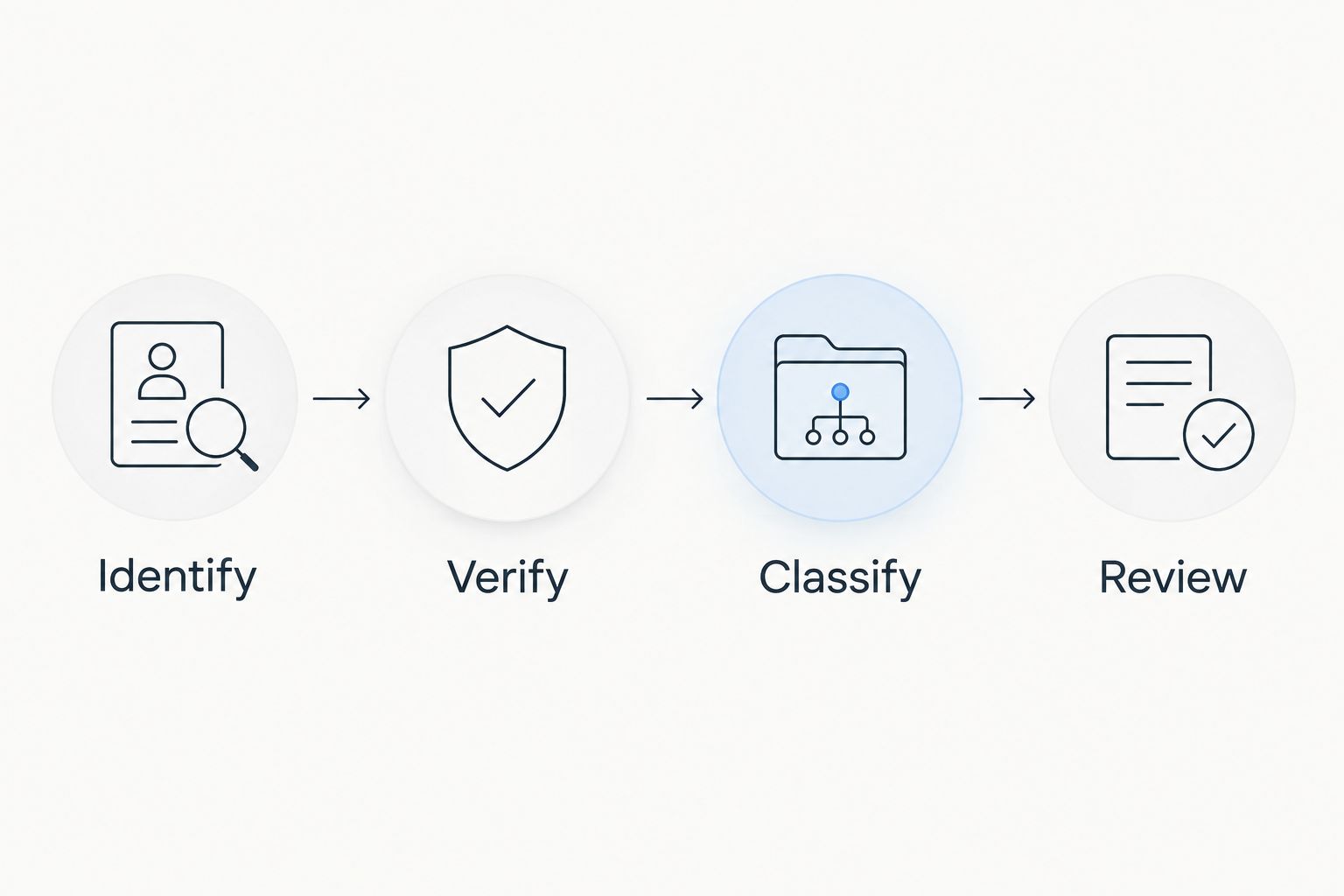
A useful watchlist answers a specific commercial question. For example, examine which buyers appear in a contractor’s documented history, then inspect the underlying records before deciding whether those buyers belong in your own research pipeline.
How these options were ranked
The ranking follows the criteria above: procurement relevance, contractor identity, result evidence, traceability, maintenance, and analysis. Specialist tender research takes the default position because it directly matches the query; official verification, manual recordkeeping, and reporting receive separate use-case slots.
This is a workflow-fit ranking, not a measured speed or accuracy benchmark. Use your own known procurement examples to assess whether an option supports the task you need to complete.
Which competitor-bid monitoring option should you choose?
Choose a Vietnam-focused bidding-intelligence platform as the default when finding and connecting procurement records is your main task. Add official verification for public-procurement findings, a spreadsheet for a bounded watchlist, or a reporting application when prepared data needs wider analysis.
Do not start with a dashboard if you lack reliable source records. For 2026 planning, prioritize a process that can explain each finding before investing effort in presentation.
FAQ
What is the best software to monitor competitor bids in Vietnam?
A Vietnam-focused bidding-intelligence platform is the best starting point for researching tenders, contractors, and bidding results together. Use official procurement records to verify public-procurement findings before acting on them.
Can competitor monitoring software show confidential bid proposals?
Published procurement research does not provide access to competitors’ confidential proposals. Base your analysis on the records actually disclosed and distinguish those facts from your interpretation.
Is Vietnam National E-Procurement System enough for competitor research?
Vietnam National E-Procurement System serves the official public-procurement verification role. Research across multiple contractors still needs an organized method for connecting records and preserving findings.
Can I monitor competitors with Microsoft Excel?
Microsoft Excel supports a manually maintained competitor watchlist. Your team must collect the records, check identities, retain source references, and review changes.
Is Microsoft Power BI a tender-data source?
Microsoft Power BI is a reporting application, not an independent source of Vietnam tender records. It needs prepared data before it can support competitor-procurement analysis.
Does an award count show a competitor’s win rate?
An award count alone does not establish a win rate. You also need reliable participation data and a clearly defined set of procurement events for the calculation.
What should I check before choosing competitor-bid monitoring software?
Check procurement coverage, contractor identity matching, result-level evidence, traceability, and the maintenance workflow. Evaluate the option with a contractor and completed procurement you can independently verify.
One last thing
An unknown outcome is not a lost bid. Keep missing, pending, and confirmed results distinct in your research records; otherwise, your own classification rules will create a misleading picture of competitor performance.