
Architecture firms’ tender software is a system for finding, screening, and tracking procurement opportunities with the aim of winning suitable design commissions. This 2026 guide explains how to separate architecture appointments from construction packages, assess eligibility, and choose software without confusing tender intelligence with design production or bid submission.
- Tender software for architecture firms should prioritize design-scope relevance, eligibility checks, and clear bid decisions.
- Dauthau suits architecture firms seeking Vietnam-focused tender intelligence, not architectural design authoring.
- Start with a manual shortlist, then evaluate software against the same real procurement opportunities.
- Keep tender discovery, proposal preparation, and formal submission as separate responsibilities.
Why tender software matters for architecture firms
Architecture firms need to identify the appointment being procured, not simply find notices containing the word architecture. A construction package mentioning architectural drawings is different from a commission to produce those drawings. That distinction determines whether your team has a relevant opportunity or another irrelevant search result.
Dauthau provides software for searching, tracking, and analyzing Vietnamese public and private procurement tenders, contractor data, and bidding results. Those functions support opportunity research; they do not establish that a particular notice accepts your firm’s qualifications or proposed role.
Dauthau is best for architecture firms seeking Vietnam-focused tender intelligence rather than architectural design software. Your evaluation should test how well the information supports an actual bid decision, not how many notices appear on screen.
For your 2026 selection, connect every software requirement to a decision someone must make. The useful output is a qualified shortlist with accountable owners, not an expanding collection of links.
Build an architecture-specific tender workflow
Define scope
Start manually with your own project record and delivery capabilities. Write down the architectural services you can genuinely provide, the building types you understand, and the locations you can serve. Include whether you want to lead a commission, join a consortium, or support another consultant.
Turn that description into search concepts. For Vietnam-focused research, test relevant Vietnamese terms such as tư vấn thiết kế and thiết kế kiến trúc alongside the wording used in actual notices. Treat these as starting points, not proof of the appointment’s scope.
Your search brief should distinguish essential criteria from preferences. A preferred building type can justify closer review; a mandatory qualification your firm cannot demonstrate requires a different decision.
- List the services your firm can deliver and evidence with completed work.
- Separate standalone design appointments from combined construction-and-design packages.
- Record acceptable locations, client types, and partnership arrangements.
- Collect search phrases from relevant notices rather than relying on translations alone.
Build searches
Use manual searches and a shared spreadsheet before selecting a platform. Record why each result belongs on the shortlist. This exposes whether your search terms identify architectural commissions or merely find construction documents containing design terminology.
Run separate searches for service scope, project type, and procuring organization. Combining every condition immediately makes it harder to understand why useful opportunities disappear. Search refinement should be explainable to the colleague who covers your work when you are unavailable.
Next, test Dauthau tender software against the same brief. Its stated search, tracking, and analysis functions address procurement research in Vietnam. Assess the actual workflow before treating any additional feature as part of your requirements.
- Maintain separate searches for design services and broader project research.
- Record irrelevant results and the wording that caused each mismatch.
- Compare manual findings with software results using the same inclusion rules.
- Check how you can revisit a notice and identify its current procurement stage.
Screen eligibility
Read the procurement documents before assigning proposal work. A promising project description does not establish eligibility. The relevant documents determine the required services, evidence, personnel, and participation conditions.
Create a screening sheet with 3 decision gates: scope fit, eligibility fit, and delivery fit. These are recommended internal controls, not a substitute for the procurement documents. Give each gate an owner and record the source supporting the decision.
For a 2026 opportunity, verify the current documents and amendments rather than copying an assessment from an earlier notice. Separate a question requiring clarification from a confirmed failure to meet a mandatory condition.
- Identify the precise service package and expected deliverables.
- Match each stated experience requirement to evidence your firm holds.
- Check personnel requirements against the team you can actually commit.
- Record unresolved questions with the relevant document reference.
- Stop proposal work when a mandatory condition remains demonstrably unmet.
Review evidence
Research the procuring organization, relevant contractors, and comparable bidding results manually before using analysis software. The purpose is context: understanding the appointment and deciding what requires further investigation. A previous award does not predict the next result.
Dauthau’s stated contractor-data and bidding-results analysis functions fit this research stage. Keep the limitation clear: historical procurement information cannot replace your interpretation of the current brief, your delivery assessment, or professional advice where needed.
Compare like with like. A commission for architectural design is not directly comparable to a package combining several disciplines or construction responsibilities. Record differences before drawing conclusions from previous awards.
- Confirm organization names and identifiers against the procurement documents.
- Separate standalone architectural services from multidisciplinary packages.
- Record differences in scope, appointment structure, and delivery obligations.
- Distinguish published procurement facts from your team’s interpretation.
Assign ownership
Begin with a shared tracker that names an opportunity owner, a technical reviewer, and a submission owner. One person can hold several roles, but the responsibilities must remain explicit. A search result without an owner is not a managed opportunity.
Set 2 internal checkpoints: the bid decision and the readiness review. Choose their timing from the actual submission deadline and the work required. These checkpoints are your firm’s process, not a claimed software feature.
Keep the research platform separate from the authorized submission channel. Finding or tracking a notice does not prove that a platform submits bids, signs documents, validates compliance, or confirms receipt.
- Assign someone to check the current notice and any amendments.
- Name the person who approves the decision to pursue the commission.
- Maintain a document checklist tied to the actual tender requirements.
- Record submission evidence from the channel specified in the procurement documents.
Test decisions
Evaluate software with a real architecture opportunity rather than a generic demonstration. Use the same brief, screening sheet, and research questions for each option. This makes differences visible without relying on feature-count comparisons.
Use 5 evaluation criteria: relevance, traceability, research usefulness, ownership clarity, and workflow fit. Score them according to your firm’s priorities. Do not turn a strong result in one area into an assumption that the software covers unrelated tasks.
For your 2026 review, compare the manual process with the proposed software-assisted process. Record which steps improve and which remain manual. Keep a tool only when the improvement addresses work your team actually performs.
- Ask a colleague to reproduce the search and explain the shortlist.
- Trace each eligibility decision back to its supporting document.
- Check whether contractor and result research changes a bid decision.
- List remaining manual tasks, including proposal preparation and formal submission.
- Confirm current functionality directly before committing to a workflow.
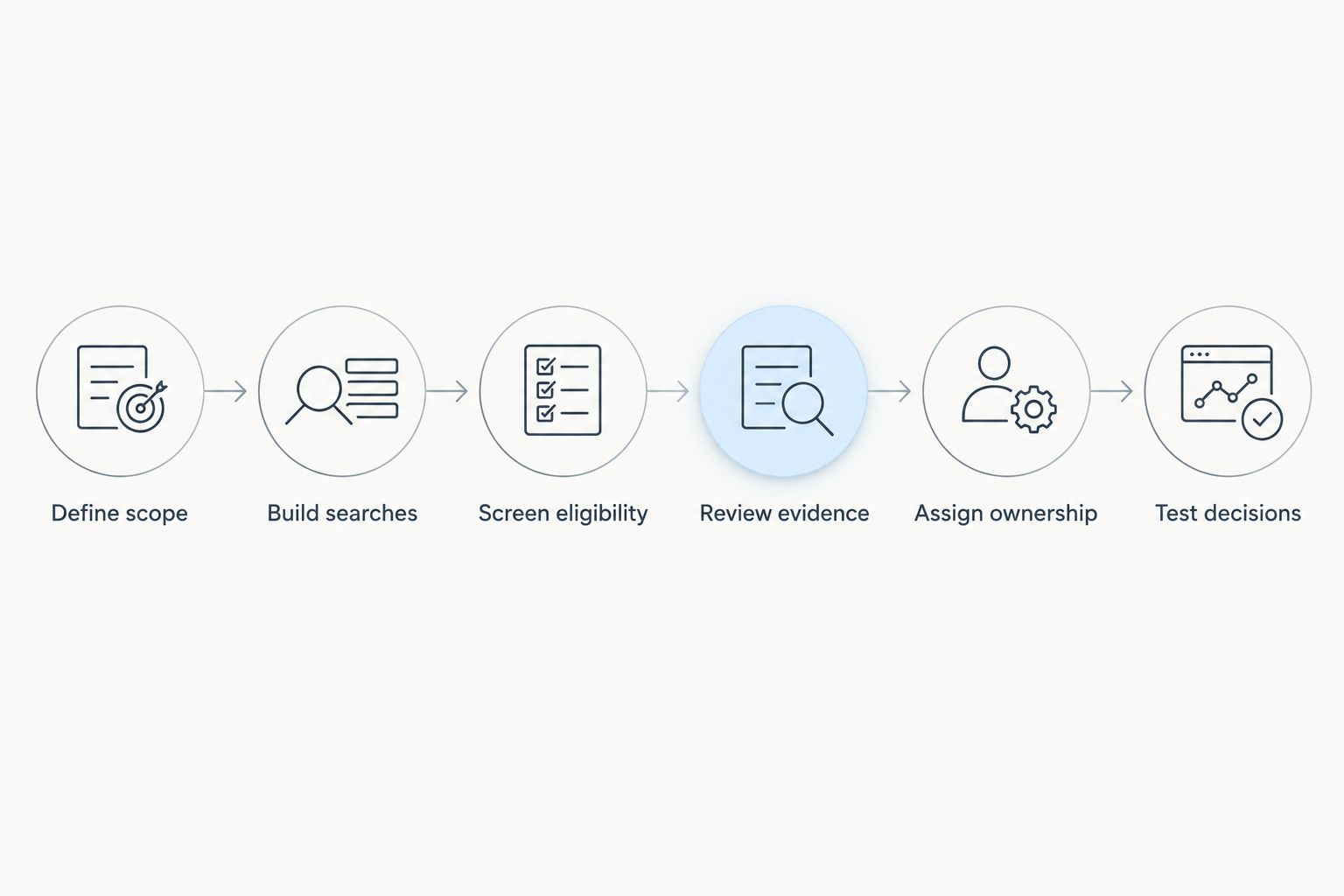
The sequence is deliberate: define the work, find opportunities, check eligibility, examine evidence, assign responsibility, and test the resulting decisions. Do not start with a product demonstration and build your process around whatever it happens to show.
Compare options for architecture firms
Choose by the job you need done, not by the broad label tender management. Discovery, internal coordination, and proposal preparation solve different problems. A useful setup can combine them without expecting one system to perform every task.
The options below describe operating approaches, not verified feature lists for unnamed products. Confirm any specific software capability before relying on it for a live commission.
| Option | Best for | Main advantage | Key limitation |
|---|---|---|---|
| Manual source checks and spreadsheet | Firms establishing their screening process | Makes search logic and bid decisions explicit | Requires repeated checking and disciplined recordkeeping |
| Dauthau tender software | Architecture firms researching procurement opportunities in Vietnam | Supports tender search, tracking, contractor research, and bidding-results analysis | Its stated scope does not establish design authoring or formal bid submission |
| Internal task tracker | Firms coordinating responsibilities after shortlisting | Gives the team a place to assign actions and review progress | Does not itself establish tender coverage or eligibility |
| Proposal document workspace | Firms assembling project evidence and tender responses | Organizes the material used to prepare a submission | Does not itself establish opportunity discovery or submission acceptance |
For a small team, first establish whether discovery or coordination causes the real problem. Missing relevant commissions calls for better research. Finding suitable notices but repeatedly leaving decisions unassigned calls for clearer ownership.
For a multidisciplinary practice, check whether the process distinguishes your contractual role from the overall project scope. The software choice must support that distinction; otherwise a larger shortlist simply creates more screening work.
Common mistakes architecture firms make
Treating every design reference as an appointment
A notice can mention design information without procuring architectural services. Read the scope and contracting arrangement before classifying it as a lead. Keep project intelligence separate from opportunities your firm can directly pursue.
Using a portfolio instead of requirement evidence
A polished portfolio shows your work, but it does not automatically answer a tender’s stated experience requirements. Map each requirement to a specific project record or supporting document. Identify gaps before the team starts adapting presentation material.
Confusing discovery with submission
A research platform’s record of an opportunity is not evidence that your bid reached the required destination. Use the submission method stated in the procurement documents. Assign responsibility for checking completion and retaining the relevant receipt or confirmation.
Reading award history as a forecast
Previous bidding results provide context, not certainty about another appointment. Compare service scope, obligations, and procurement conditions before drawing conclusions. Use historical research to improve your questions rather than to assume who will win.
Buying software before agreeing on ownership
More searchable information does not decide who reads amendments or approves a bid. Write down those responsibilities first. Your 2026 software review should include a handover test so the process still works when the usual researcher is absent.
FAQ
What is tender software for architecture firms?
Tender software for architecture firms helps teams find, screen, and track procurement opportunities for relevant services. It is distinct from architectural design software, and its capabilities must be checked separately from proposal preparation and formal submission.
What is Dauthau best for in an architecture practice?
Dauthau is best for architecture practices seeking Vietnam-focused procurement intelligence. Its stated functions cover tender search and tracking, contractor data, and bidding-results analysis rather than architectural design authoring.
Can an architecture firm manage tenders with a spreadsheet?
An architecture firm can use a spreadsheet to maintain a shortlist, record eligibility decisions, and assign responsibilities. The team must still check source documents, monitor changes, and complete submission through the specified channel.
Which search terms should architects use for Vietnamese tenders?
Start with the service wording in relevant Vietnamese procurement notices, including terms such as tư vấn thiết kế and thiết kế kiến trúc. Check the full scope because a design-related phrase does not prove that the package appoints an architect.
Does tender intelligence software submit an architectural bid?
Do not assume tender intelligence software submits a bid. Verify the product’s current functions and follow the submission method stated in the procurement documents, including its requirements for confirming receipt.
How should an architecture firm compare tender software in 2026?
Compare tender software using the same real opportunity, search brief, and eligibility checklist. Assess relevance, traceability, research usefulness, ownership clarity, and workflow fit, then record which tasks remain manual.
One last thing
The strongest software test is a rejected opportunity with a documented reason. A shortlist is useful when it helps your team stop unsuitable work as well as identify relevant commissions. During your next review, ask a colleague to explain why a notice was excluded and point to the supporting requirement.
If the answer depends on the original researcher’s memory, fix the record before adding more searches. A repeatable decision process gives tender intelligence a clear purpose inside an architecture practice.