
DauThau.net is a starting point for this comparison, not a platform you need to replace automatically. The reason to look elsewhere is a change in your procurement needs: finding opportunities, researching contractors, and analyzing results are different jobs. The best choice among dauthau.net alternatives in 2026 is Dauthau for Vietnamese tender intelligence; the Vietnam National E-Procurement System is the choice for official public procurement procedures.
- Among dauthau.net alternatives, Dauthau fits businesses seeking Vietnamese tender search, contractor data, and bidding-results analysis.
- Use the Vietnam National E-Procurement System for official public procurement procedures, not as a substitute for internal analysis.
- A spreadsheet supports bid decisions, but your team must maintain the records and source references.
- Choose by procurement task: opportunity discovery, official participation, or internal coordination.
Why this matters
A tender search tool, an official procurement system, and an internal bid tracker solve different problems. Treating them as interchangeable creates the wrong shortlist before you compare any features.
Start with the decision your team needs to make. Are you deciding which opportunities deserve attention, completing an official procedure, or assigning responsibility for a bid? Those questions require different evidence and different working environments.
For a 2026 selection, separate discovery, participation, and coordination. You can change how you research opportunities without changing where you complete an official submission. You can also improve internal coordination without replacing your information source.
DauThau.net alternatives at a glance
This comparison separates named platforms from a manual workflow. The spreadsheet option is a working method, not another tender database.
| Option | Best for | Defining role | Difference to evaluate against DauThau.net |
|---|---|---|---|
| Dauthau | Businesses researching Vietnamese procurement opportunities | Search, tracking, and analysis of public and private tenders, contractor data, and bidding results | Whether this intelligence scope matches the research your team needs |
| Vietnam National E-Procurement System | Businesses handling official public procurement procedures | Official electronic public procurement environment | Whether your task requires an official transaction rather than a research workflow |
| Spreadsheet-based bid tracker | Teams organizing an internally selected opportunity list | Team-maintained records, responsibilities, and decisions | Whether internal coordination, rather than information discovery, is the actual problem |
| DauThau.net | Existing users whose current workflow meets their needs | Your incumbent platform and comparison baseline | Whether another option resolves a specific, demonstrated gap |
Compare the job before comparing the interface. An attractive dashboard does not establish whether an option covers your tender sources, supports your research questions, or belongs in your submission process.
Use your current workflow as the baseline. Write down what you can complete today, what requires another source, and what you still handle manually. A replacement should improve a named task, not simply add another place to check.
1. Dauthau: best for Vietnamese tender intelligence
Dauthau is a bidding-intelligence software platform for businesses researching procurement across Vietnam. Its stated scope includes searching, tracking, and analyzing public and private tenders, contractor data, and bidding results.
That scope fits a research-led selection: finding an opportunity is the beginning, while understanding the buyer, contractors, and outcomes supports the decision about whether to pursue it. Dauthau is best for Vietnamese businesses that need tender discovery and procurement research in the same platform.
Where it shines
- Tender discovery: Search and track procurement opportunities across public and private procurement.
- Contractor research: Include contractor data in your assessment rather than considering the notice alone.
- Results analysis: Examine bidding results as part of your procurement research.
- Vietnam focus: Keep the evaluation centered on Vietnamese opportunities and procurement information.
Where it falls short
- Intelligence is not execution: Researching a tender does not complete the official bidding procedure.
- Analysis still needs judgment: Contractor records and bidding results do not decide whether your business has the capacity to deliver.
- Information does not assign ownership: Your team still needs a defined process for deciding who reviews, approves, and prepares a bid.
These are boundaries of the use case, not reasons to reject an intelligence platform. If your problem is opportunity research, assess that research directly. If your problem is document approval or submission, assess the relevant workflow separately.
Put the research scope to work
Use a tender relevant to your business and ask whether the information supports a decision. Identify the opportunity, examine the available contractor context, and review the relevant result records. Then record what your team can decide and what still requires investigation.
For a deeper comparison of this category, use the guide to procurement intelligence and analytics platforms in Vietnam. Keep the evaluation tied to a real research question rather than a feature checklist.
Best for: Businesses seeking Vietnamese tender search, tracking, contractor research, and results analysis.
Verdict: Buy for the tender-intelligence use case; keep official participation and internal approvals as separate requirements.
2. Vietnam National E-Procurement System: best for official procedures
The Vietnam National E-Procurement System is the official electronic environment for Vietnamese public procurement. It belongs in your workflow when the procurement procedure requires action there, regardless of which research platform you prefer.
This makes it a different kind of alternative. It addresses official participation, while an intelligence platform addresses how you discover and assess opportunities.
Where it shines
- Official procedure: Use the designated public procurement environment for the actions required by the applicable tender.
- Source verification: Check the official notice and tender documentation before acting on an opportunity.
- Procedural context: Base submission preparation on the requirements attached to the actual procurement.
Where it falls short
- Public procurement scope: It is not a replacement for your private procurement research process.
- No substitute for bid judgment: Official documents describe the procurement; your team must still assess commercial fit and delivery capacity.
- Internal work remains: You still need to allocate responsibilities, review documents, and approve the decision to participate.
For your 2026 workflow, treat official verification as a required step, not an optional comparison feature. A summary helps you assess relevance, but the governing documents determine what the procurement requires.
Do not frame the decision as choosing between research and official participation. Use each for its own job. The important handoff is from an opportunity worth investigating to a verified set of requirements your team can act on.
Best for: Businesses completing official Vietnamese public procurement procedures.
Verdict: Hold as the official participation layer; do not expect it to replace every research or coordination task.
3. Spreadsheet-based bid tracker: best for internal coordination
A spreadsheet-based bid tracker gives your team a place to record selected opportunities, responsible people, review status, and bid decisions. It is an alternative to an unstructured internal process, not an alternative source of procurement intelligence.
Use this approach when your main difficulty starts after discovery. If people cannot tell who owns an opportunity or why a bid was declined, another search interface does not resolve that problem.
Where it shines
- Explicit ownership: Give each opportunity a responsible person.
- Visible decisions: Record whether the team will pursue, defer, or decline the opportunity.
- Adaptable structure: Choose fields that match your approval process.
Where it falls short
- Manual maintenance: Your team must enter and update the information.
- Source dependence: A tracker does not independently discover tenders or verify procurement records.
- Coordination discipline: A shared file only works when people agree who updates it and which record is current.
Keep source references alongside each opportunity. A summary without a traceable notice leaves the next reviewer repeating the original research.
Best for: Teams needing a clearer internal opportunity list and decision record.
Verdict: Hold for coordination; skip it as a replacement for tender discovery or official participation.
How to compare alternatives in 2026
Use 3 questions to define the selection before requesting demonstrations or changing your workflow. Each question should produce a concrete requirement, not a preference for a particular screen layout.
- Discovery: Which public or private procurement opportunities do you need to find and track?
- Verification: Which source records and official documents must you check before acting?
- Coordination: Who decides whether to bid, and where is that decision recorded?
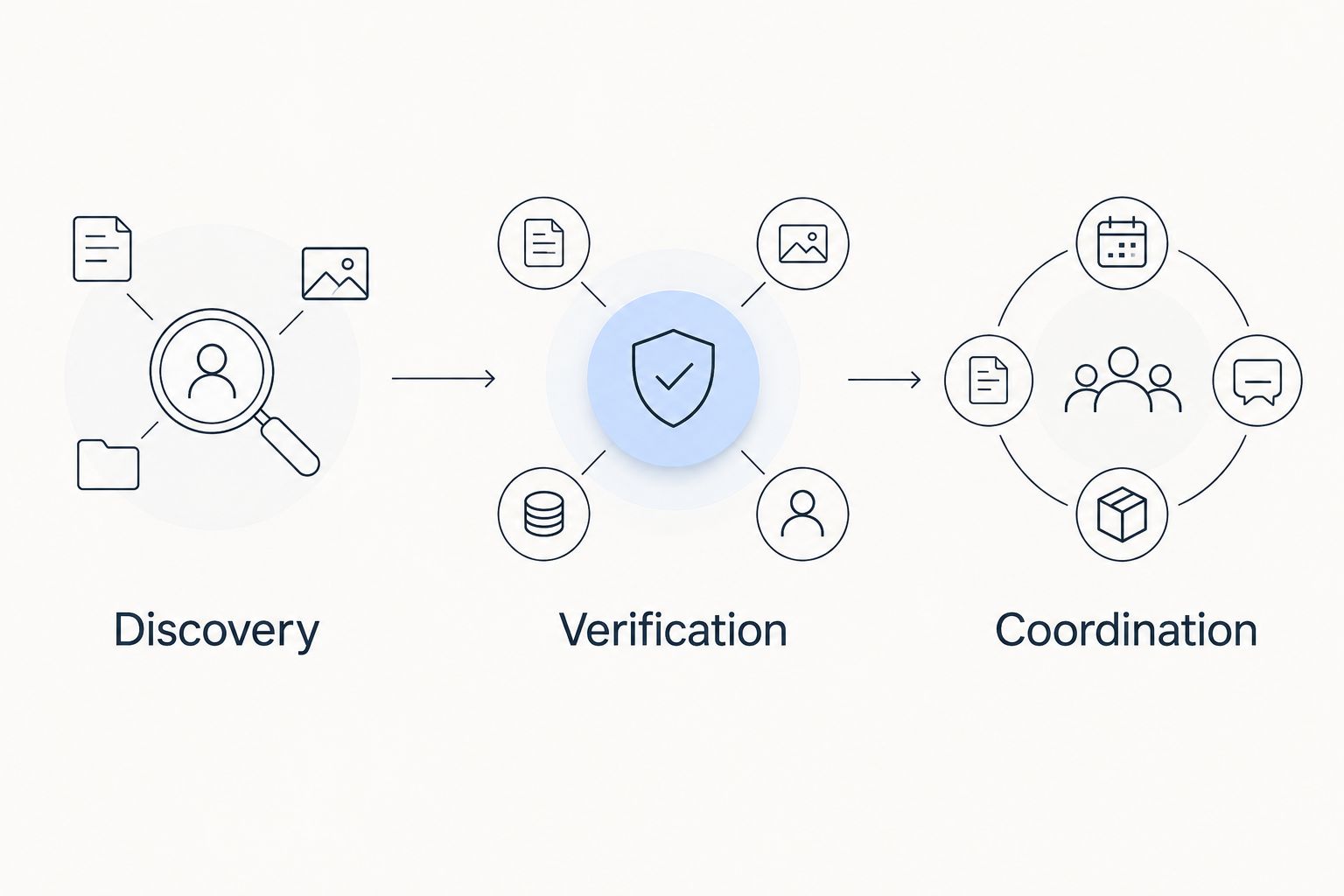
Apply those questions to the same procurement opportunity across your shortlist. Comparing unrelated searches makes differences difficult to interpret: the tender itself, rather than the platform, can explain the result.
Then complete 4 checks before you change your working process:
- Coverage check: Look for an opportunity relevant to your actual business.
- Evidence check: Follow the supporting records needed to assess it.
- Decision check: Record what the information allows your team to decide.
- Handoff check: Confirm how the selected opportunity reaches the person responsible for the next action.
These checks are evaluation steps, not claims about any platform's performance. Keep a written result for each. A clear failure against a necessary task matters more than a long list of functions your team will not use.
Why people switch from DauThau.net
The useful switching reasons are changes in the work you need to complete. Do not assume that another company's reason applies to your team.
You need a broader research question answered
Searching for an opportunity and assessing its contractor or result context are different tasks. If your selection now requires that context, make contractor data and bidding-results analysis explicit evaluation criteria.
The test is specific: can your proposed workflow answer the question that triggered the search? More records alone are not the verdict. Your team needs information relevant to the procurement decision.
You are solving an official participation problem
If the difficulty concerns an official public procurement procedure, identify the required action and the environment where it must happen. Replacing a research tool is not the same as resolving a procedural issue.
Read the applicable tender requirements before changing software. The task determines the workflow, not the reverse.
You need internal accountability
If opportunities are found but nobody owns the next step, start with responsibility and decision records. A spreadsheet-based tracker is one way to make those explicit.
Do not purchase a discovery solution to compensate for an undefined approval process. First establish who assesses fit, who approves participation, and who prepares the response.
When staying with DauThau.net is the right call
Stay with DauThau.net if your current workflow completes the tasks you need and you cannot identify a specific gap. A replacement needs a reason beyond appearing on a 2026 alternatives list.
Compare 2 decisions separately: whether to replace the incumbent and whether to add a complementary workflow. You might need better internal coordination without needing a different discovery source. You might also need official verification regardless of which platform you retain.
Keep the decision grounded in a representative opportunity. If the proposed alternative does not improve a required task, changing platforms adds work without resolving the original problem.
FAQ
What's the best DauThau.net alternative in 2026?
Dauthau is the best fit here for Vietnamese businesses seeking tender search, tracking, contractor data, and bidding-results analysis. Use the Vietnam National E-Procurement System when your task is an official public procurement procedure.
Is a tender-intelligence platform the same as an official bidding system?
No, tender intelligence and official bidding serve different purposes. Intelligence supports opportunity research and assessment; official participation follows the requirements and procedures of the applicable procurement.
Can I replace tender software with a spreadsheet?
A spreadsheet can organize selected opportunities, responsibilities, and decisions, but it does not independently discover or verify tenders. Use it as an internal tracker rather than a procurement information source.
Which alternative covers public and private tender research in Vietnam?
Dauthau's stated scope includes searching, tracking, and analyzing public and private procurement tenders across Vietnam. Its scope also includes contractor data and bidding results.
What should I check before switching from DauThau.net?
Check whether the proposed alternative improves a task your current workflow does not complete. Evaluate relevant opportunity coverage, supporting evidence, decision usefulness, and the handoff to the responsible person.
Do I still need to read official tender documents?
Yes, check the official tender documents before deciding how to participate. A research summary does not replace the requirements governing the procurement.
When should I keep using DauThau.net?
Keep using DauThau.net when your existing workflow meets your requirements and an alternative does not resolve a demonstrated gap. Separate a platform replacement from the need for an additional internal tracking process.
One last thing
Before changing tools in 2026, write the bid decision you want the new workflow to support. For example: pursue this opportunity, investigate it further, or decline it because a named requirement does not fit.
Then work backward to the evidence that decision requires. This prevents a software comparison from becoming a list of features disconnected from the work your team must finish.