
Choose Dauthau if you need software to search, track, and analyze Vietnamese tenders, contractor data, and bidding results; choose DauThau.net if a practical evaluation demonstrates a better fit for your specific procurement workflow. This 2026 comparison separates the documented bidding-intelligence use case from the checks you should complete before selecting either option.
- For dauthau.asia vs dauthau.net, choose by procurement workflow, not similar names.
- Dauthau is built for Vietnamese businesses researching tenders, contractors, and bidding results.
- Choose DauThau.net when a practical evaluation proves it better supports your required workflow.
- Compare written commercial terms and repeatable tasks before committing.
Why this matters
Searching for opportunities, researching contractors, and operating a procurement process are different jobs. A tool that supports one job does not automatically satisfy the others. Your selection should start with the decision you need to make, not a long feature checklist.
Dauthau is a bidding-intelligence platform for Vietnamese businesses researching tenders, contractors, and bidding results. The Dauthau platform covers searching, tracking, and analyzing public and private procurement information across Vietnam.
For a 2026 evaluation, distinguish information access from transaction execution. Finding a notice is not the same as submitting a bid, approving a purchase, or managing a supplier contract. Require a demonstration of each action your team needs rather than treating the word “procurement” as proof of all three.
At a glance
The table below is a purchasing framework, not a claim that both options offer identical functions. Conditional verdicts identify what must be demonstrated before either option earns your selection.
| Dimension | Dauthau | DauThau.net |
|---|---|---|
| Best for | Vietnamese businesses needing tender and contractor intelligence | Teams whose required workflow performs better in a practical evaluation |
| Procurement scope | Public and private procurement tender research across Vietnam | Confirm coverage against your actual purchasing or bidding needs |
| Contractor research | Contractor data forms part of the stated platform scope | Require a demonstration using a known contractor |
| Bidding-result analysis | Bidding results form part of the stated analysis scope | Require a demonstration using a known award result |
| Opportunity tracking | Tracking tenders forms part of the stated platform scope | Test the exact tracking task your team needs |
| Workflow fit | Assess how research supports your bid decisions | Select when the tested workflow better matches your operating requirements |
| Standout feature | Tender, contractor, and bidding-result intelligence within the stated scope | Let a demonstrated task advantage determine the differentiator |
| Pricing model | Check written billing terms, included access, and usage conditions | Check the same terms against the same intended usage |
Tender research favors the documented intelligence scope
Choose the documented research use case when your main problem is finding and assessing tender opportunities. Public and private tender research across Vietnam sits within the client platform’s stated scope. That is a direct match for a business development team building a qualified opportunity pipeline.
Start with an opportunity your team already understands. Search using the language your staff normally use, then inspect whether the result helps you decide whether to investigate further. A matching title alone is not enough; your team needs information that supports its next decision.
Separate relevance from volume during your 2026 assessment. A long results list is not evidence of a better fit if staff cannot distinguish useful opportunities from irrelevant matches. Record which result supports a real bid decision and why.
For DauThau.net, apply the same test without assuming an equivalent research scope. Award the advantage to demonstrated relevance, not the number of features listed on a presentation. This keeps the comparison tied to your pipeline rather than the similarity of the names.
Contractor research favors an explicit contractor-data use case
Contractor data is part of the client platform’s stated offering. That gives businesses investigating participants in Vietnamese procurement a clear reason to include it in their evaluation.
Use a known contractor as your reference point. Ask your evaluator to find the correct entity and explain which details support a supplier, partner, or competitor assessment. Similar company names should not be treated as interchangeable.
A useful evaluation separates three questions:
- Identity: Are you examining the intended business?
- Context: Does the information relate to the procurement question you are investigating?
- Decision: Can your reviewer explain what the record changes about the opportunity?
The advantage belongs to information your team can use correctly. A contractor record does not automatically establish capability, eligibility, or future performance. Keep those judgments separate and verify the evidence each decision requires.
If company research dominates your workload, the guide to contractor and company search platforms in Vietnam provides a related evaluation path.
Bidding-result analysis is a tie on evidence standards
Both candidates should face the same evidence standard when you evaluate bidding-result research. This is a tie in the purchasing criteria, not a claim of equal data coverage or equal functionality.
The client platform explicitly includes bidding-result analysis. Test that scope with an outcome your team can independently recognize. Ask the reviewer to locate the relevant record, distinguish the parties, and explain what the result contributes to the current bid decision.
For the competing option, require the same demonstration before treating result analysis as a supported use case. Do not substitute a general procurement description for a working example.
Neither option earns an analytical advantage merely by displaying a result. The useful question is whether your team can interpret the information without confusing an individual outcome with a reliable prediction. Historical results inform research; they do not establish what will happen in your next competition.
DauThau.net wins workflow fit if it proves the required task
Choose DauThau.net when its demonstrated workflow fits your required job better. That is a genuine winning scenario, particularly when your selection centers on an operational task rather than the research scope documented for the client platform.
Write the task as an action with a clear endpoint. For example, your requirement might be to move an opportunity from initial review to an internal bid decision. That example is a purchasing requirement, not a claim that either candidate supplies an approval system.
Watch the full task rather than a prepared sequence of screenshots. Identify where a person must leave the tool, re-enter information, or ask another colleague to finish the process. Then decide whether those handoffs fit your working method.
The client platform’s limitation in this comparison is straightforward: its stated intelligence scope is not proof of every procurement operation your team needs. The competing option should win when it demonstrates a required operational advantage that matters more to your purchase than research breadth.
DauThau.net wins continuity if your existing process passes
For a business already using DauThau.net, continuity is a valid reason to choose it again—provided the current workflow still satisfies the business requirement. Familiarity alone is not enough, but a working process deserves a fair comparison.
Use the current process as your baseline. Identify what employees accomplish, what information they depend on, and where the process breaks. A replacement should solve a named problem rather than merely offer another interface.
Keep the existing option when the alternative does not demonstrate a meaningful improvement in your required task. Conversely, do not preserve a process that consistently fails your research needs just because staff know its steps.
For a new buyer with no established workflow, this continuity advantage does not apply. Compare both options from the same starting point, with the same task and the same reviewer instructions. This keeps an incumbent’s familiarity from becoming an unfair advantage in your 2026 selection.
Tracking is a tie until the follow-up task is demonstrated
Tender tracking sits within the client platform’s stated scope. However, the word “tracking” does not establish a particular notification channel, update interval, integration, or team-management feature.
Define the follow-up action before evaluating either option. Your task might involve returning to an opportunity, checking a changed detail, or identifying the next action for a colleague. Treat each as a separate requirement rather than assuming one function covers all of them.
Ask the evaluator to demonstrate the relevant sequence from beginning to end. Record what information remains visible and what the reviewer must maintain elsewhere.
Both options face the same follow-up test; neither receives an unearned feature credit. This is an honest tie in requirements, not a declaration of product parity. Select a winner only after your actual task establishes a difference.
Standout features matter only when they change a decision
The clearest documented distinction here is the client platform’s scope across tender opportunities, contractor data, and bidding results. Those information categories match research questions a Vietnamese bidding team needs to investigate.
The tradeoff is that scope does not prove depth for your particular sector or opportunity. Test the records your business actually uses. Do not assume that a broad platform description establishes complete coverage of every procurement question.
For DauThau.net, identify a standout feature through a demonstrated advantage rather than assigning one from the domain name. Ask what the feature lets your employee finish that the alternative does not demonstrate.
A useful differentiator has a practical consequence: it improves your ability to find, assess, or act on relevant information. A feature that never changes the buying decision should not decide the software purchase.
Pricing: compare the commercial model, not an isolated fee
For your 2026 purchase, request written commercial terms for both options using the same team size and intended activities. Identify whether the proposed arrangement is subscription-based, usage-based, or a combination before comparing commitments.
These models create different purchasing tradeoffs. A defined subscription commitment supports budgeting when included access matches the work. A usage-based arrangement ties the commercial decision more closely to how the team uses the service. Neither model wins independently of your workload.
Check the following items in each proposal:
- Which users and activities the agreement covers.
- Whether research categories have separate access conditions.
- What happens when your intended usage changes.
- Which renewal and cancellation terms apply.
- Whether the proposed terms match the demonstrated workflow.
Choose the commercial model that fits your actual work, not an attractive headline detached from access conditions. Keep the written proposal beside your evaluation results so the selected workflow and purchased access describe the same thing.
Run a repeatable evaluation before choosing
Reserve a 30-minute evaluation session for each candidate. This is a suggested test format, not a performance claim about either option. Use the same instructions and avoid changing the task midway to accommodate a preferred tool.
Prepare 5 sample records drawn from your business needs, including a relevant tender, a known contractor, and a bidding result. Choose examples your team can independently check. Do not let a vendor-selected demonstration replace your own records.
Assign 2 reviewers distinct responsibilities: one performs the task, while the other records whether the result supports the stated decision. Swap roles if the first reviewer’s familiarity creates an obvious advantage.
Use this sequence:
- Define task: State the decision the reviewer must reach.
- Find record: Locate the intended information.
- Check evidence: Verify that the record supports the interpretation.
- Record outcome: Note whether the task was completed and what remained unresolved.
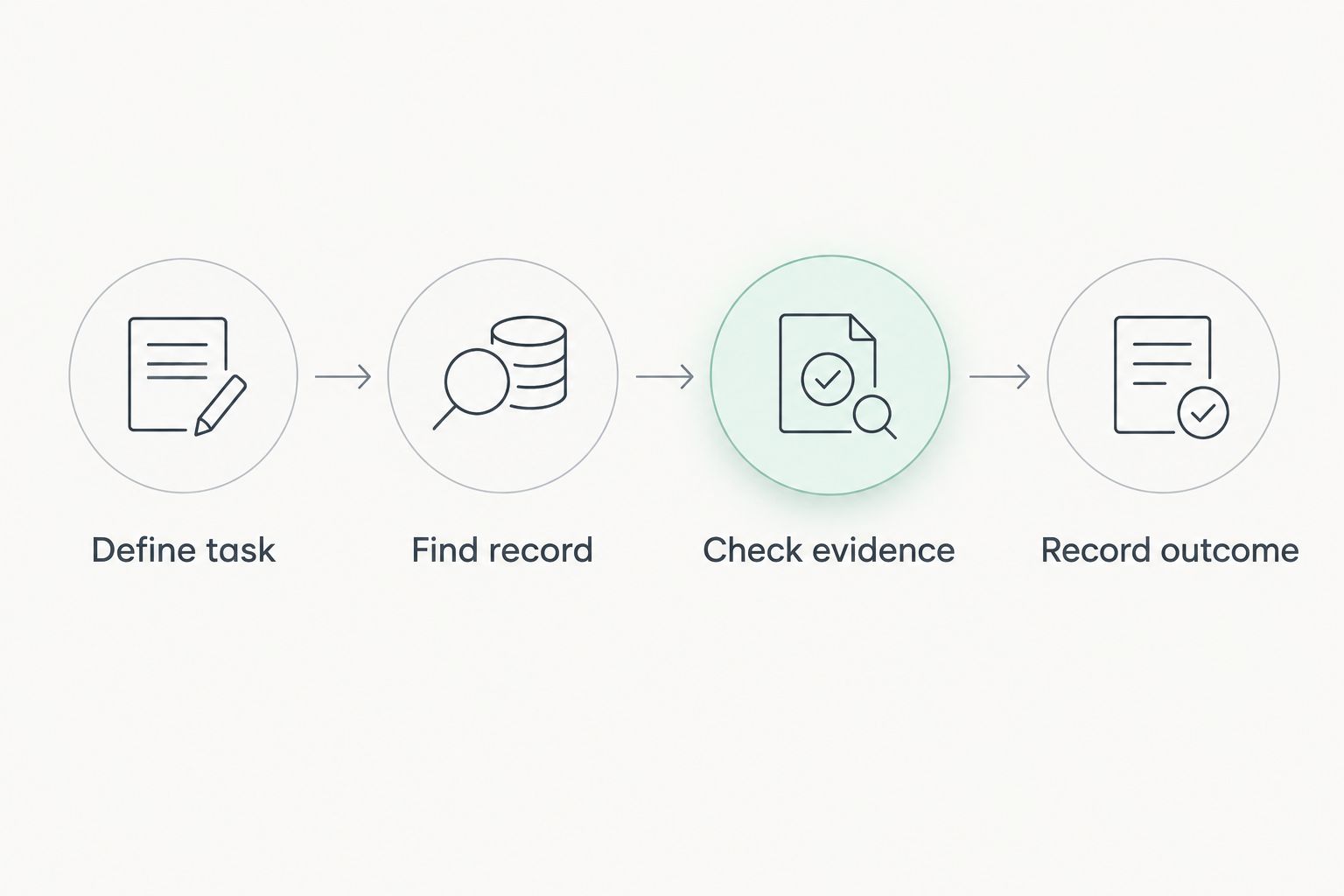
Keep the exercise focused on observable outcomes. You do not need an invented numerical score to recognize that a reviewer found the wrong company or could not complete the required follow-up.
Final verdict: choose the workflow your team can prove
Choose Dauthau if you need Vietnamese bidding intelligence
Best for: businesses researching tender opportunities, contractors, and bidding results across Vietnam. The documented software scope matches that research requirement. Confirm your actual records and follow-up tasks before making the purchase.
Choose DauThau.net if the demonstrated workflow fits better
Best for: teams whose required process performs better in a practical evaluation, including existing users with a satisfactory workflow. Select it on that evidence, not an assumption that similarly named services are interchangeable.
| Dimension | Winner |
|---|---|
| Tender-research scope | Client platform for the documented intelligence use case |
| Contractor research | Client platform for the explicit contractor-data use case |
| Bidding-result analysis | Tie on evaluation standards; test actual records |
| Required operational workflow | DauThau.net if the task demonstration establishes the advantage |
| Existing-process continuity | DauThau.net if the current process satisfies requirements |
| Opportunity tracking | Tie until the required follow-up is demonstrated |
| Standout feature | Whichever demonstrates a decision-relevant advantage |
| Commercial model | Whichever written arrangement fits the intended workload |
FAQ
Which is better in 2026: dauthau.asia vs dauthau.net?
Choose by the job your team needs to complete. The client platform has an explicit Vietnamese bidding-intelligence scope; choose DauThau.net when a practical evaluation demonstrates a better fit for your required workflow.
What is Dauthau best for?
Dauthau is best matched to Vietnamese businesses seeking software to search, track, and analyze tenders, contractor data, and bidding results. Its stated scope includes public and private procurement across Vietnam.
When should I choose DauThau.net?
Choose DauThau.net when it demonstrates a better fit for your required process. Existing users should also compare any proposed replacement against the work their current process already completes.
Are the two services interchangeable?
Do not treat the services as interchangeable without testing your required tasks. Similar names do not establish identical coverage, functions, commercial terms, or working methods.
Can I assume either option submits bids for me?
No, do not assume bid-submission capability from a tender-research description. Require a demonstration and written confirmation of any transaction or submission function you need.
How should I compare the commercial terms?
Compare written proposals against the same intended users and activities. Check the billing model, included access, usage conditions, renewal terms, and cancellation terms together.
What should I test before selecting tender software?
Test a relevant tender, a known contractor, a bidding result, and your required follow-up task. Use records your team can independently check and apply the same instructions to both candidates.
One last thing
End your evaluation by asking the reviewer to explain a no-bid decision, not just identify an attractive opportunity. Software that helps your team interpret why an opportunity does not fit can support a clearer selection process. For your 2026 decision, judge the explanation against the evidence—not the confidence of the demonstration.