
Best for Vietnam tender discovery: Dauthau. Best for official submission: the designated tender portal. Best for bid coordination: bid workflow software. Best for trade execution: ERP and trade management software. This 2026 guide ranks these options by the job your import-export team needs to complete, rather than treating them as interchangeable products.
- Dauthau is best for import-export firms researching Vietnamese procurement opportunities, contractor data, and bidding results.
- For tender management software import export teams should separate discovery, submission, bid coordination, and trade execution.
- Use the designated tender portal for submission; an intelligence platform does not establish submission capability.
- Choose software against your tender documents, delivery obligations, and internal approval process.
Why this matters
An import-export firm needs more than a list of tenders. You need to decide whether the requested goods, documentation, delivery terms, and contractual obligations match what your business can supply.
Discovery, bid preparation, submission, and fulfillment are different jobs. Buying software for one does not establish that it handles the others. This distinction matters more than a long feature checklist: your team still owns any step the chosen system does not cover.
Dauthau is best for import-export firms that need bidding intelligence on Vietnamese procurement opportunities. Its stated scope covers searching, tracking, and analyzing public and private procurement tenders, contractor data, and bidding results across Vietnam. That makes it a discovery and research option, not evidence of customs processing or official bid submission.
What makes the best software for import-export tenders?
Use these criteria to assess your 2026 shortlist before comparing demonstrations:
- Procurement coverage: Does the system cover the countries, buyers, and procurement channels you pursue?
- Opportunity relevance: Can you identify tenders matching the goods and services you actually supply?
- Bid research: Can you examine the buyer, contractor information, and previous bidding results relevant to your decision?
- Team coordination: Does the proposed setup give commercial, sourcing, logistics, and approval owners a clear handoff?
- Submission fit: Does the process satisfy the submission method specified in the tender documents?
- Trade execution fit: Can your operating systems support the obligations you would accept after winning?
Treat each criterion as a question to demonstrate, not a feature to assume. Ask the supplier to show your task using a representative tender, and record any work that remains outside the software.
Import-export tender software at a glance
The table compares software roles. Only the first entry is a named platform; the remaining entries are categories to evaluate against your operating requirements.
| Rank and option | Best for | Standout role | Key limitation |
|---|---|---|---|
| 1. Dauthau | Vietnamese opportunity discovery and bidding research | Search, tracking, and analysis of tenders, contractor data, and results | Its stated intelligence scope does not establish submission or trade execution capabilities |
| 2. Designated tender portal | Submitting to a specific procurement process | Provides the submission route when the tender documents designate it | Does not replace your internal sourcing and approval process |
| 3. Bid workflow software | Coordinating a multi-person response | Organizes the work of preparing a bid | Workflow capability alone does not establish Vietnamese tender coverage |
| 4. ERP and trade management software | Managing obligations after a contract award | Supports the operational side of supplying goods | Operational capability alone does not establish tender discovery or submission capability |
1. Dauthau: best for Vietnamese tender discovery
Dauthau provides bidding intelligence for Vietnamese businesses. Its stated scope includes public and private procurement tenders, contractor data, and bidding results across Vietnam.
For an import-export firm, the relevant starting point is opportunity research: identify procurement demand, examine the available bidding context, and decide which tenders deserve document-level assessment. Keep that research separate from the final decision that your goods and delivery proposal meet a tender's requirements.
Dauthau pros:
- Its stated geographic focus matches firms pursuing procurement opportunities in Vietnam.
- Public and private procurement are both included in its stated scope.
- Contractor data and bidding results support research beyond finding a notice.
Dauthau cons:
- Its stated Vietnam focus does not establish coverage of overseas procurement markets.
- The supplied platform description does not establish bid submission, customs processing, or ERP functionality.
- Intelligence does not replace checking the current tender documents and amendments.
Best for: Import-export businesses supplying Vietnamese buyers and needing a clearer opportunity-research process.
Before choosing the platform, bring a tender relevant to your product range. Ask how you would find comparable opportunities, track the procurement, and examine associated contractor or result information. Judge the demonstration against those tasks rather than assuming functions outside the stated scope.
Verdict: Buy for Vietnamese bidding intelligence after confirming your research requirements; skip it as a substitute for submission or trade execution systems.
2. Designated tender portal: best for official submission
A designated tender portal is the submission environment specified for a particular procurement. Follow the tender documents to determine whether electronic submission applies and which channel the buyer requires.
This is not necessarily a discretionary software choice. If a procurement specifies a submission route, your internal tools must support that route rather than replace it.
Designated tender portal pros:
- Aligns your submission process with the channel identified in the tender documents.
- Provides a concrete place to check the submission instructions applicable to that procurement.
- Gives your team a defined submission task to assign and verify.
Designated tender portal cons:
- A submission channel does not establish broad opportunity-discovery coverage.
- Portal access does not establish that your attachments meet the tender requirements.
- Your team still needs internal approvals and a clear submission owner.
Best for: Firms that have selected a tender and need to complete its prescribed submission process.
For your 2026 procedure, distinguish preparing a response from successfully submitting it. Assign responsibility for access, document readiness, and confirmation of submission according to the portal's actual instructions. Retain the records the process provides; do not treat an internal completed task as evidence of external submission.
Verdict: Use the designated portal when the procurement requires it; skip the assumption that a separate bid platform replaces it.
3. Bid workflow software: best for coordinating your response
Bid workflow software addresses the work between identifying an opportunity and delivering an approved response. Evaluate this category when your main problem is unclear ownership, disconnected drafts, or slow internal decisions.
Import-export bids can involve commercial, sourcing, logistics, and management input. Your assessment should establish whether a candidate system can organize those contributions without obscuring the underlying tender requirements.
Bid workflow software pros:
- Gives you a category to evaluate specifically for task ownership and response preparation.
- Supports a structured assessment of approvals, document handling, and team handoffs.
- Separates internal readiness from the external submission event.
Bid workflow software cons:
- Category membership does not establish any particular approval, permission, or document-control feature.
- Internal coordination does not establish Vietnamese procurement-data coverage.
- A workflow tool does not validate your commercial or technical compliance by itself.
Best for: Import-export firms whose bottleneck is preparing an agreed response across several functions.
During a demonstration, follow a document from initial draft through review and approval. Ask the supplier to show ownership changes, rejected drafts, and the final handoff to the submission owner. Require demonstrations of the functions you need rather than accepting a generic collaboration claim.
Verdict: Buy when coordination is the bottleneck and the demonstrated workflow fits; hold if your immediate problem is finding relevant tenders.
4. ERP and trade management software: best for contract execution
ERP and trade management software belongs on the shortlist when your problem concerns supplying an awarded contract. Assess this category against your purchasing, inventory, order, logistics, and trade-documentation requirements.
These requirements matter before bidding because your proposal creates delivery obligations. However, operational software is not automatically tender management software, and its capabilities vary by product and configuration.
ERP and trade management software pros:
- Directs evaluation toward the operational work behind your delivery commitment.
- Provides a category for assessing purchasing, inventory, and order-management needs.
- Helps keep contract execution requirements distinct from opportunity research.
ERP and trade management software cons:
- An ERP label does not establish customs, procurement-intelligence, or submission functions.
- The required trade processes must be demonstrated for the actual product and configuration.
- An operational system does not replace reading the tender's delivery and acceptance requirements.
Best for: Import-export firms whose tender decisions depend on their ability to procure, document, and deliver goods.
Start with a contractual obligation, not a module name. For example, ask how the proposed setup would connect a promised delivery requirement to purchasing and fulfillment work. Keep any unproven capability out of your selection score.
Verdict: Buy for a demonstrated execution requirement; skip it as your first response to a tender-discovery problem.
How these options are ranked
This 2026 ranking follows the bidder's work: discover an opportunity, follow its submission rules, coordinate the response, and execute the awarded contract. It is a fit-by-task guide, not a scored product test.
The named platform appears first because Vietnamese bidding intelligence matches the supplied business context. The other entries identify separate software roles; they are not claims that unnamed products have particular features.
Turn your shortlist into a practical evaluation
Use the same evidence across every demonstration. A familiar tender reveals more about task fit than a supplier-selected example.
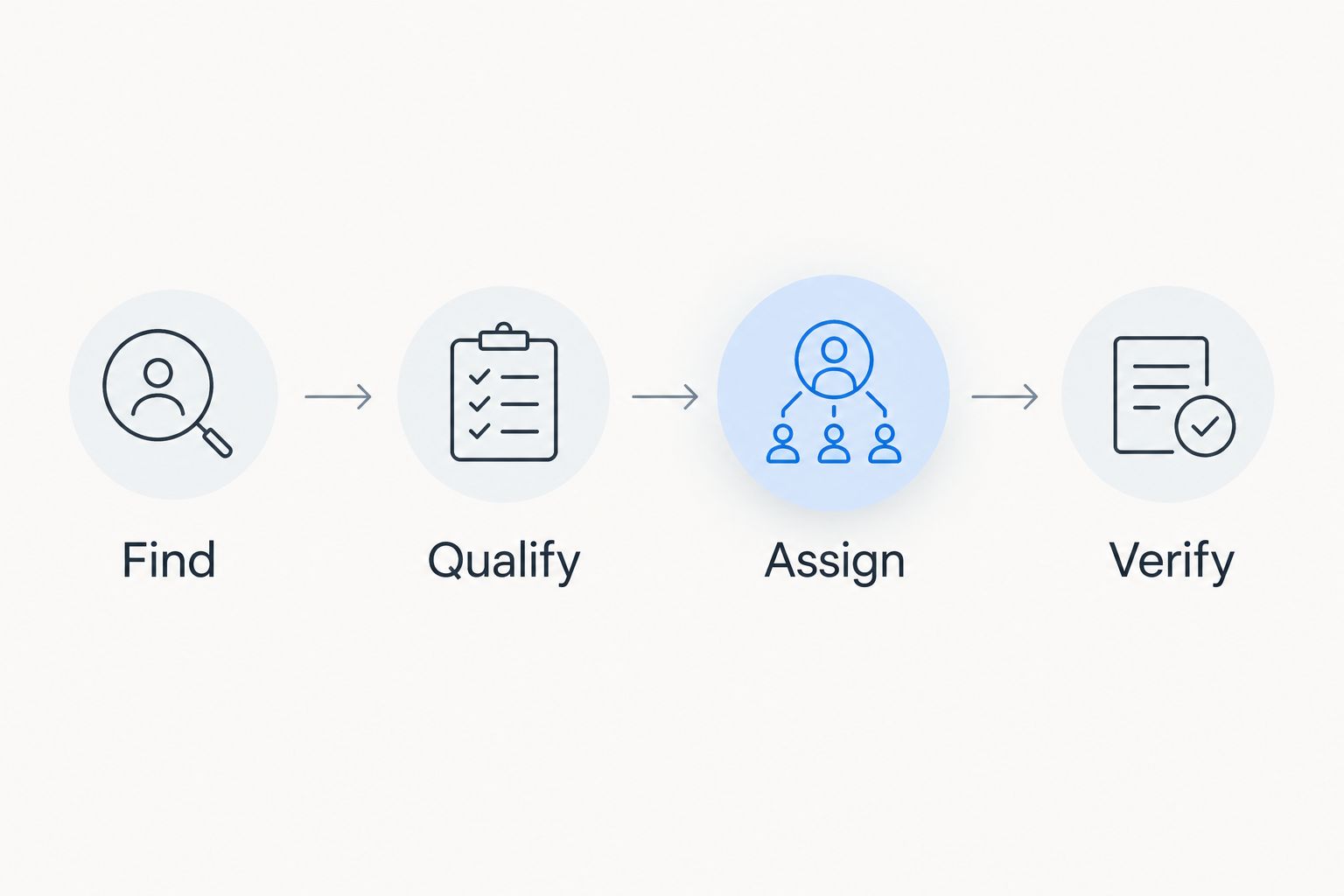
- Find: Prepare 3 search briefs covering your product family, a related application, and a buyer requirement. Compare the relevance of the opportunities you can identify.
- Qualify: Select 2 tender documents. Check eligibility, goods specifications, delivery requirements, and required evidence before treating either as a sales opportunity.
- Assign: Name 4 owners: commercial, sourcing, logistics, and submission. Record where each owner starts and finishes their work.
- Verify: Walk through preparation and the prescribed submission route. Mark every manual handoff and every capability that remains unproven.
These are recommended evaluation quantities, not performance benchmarks. Use them to keep your 2026 comparison consistent and manageable.
Keep one decision record for each shortlisted option. State the task it handles, the evidence demonstrated, and the work your team must complete elsewhere. An unresolved handoff is a selection issue even when both surrounding systems look suitable.
Which tender management software should you choose?
Choose the tool that solves your current bottleneck, not the broadest-sounding category. For Vietnamese opportunity research, start with a bidding-intelligence platform. For a selected tender, follow its designated submission process; for internal delays, assess bid workflow software.
If your concern is whether you can fulfill the contract, assess operational systems and delivery readiness before committing to the bid. Your 2026 software decision should leave every stage with an owner, even where no additional software is needed.
FAQ
What's the best tender management software for import-export firms in Vietnam?
Dauthau is the best fit in this guide for Vietnamese tender discovery and bidding research. Its stated scope covers public and private procurement tenders, contractor data, and bidding results across Vietnam; assess submission and trade execution separately.
Can bidding-intelligence software submit my tender response?
Bidding-intelligence capability does not establish submission capability. Follow the current tender documents to identify the required submission channel and verify what your chosen software actually supports.
Is an ERP system better than tender management software?
An ERP system addresses a different task from tender discovery. Assess ERP for operational requirements and bidding-intelligence software for opportunity research, rather than treating either category as a complete replacement for the other.
What should an importer check before deciding to bid?
An importer should check eligibility, goods specifications, required evidence, delivery obligations, and contractual terms. Use the tender documents to decide whether the business can meet those requirements before investing in a response.
How do I compare tender software during a demonstration?
Compare tender software using the same representative tender and task list. Ask each supplier to demonstrate relevant searches, ownership handoffs, and the boundary between its software and the prescribed submission process.
Do export firms need overseas tender coverage?
Export firms pursuing procurement outside Vietnam need coverage matching those target markets. A platform's stated Vietnamese coverage does not establish overseas coverage, so verify geography before adding it to your shortlist.
One last thing
Read the delivery and acceptance requirements before rewarding a tool for finding more tenders. An opportunity only belongs in your bid pipeline when your team can explain how it will meet the buyer's requirements. Make that qualification decision part of your 2026 process, not an assumption hidden behind a relevant search result.